
This document explains the means of containment requirements. For specific details, consult Part 5 of the TDG Regulations. It does not change, create, amend or suggest deviations to the Transportation of Dangerous Goods Regulations(TDG Regulations).
On this page
- Overview
- Means of containment (small and large)
- Selection of a means of containment for the transport of dangerous goods
- Compliance marks on a means of containment
- Mode of transport and destination
- Compliance with the TDG Act and Regulations
- Contact us
Overview
The Transportation of Dangerous Goods Act (TDG Act), TDG Regulations and standards require dangerous goods to be transported in a means of containment designed, constructed, filled, closed, secured and maintained so that under normal conditions of transport, including handling, there will be no release of the dangerous goods that could endanger public safety. A means of containment is a container or packaging, or any part of a means of transport that is, or may be used, to contain dangerous goods.
The TDG Regulations may refer to other regulations or standards for the manufacturing, selection and use of a means of containment for dangerous goods.
Regulations, safety standards and safety requirements may be specific to a class of dangerous goods, means of containment or mode of transport.
This document identifies the types of means of containment used to transport dangerous goods. It also helps in the selection of a means of containment, describes the compliance marks and makes reference to other regulations based on the mode of transport chosen and the destination of the shipment.
Means of containment (small and large)
Small means of containment are containers with a water capacity of 450L or less. They may be drums, jerricans, boxes, pails, bags, cylinders or intermediate bulk containers (IBC).
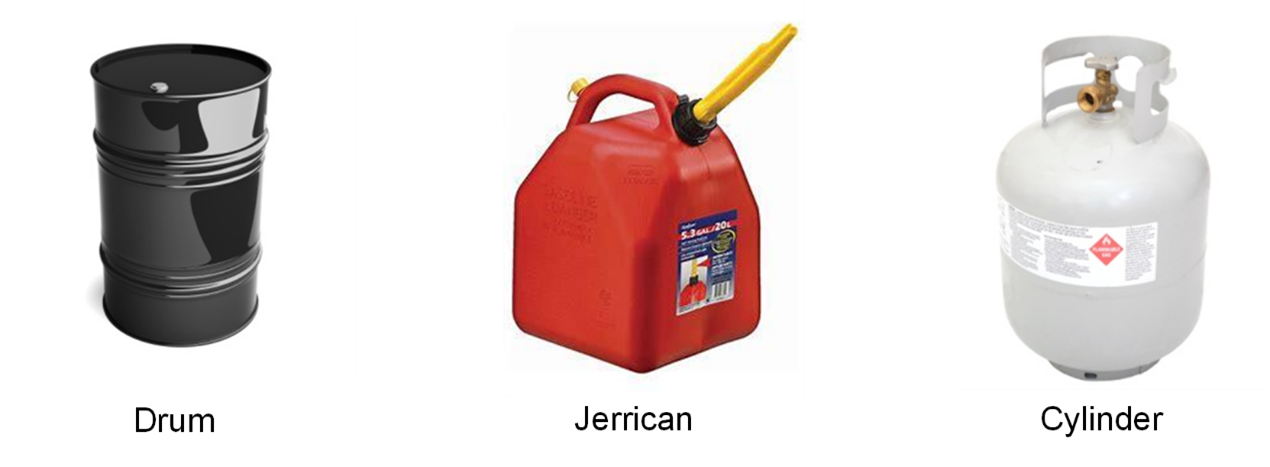
Large means of containment are containers with a water capacity greater than 450L. They may be highway tanks, tank cars, intermediate bulk containers (IBC), portable tanks or tubes.

Selection of a means of containment for the transport of dangerous goods
Several factors influence the selection of a means of containment, such as:
- class and packing group of the dangerous goods
- type and size of the means of containment
- mode of transport
- destination
Compliance marks on a means of containment
All standardized means of containment bear compliance marks to indicate that they were manufactured in compliance with a standard. A compliance mark is any symbol, device, letter, word, number or abbreviation that is displayed on a means of containment or means of transport to indicate compliance with a safety standard.
To remain in standard, some means of containment must be periodically inspected, tested and marked at intervals specified by the standard or regulation. These marks describe what, when and by whom the inspections and tests were performed.
All compliance marks must be durable, visible, legible and easily accessible for inspection.
United Nations (UN) standardized means of containment are internationally recognized and can generally be used anywhere in the world and by any mode of transport. However, some means of containment standards are specific to Canada. Cylinders, tubes, highway tanks, some portable tanks and rail tank cars are examples of such “TC” standardized means of containment which will display the “TC” marking. It should be noted that means of containment bearing the “DOT” certification mark may be recognized in Canada under certain conditions.

Mode of transport and destination
There may be additional packaging requirements based on the mode of transport or destination. For more information, refer to Part 9 of the TDG Regulations for road transportation, Part 10 for rail transportation, Part 11 for marine transportation and Part 12 for air transportation.
Compliance with the TDG Act and Regulations
Failure to comply with the TDG Act and TDG Regulations may lead to fines and/or imprisonment. For more information, you can visit the TDG website and the Department of Justice website.
Contact us
For any regulatory questions, please contact us.

Dangerous goods means of containment
(PDF, 337 KB)