
*** Please note that this is a draft document, and it is subject to change. The Government of Canada does not accept any responsibility or liability, of whatsoever nature and however arising, in respect of any person’s reliance or action taken on, or in respect of, the contents of this document. ***
Foreword
The regulatory authority for oversight of commercial rocket launch activities in Canada stems from the Aeronautics Act (the “Act”). In s. 3(1), an “aircraft” is defined as “any machine capable of deriving support in the atmosphere from reactions of the air and includes a rocket.”
The Minister of Transport is responsible for issuing authorizations for rocket launches (authorizations to launch) in Canada. This document provides guidance and sets out the minimum requirements to be met in order to receive an authorization to conduct rocket launches in Canada that exceed the definition of an amateur rocket. These requirements are intended to respect industry practices while also reflecting Canada’s domestic and international legal obligations.
Document Overview
Section 1 of this document describes the purpose of these requirements, the legal background of commercial space launch in Canada and the scope of an authorization to launch.
Section 2 describes the overall process for applying for an authorization to launch, including the major steps, informational opportunities, the submissions and how they are to be made.
Section 3 describes the reviews that will take place, and what the applicant is expected to provide to support them.
Section 4 describes detailed launch safety requirements and how they should be addressed in the application. A diagram providing a high-level overview of the safety process is attached in Annex 3.
Section 5 describes detailed launch site safety requirements and how they should be addressed in the application.
Section 6 provides a list of applicable documents, with hyperlinks for ease of retrieval.
Table of Versions
| Version | Date | Modifications |
|---|---|---|
|
0.1 |
04/12/2023 |
|
|
0.2 |
19/12/2024 |
|
|
0.3 |
14/03/2025 |
|
|
0.4 |
30/04/2025 |
|
Table of Contents
- 1 General
- 2 Application Process
- 3 Overview of Requirements to Obtain an Authorization to Launch
- 4 Safety Requirements
- 5 Launch Sites
- 6 Security requirements
- 7 Applicable Documents
- Annex 1 – Definitions, Abbreviations, and Acronyms
- Annex 2 – Equations and Tables for Explosive Site Plan
- Annex 3 – Safety Process Overview
- Annex 4 – Accepted Means of Compliance
- Annex 5 – Additional Post-Authorization Conditions - Orbital Safety
- Annex 5.1 – Applicability
- Annex 5.2 – Control of Debris Released During Normal Operations
- Annex 5.3 – Minimizing Debris Generated by Explosions
- Annex 5.4 – Collision Mitigation between Launched Objects
- Annex 5.5 – Collision Avoidance with Orbital Objects
- Annex 5.6 – Post-Mission Disposal
- Annex 5.7 – Controlled Atmospheric Disposal
- Annex 5.8 – Heliocentric, Earth-Escape Disposal
- Annex 5.9 – Direct Retrieval
- Annex 5.10 – Uncontrolled Atmospheric Disposal
- Annex 5.11 – Maneuver to a Disposal Orbit
- Annex 5.12 – Real-Time Reporting of Orbital Safety Hazards
- Annex 6 – Additional Post-Authorization Conditions - General
- Annex 6.1 – Responsibility for Aviation Safety, Public Safety and Safety of Property
- Annex 6.2 – Compliance
- Annex 6.3 – Compliance Monitoring
- Annex 6.4 – Continuing Accuracy of Launch Application; Application for Modification of Authorization
- Annex 6.5 – Preflight Reporting
- Annex 6.6 – Post-Flight Reporting
- Annex 6.7 – Registration of Space Objects
- Annex 6.8 – Records
List of Figures
List of Tables
- Table 1 – Energetic Liquid ‘Explosive’ EquivalentsFootnote 1Footnote 2Footnote 3
- Table 2 – Factors to Use When Converting Energetic Liquid Densities
- Table 3 – Separation Distance Criteria for Storage of Liquid Hydrogen and Bulk Quantities of Hydrazine
- Table 4 – Launch Risk Criteria
- Table 5 – High Consequence Event Protection Criteria
- Table 6 – Disposal Safety Criteria
- Table 7 - Orbital Safety Criteria
1 General
1.1 Purpose
This document defines the application requirements that need to be met for a launch operator to receive an authorization from the Minister of Transport to conduct uncrewed rocket launches in Canada other than amateur rockets, as defined in Annex 1. It also provides guidance on how to demonstrate compliance with these requirements.
In addition to specifying the conditions that an applicant must demonstrate compliance to in their application, Annex 5 and Annex 6 of this document highlight additional conditions that may be attached to the authorization to launch, once/if granted. The intent of the requirements set out in this document is to facilitate launches that are in the public interest and are not likely to affect aviation safety.
1.2 Applicability
The requirements set out in this document apply to all parties seeking authorization to launch uncrewed, commercial launch vehicles, or experimental rockets, in Canada.
It covers all activities conducted on the launch site or during launch and flight operations including, but not limited to, pre-launch operations, launch, and recovery of rockets, payloads, and/or their component parts.
These requirements do not apply to amateur rockets.
1.3 Authorization to Launch
In order to obtain authorization to conduct a launch from Canadian territory, an applicant must satisfy the requirements set out in this document. The information provided by the applicant, together with launch site and operational inspections and monitoring, enable Transport Canada to reasonably assess, in consultation with government partners and other affected agencies and/or Government of Canada departments, whether the proposed activities are in the public interest and not likely to affect aviation safety.
An authorization to launch may be issued if the Minister of Transport is satisfied that the launch is in the public interest and that adequate measures are in place to support the safety of the launch. The authorization will also specify conditions that must be met by the launch operator following the issuance of the authorization to ensure aviation safety and the public interest.
The launch application review incorporates a review and analysis of the launch site and launch site operator’s capacity and preparedness to facilitate launch operations in a safe manner, respecting the public interest.
1.3.1 Inspection and Compliance Monitoring
Transport Canada may conduct inspections to ensure that conditions attached to an authorization to launch issued by the Minister are met and complied with. Under the Aeronautics Act, launch site operators and launch operators must allow Transport Canada inspectors to access relevant facilities and provide reasonable assistance to inspectors conducting an inspection of the launch site, manufacturing facilities, processing facilities and ground, launch, flight, and recovery operations. Transport Canada inspectors may also conduct compliance verification activities remotely, and as a result persons authorized to conduct a launch may also be required to send requested information electronically.
1.4 Scope of Authorization
-
(a) General. An authorization to launch is issued for a specific launch vehicle at a specific launch site, during a defined period of time, and (if applicable) carrying a specific payload or type of payload. The authorization will identify the scope of applicability.
-
(1) An authorization to launch is issued for a specific launch and does not constitute a blanket authorization for subsequent launches, unless otherwise stated on the authorization. Information previously used to obtain an authorization to launch, including launch-related authorizations, licenses, permits, certifications and/or approvals from other jurisdictions may be used to simplify the review of the application for subsequent authorizations to launch with similar characteristics.
-
-
(b) Scope of launch. An authorization to launch generally applies to the flight of a launch vehicle and pre- and post-flight ground operations as follows:
-
(1) Launch begins when pre-flight hazardous operations commence at a Canadian launch site. Such operations include pressurizing or loading of propellants into the vehicle, operations involving a fueled launch vehicle, the transfer of energy necessary to initiate flight, or any activity preparing the vehicle for flight that may pose a risk. Pre-flight hazardous operations do not include the period between the end of the previous launch and launch vehicle reuse when the vehicle is in a safe and dormant state.
-
(2) Launch ends when any of the following events occur:
-
(i) For an orbital launch of a vehicle, launch ends after the launch provider’s last exercise of control over its vehicle on orbit, after vehicle component impact or landing on Earth, after activities necessary to return the vehicle or component to a safe condition on the ground after impact or landing, or after activities necessary to return the site to a safe condition, whichever occurs latest;
-
(ii) For a suborbital launch of a vehicle, launch ends after vehicle or vehicle component impact or landing on Earth, after activities necessary to return the vehicle or vehicle component to a safe condition on the ground after impact or landing, or after activities necessary to return the site to a safe condition, whichever occurs latest.
-
(c) Application requirements. An applicant must identify pre- and post-flight ground operations, relevant to the applicant’s proposed launch activities, at a Canadian launch site sufficient for Transport Canada to determine the scope of activities for which the applicant seeks an authorization.
-
2 Application Process
2.1 Notice of Intent to Participate in Information Sessions
Potential applicants may wish to engage in voluntary information sessions with Transport Canada and other relevant government departments and agencies prior to submission of an application. The sessions will allow applicants to provide information on the scope of the launches and for relevant government departments and agencies to provide information on the authorization to launch application process, applicable federal legislative and regulatory requirements, and application timelines. The process begins with a notice of intent to Transport Canada.
Early consultation of such nature enables the potential applicant to build a constructive relationship early in the application process with those within government with whom the applicant will coordinate and foster open channels of communication with that will allow a collaborative approach to facilitate the application and a safe and secure launch.
At this stage, the potential applicant should be prepared to provide details regarding its launch vehicle, payload (if applicable), its launch site operations and intended concept of operations, including any operations that are potentially hazardous to the public. Participation in an information session does not guarantee the approval of an application subsequently submitted to Transport Canada.
2.1.1 Submission
Potential applicants wishing to attend an information session as described in 2.1 must submit a notice of intent to Transport Canada in the following manner:
-
(a) They must prepare a notice of intent in writing, in English or French. The potential applicant must file the notice of intent with Transport Canada Civil Aviation either by paper, by use of digital storage media, or by email in the following manner:
-
(1) By mail:
Transport Canada, Strategy and Emerging Technology (SET), AARV
330 Sparks St, Ottawa ON
K1A 0N5 -
(2) By e-mail: tc.commercialspacelaunch-lancementspatialcommercial.tc@tc.gc.ca. For electronic submissions, the digital storage media must be in a format such that its contents cannot be altered.
-
-
(b) For a notice of intent submitted by email, a potential applicant must send the notice of intent as an email attachment, or as a link to a secure server. The notice of intent and the email to which the notice of intent is attached or linked must also satisfy the following criteria:
-
(1) The email to which the notice of intent is attached or linked must be sent from an email address controlled by the person who signed the notice of intent or by an authorized representative of the applicant;
-
(2) The email must identify each document that is included as an attachment or that is stored on a secure server; and
-
(3) The electronic files must be date-stamped and have version control documentation.
-
2.1.2 Notice of Intent - Content
A notice of intent must include the following information:
-
(a) The name and address of the potential applicant;
-
(b) The name, address, and telephone number of any person to whom inquiries and correspondence should be directed;
-
(c) A general description of the purpose of the launch and approximate launch date;
-
(d) The model, type, and configuration of any vehicle proposed for launch by the potential applicant;
-
(e) A description of the vehicle by characteristics that include individual stages, their dimensions, type and amounts of all propellants, and maximum thrust;
-
(f) Description of previous accident(s) or launch incident(s), if any, associated with the proposed launch vehicle model;
-
(g) Details concerning foreign ownership of the potential applicant;
-
(h) If available, the proposed vehicle flight profile, including:
-
(1) Launch site;
-
(2) Normal impact or landing areas for all mission hardware;
-
(3) Preliminary flight hazard areas for land, sea and air; and
-
(4) For each orbital mission, the range of intermediate and final orbits of each vehicle upper stage and their estimated orbital lifetimes (i.e. upper stage disposal intentions)
-
-
(i) If available, the launch vehicle and ground station RF spectrum licensing intentions
-
(j) If available, launch site operator’s name and address;
-
(k) If available, details of any aeronautical study conducted by the launch site operator in support of launches from the proposed launch site;
-
(l) If available, details regarding the launch site operator’s previous and/or current security program;
-
(m) If available, a description of the payloads and/or payload classes;
-
(n) If available, the potential applicant is also invited to provide information concerning:
-
(1) Intended operations during the lifetime of the payload, including anticipated life span and any planned disposal;
-
(2) Any foreign ownership of the payload or payload operator; and
-
(3) Licensing intentions of the payload owner or payload operator under domestic or foreign jurisdiction for in-space activities (e.g., spectrum license, remote sensing license, etc.)
-
-
(o) Any additional information concerning the launch, launch operator, launch site or payloads the potential applicant believes may provide useful context to participants to the information session.
2.1.3 Signature and Certification of Accuracy
A notice of intent must be legibly signed, dated, and certified as true, complete, and accurate by an officer or other individual with the authority to bind the applicant.
2.1.4 Timeline
Unless otherwise specified, Transport Canada aims to convene an information session with the potential applicant, as described in 2.1, within 21 business days of receipt of a complete notice of intent.
2.2 Application for an Authorization to Launch
2.2.1 Submission
-
(a) An applicant must make an application in writing, in English or French. The applicant must file the application with Transport Canada either by paper, by use of digital storage media, or by email in the following manner:
-
(1) By mail:
Transport Canada, Strategy and Emerging Technologies (SET), AARV
330 Sparks St, Ottawa ON
K1A 0N5 -
(2) By e-mail: tc.commercialspacelaunch-lancementspatialcommercial.tc@tc.gc.ca. The application must include a cover letter that is signed by the person who signed the application or by an authorized representative of the applicant;
-
-
(b) The cover letter must identify each document that is included in the application package
-
(c) For electronic submissions, the digital storage media must be in a format such that its contents cannot be altered.
-
(d) For an application submitted by email, an applicant must send the application as an email attachment, or as a link to a secure server. The application and the email to which the application is attached or linked must also satisfy the following criteria:
-
(1) The email to which the application is attached or linked must be sent from an email address controlled by the person who signed the application or by an authorized representative of the applicant;
-
(2) The email must identify each document that is included as an attachment or that is stored on a secure server; and
-
(3) The electronic files must be date-stamped and have version control documentation.
-
2.2.2 Administrative Information
An application must identify the following:
-
(a) The name and address of the applicant;
-
(b) The name, address, and telephone number of any person to whom inquiries and correspondence should be directed.
2.2.3 Signature and Certification of Accuracy
An application must be legibly signed, dated, and certified as true, complete, and accurate by an officer or other individual with the authority to bind the applicant.
2.2.4 Measurement System and Units
For each analysis, an applicant must employ the International System of Units (SI) in its application and all related submissions and correspondences.
2.3 Confidentiality
-
(a) Any person providing information to Transport Canada may request in writing that it considers confidential any information that contains third-party trade secrets or financial, commercial, scientific, or technical information. The request must be made at the time the information or data is submitted and state the period of time for which confidential treatment is desired.
-
(b) Information or data for which any applicant requests confidentiality must be clearly marked as “confidential”.
-
(c) If an applicant requests that previously submitted information or data be treated confidentially, Transport Canada will do so to the extent permitted by law, if practicable in light of any prior distribution of the information or data.
-
(d) By submitting an application, the applicant consents to Transport Canada sharing information provided by the applicant, including information the applicant considers confidential, with other departments and agencies, as appropriate, to ensure that all requirements for an authorization to launch are met.
2.4 Application Screening Process
Transport Canada will initially screen an application to determine whether it is complete enough for Transport Canada to start its review. After completing the initial screening, Transport Canada will notify the applicant in writing of one of the following:
- (a) Transport Canada has received the application and will initiate a review; or
- (b) The application is incomplete so Transport Canada cannot begin its review. In its notification to the applicant, Transport Canada will identify specific areas of the application that are incomplete and need to be completed for Transport Canada to begin its evaluation.
2.5 Completeness of Application
Acceptance of an application by Transport Canada to initiate a review does not constitute a determination that the application is complete. If, in addition to the information required by the applicable parts of this section, Transport Canada requires other information necessary for a determination that the proposed launch or launches are not likely to affect aviation safety and are in the public interest, an applicant will be requested to submit additional information.
2.6 Continuing Accuracy of Application
-
(a) An applicant is responsible for the continuing accuracy and completeness of information provided to Transport Canada as part of a pending application. If at any time information provided by an applicant as part of their application is no longer accurate and complete in all material respects, the applicant must submit a statement furnishing the new or corrected information. As part of its submission, the applicant must recertify the accuracy and completeness of the application in accordance with 2.2.3. An applicant's failure to ensure continuing accuracy of information submitted as part of the application may be sufficient grounds to refuse the application.
-
(b) An applicant may amend or supplement an application at any time prior to issuance of authorization to launch. Note that doing so may affect the processing time of the application.
-
(c) Knowingly making any false representations is an offence that may result in a prosecution by way of summary conviction or indictment and is considered grounds for refusal of the application.
2.7 Issuance of Authorization
After Transport Canada completes its reviews, as described in section 3, and recommends the decision to issue an authorization to launch, the Minister of Transport will issue an authorization to launch to the applicant.
The authorization to launch authorizes a launch operator to conduct launches in accordance with representations made in its application, and subject to the conditions set out in authorization to launch.
2.8 Refusal of Authorization
-
(a) Transport Canada will notify the applicant, in writing, if its application has been refused and will state the reasons for refusal.
3 Overview of Requirements to Obtain an Authorization to Launch
3.1 General
-
(a) Application. To obtain an authorization to launch for a commercial launch vehicle or experimental rocket, the applicant must:
-
(b) Previously submitted information. An applicant may reference materials previously provided as part of that applicant’s earlier authorization to launch in order to meet the application requirements.
3.2 Safety Review
-
(a) General. Transport Canada determines whether the applicant can conduct launch without affecting aviation safety, while considering whether the launch would be in the public interest. The applicant must satisfy the application requirements in this section, and sections 4 and 5 of this document, to receive an authorization to launch.
-
(b) Issues during safety review. Transport Canada will advise an applicant, in writing, of any issues raised during a safety review. The applicant may respond, in writing, or amend its application as per 2.6(b) of this document.
-
(c) Application requirements. An applicant must submit the information required in the “Application Requirements” under section 4, information required under section 5.1, as well as the information set out in 3.2 (c)(1) to (c)(6). To ensure the timely processing of the application it is strongly recommended that the applicant use the means of compliance set out in Annex 4 in completing their application:
-
(1) General. An application must:
-
(i) Contain a glossary of unique terms and acronyms used in alphabetical order;
-
(ii) Contain a listing of all referenced material;
-
(iii) Use equations and mathematical relationships derived from or referenced to a recognized standard or text, and define all algebraic parameters;
-
(iv) Include the units of all numerical values provided; and
-
(v) Include a legend or key that identifies all symbols used for any schematic diagrams.
-
-
(2) Site description. The applicant must identify the proposed launch site, including contingency abort locations, and submit the following:
-
(i) Boundaries of the site;
-
(ii) Launch or landing point locations, including latitude and longitude;
-
(iii) Identity of any site operator; and
-
(iv) Identity of any facilities at the site that will be used for pre- or post-flight ground operations, with careful identification of those involved in hazardous activities.
-
-
(3) Launch vehicle description. The applicant must submit the following:
-
(i) A written description of the launch vehicle or family of launch vehicles, including structural, thermal, pneumatic, propulsion, electrical, and avionics and guidance systems used in each vehicle, and all propellants. The description must include a table specifying the type (per AD 5) and quantities of all hazardous materials or components on each vehicle and must include propellants, explosives, pressure vessels, and toxic materials; and
-
(ii) A drawing of each vehicle that identifies:
-
(A) Each stage, including strap-on motors;
-
(B) Physical dimensions and mass;
-
(C) Location of all safety-critical systems;
-
(D) Location of all major launch vehicle control systems, propulsion systems, pressure vessels, and any other hardware that contains potential hazardous energy or hazardous material; and
-
(E) For an unguided suborbital launch vehicle, the location of its center of pressure in relation to its center of gravity for the entire flight profile.
-
-
(iii) Description of previous accident(s) or launch incident(s), if any, associated with the proposed launch vehicle model.
-
-
(4) Launch schedule. The applicant must submit
-
(i) generic launch processing schedule, including an operational flow diagram, that commences with arrival of vehicle components at the launch site facility and concludes at ignition, and identifies:
-
(A) any readiness activities, such as reviews and rehearsals,
-
(B) each safety-critical preflight operation to be conducted,
-
(C) each hazardous operations to be conducted,
-
(D) the specific location (i.e. building, or part of building) of any hazardous activities.
-
(E) Any payload processing or integration activities that may include hazardous activities, materials, etc.
A nominal launch date, and any launch window restrictions.
-
-
-
(5) Radionuclides. Transport Canada will evaluate the launch of any radionuclide on a case-by-case basis. For any radionuclide on a launch vehicle, an applicant must:
-
(i) Identify the type and quantity;
-
(ii) Include a reference list of all documentation addressing the safety of its intended use; and
-
(iii) Describe, and include if available, all necessary license and certificates as required by the Canadian Nuclear Safety Commission.
-
-
(6) Additional material.
-
(i) The applicant is encouraged to submit information relevant to the safety review submitted as part of other launch authorizations, including for launch-related authorizations, licences, permits, certifications and/or approvals obtained in other jurisdictions.
-
(ii) Transport Canada may also request any other information relevant to the application.
-
-
3.3 Security Review
-
(a) General. A launch operator must develop, document, implement, and maintain a security plan that anticipates, prevents, and mitigates unlawful interference that could negatively impact the security of proposed launch operations and thus affect the public interest and aviation safety.
-
(b) Application requirements. The applicant must submit in its application a copy of a security plan as described in (a).
3.4 Payload Review and Determination
-
(a) General. Where a launch includes one or more payloads, a review of each payload assists Transport Canada in determining whether the launch is in the public interest and unlikely to affect aviation safety.
-
(b) Relationship to other federal departments and agencies. Transport Canada’s payload review does not include a consideration of:
-
(1) Those aspects of payloads that are subject to regulation by Innovation, Science and Economic Development Canada or by Global Affairs Canada; or
-
(2) Payloads owned or operated by the Canadian Government.
-
-
(c) Classes of payloads. Where payload specifics are not available at the time of application, Transport Canada may review proposals for class of payload, including communications, remote sensing, or navigation. However, prior to a launch, each payload must be reviewed by Transport Canada to assess whether its launch would be in the public interest and be unlikely to affect aviation safety.
(d) Interdepartmental consultation. Transport Canada consults with other departments and agencies, as appropriate, in the conduct of the payload review.
(e) Application requirements. A launch operator requesting review of a particular payload or payload class must identify the following for launch of a payload:
-
(1) Payload name or class of payload, and function;
-
(2) Description, including physical dimensions, weight, composition, and any hosted payloads;
-
(3) Payload owner and payload operator, if different from the launch operator;
-
(4) Any foreign ownership of the payload or payload operator, as specified in 3.5 (d)(3), if different from the launch operator;
-
(5) Licences or licensing intentions of the payload owner and payload operator under domestic or foreign jurisdiction for in-space activities (e.g., spectrum license, remote sensing license, etc.);
-
(6) Hazardous materials, radioactive materials, and the amounts of each;
-
(7) Pressure Vessels that form a part of the payload;
-
(8) Explosive potential of payload materials, alone and in combination with other materials found on the payload;
-
(9) For orbital launches, parameters for parking, transfer and final orbits, and approximate transit times to final orbit;
-
(10) Delivery point in flight at which the payload will no longer be under the launch operator's control;
-
(11) Intended operations during the lifetime of the payload, including anticipated life span and any planned disposal;
-
(12) Any encryption associated with data storage on the payload and transmissions to or from the payload; and
-
(13) Any other information Transport Canada determines necessary to make a determination as to whether the launch would be in the public interest and be not likely to affect aviation safety.
-
3.5 Policy Review
-
(a) General.
-
(1) Transport Canada determines whether the applicant and their proposed launch activities would be in compliance with applicable Canadian laws, or whether the proposed launch could potentially jeopardize Canadian national security, foreign policy interests, or international obligations of Canada. The outcome of this review will assist in the determination of whether the proposed launch is in the public interest and unlikely to affect aviation safety.
-
(2) In addition to information received as per 3.4 (d), Transport Canada will also consider information submitted from other parts of the application in this review.
-
-
(b) Interdepartmental consultation.
-
(1) Transport Canada consults with federal departments and agencies to determine whether the applicant and their proposed launch activities are in compliance with Canadian laws.
-
(2) Transport Canada consults with relevant departments and agencies to determine whether an authorization to launch application presents any issues affecting Canadian national security or defence.
-
(3) Transport Canada consults with Global Affairs Canada and other relevant federal departments and agencies to determine whether an authorization to launch application presents any issues affecting Canadian foreign policy interests or international obligations.
-
-
(c) Issues during policy review. Transport Canada will advise an applicant, in writing, of any issue raised during a policy review that may impede issuance of an authorization to launch. The applicant may respond, in writing, or amend its application as required by 2.6 by providing supplemental information.
-
(d) Application requirements for policy review. In its application, an applicant must:
-
(1) Identify the model, type, and configuration of any vehicle proposed for launch by the applicant;
-
(2) Describe the vehicle by characteristics that include individual stages, their dimensions, type and amounts of all propellants, and maximum thrust;
-
(3) Identify foreign ownership of the applicant as follows:
-
(i) For a sole proprietorship or partnership, identify all foreign ownership;
-
(ii) For a corporation, identify any foreign ownership interests of 10 percent or more; and
-
(iii) For a joint venture, association, or other entity, identify any participating foreign entities; and
-
-
(4) Identify the proposed vehicle flight profile, including:
-
(i) Launch site, including any contingency abort locations;
-
(ii) Flight azimuths, trajectories, and associated ground tracks and instantaneous impact points for the duration of the licensed activity, including any contingency abort profiles;
-
(iii) Sequence of planned events or maneuvers during flight, expressed as time-after-liftoff, (including staging, motor ignition, motor burnout, any deployments, and changes to the control system being applied, etc);
-
(iv) Normal impact or landing areas for all mission hardware; and
-
(v) For each orbital mission, the range of intermediate and final orbits of each vehicle upper stage and the payload(s), and their estimated orbital lifetimes (ie. full orbit parameters).
-
-
(5) Identify the demographic and man-made object parameters used in any analysis, including launch site facilities, which are exposed to risk during the authorized flight.
-
(6) Any other information Transport Canada determines necessary to make a determination as to whether the launch would be in the public interest and not likely to affect aviation safety.
-
3.6 Technology Security Review
-
(a) General. The launch operator must develop, document, implement and maintain a technology security plan, which must include the following:
-
(1) arrangements and procedures for safeguarding the technology to be used in operating the launch facility, including:
-
(i) if there is in force an agreement of any kind between Canada and another country that relates to safeguarding all or part of the technology, information on how the plan ensures that Canada gives effect to its obligations under the agreement.
-
-
-
(b) Application requirements: If the proposed launch(es) require the use of launch technology covered by the Canada - United States Technology Safeguards Agreement, the applicant must submit in its application:
-
(1) A technology security plan as described in (a) of this section;
-
(2) A copy of the Technology Transfer Control Plans provided by the U.S. Licensee; and,
-
(3) If applicable, the contractual arrangements, ensuring that that both the applicant and any foreign entities significantly involved in Launch Activities using Non-U.S. Launch Vehicles adhere to terms and conditions that are substantially equivalent to those required by the U.S. Government under the TTCP for U.S. Participants.
-
3.7 Financial Responsibility Review
-
(a) General As a condition of each authorization to launch, a launch operator must comply with all insurance requirements of this section.
-
(b) Third-party insurance
-
(1) A launch operator must obtain, at least 60 days before the start of any authorized activity, and maintain throughout the duration defined under paragraph (e), a policy or policies of liability insurance, in an amount conveyed by the Minister and specified on the authorization to launch, that protects the following persons involved in a launch activity as additional insureds to the extent of their respective potential liabilities against covered claims by a third party for damages resulting from an authorized launch:
-
(i) The launch operator, its affiliates, its customer, and their respective contractors and subcontractors, and the employees of each; and,
-
(ii) Government of Canada, its departments, agencies, employees, agents and its contractors and subcontractors, etc.
-
-
(2) The Minister of Transport will indicate in advance of issuing a launch authorization the amount of insurance required to compensate the total of covered third-party claims for damages resulting from an authorized launch. The amount of insurance required is based upon the determination of the Minister of Transport based on operational risks associated with the authorized launch.
-
(3) Once the launch operator submits their application, the Minister of Transport will determine the required amount of insurance based on internationally recognized risk models. Any information provided in the application will be used to make a determination of the amount of insurance required amount.
-
-
(c) Indemnification to the Crown
-
(1) The Minister will require a launch operator, as a condition of the authorization, to indemnify Canada against:
-
(i) any claim brought against Canada under the Convention on International Liability for Damage Caused by Space Objects, the Outer Space Treaty, or any other applicable international law; or
-
(ii) any other claim brought against Canada under international law in relation to an act or omission of the launch operator under these requirements to the extent that the Government has not already benefited from the third-party liability insurance of the launch operator up to the amount of the compensation.
-
-
-
(d) Conditions of insurance coverage
-
(1) Insurance coverage required under paragraph (b) must comply with each of the following terms and conditions of coverage:
-
(i) Bankruptcy or insolvency of an insured, including any additional insured, shall not relieve an insurer of any of its obligations under any policy.
-
(ii) Policy limits shall apply separately to each occurrence and, for each occurrence to the total of claims arising out of the authorized launch activity.
-
(iii) Except as provided in this section, each policy must pay claims from the first dollar of loss, without regard to any deductible, to the limits of the policy. A launch operator may obtain a policy containing a deductible amount if the amount of the deductible is placed in an escrow account or otherwise demonstrated to be unobligated, unencumbered funds of the launch operator, available to compensate claims at any time claims may arise.
-
(iv) No policy may be invalidated by any action or inaction of the launch operator or any additional insured, even by nonpayment by the launch operator of the policy premium.
-
(v) Each exclusion from coverage must be specified in the certificate of insurance.
-
(vi) Insurance shall be primary without right of contribution from any other insurance that is carried by the launch operator or any additional insured.
-
(vii) Each policy must expressly provide that all of its provisions, except the policy limits, operate in the same manner as if there were a separate policy with and covering the launch operator and each additional insured.
-
(viii) Each policy must be placed with an insurer of recognized reputation and responsibility that is either:
-
i. incorporated under the federal Insurance Companies Act (the “ICA”) (“Canadian Companies”);
-
ii. foreign insurers registered under the ICA to operate through Canadian branches (“Canadian Branches”); or
-
iii. insurers incorporated under the legislation of one of the provinces (“Provincial Companies”).
-
-
-
-
(e) Duration of coverage for an authorized launch, including suborbital launches
-
(1) Insurance coverage required under paragraph (b), shall apply when an authorized launch starts as defined under paragraph 1.4b of the “Application Requirements for Obtaining Authorization to Launch Uncrewed Orbital and Suborbital Rockets in Canada” document and must be in place for a period of at least 30 days after the launch ends or for a period of at least 30 days after deployment of the payloads from the Launch Vehicle, whichever is the later.
-
-
(f) Application Requirements. A launch operator must demonstrate compliance as follows:
-
(1) At least 60 days before the start of any authorized activity, the launch operator must provide proof of the existence of the insurance required under paragraph (b) by:
-
(i) Submitting to Transport Canada one or more insurance certificate evidencing insurance coverage by one or more insurers under a currently effective and properly endorsed policy or policies of insurance, applicable to a launch activity, on terms and conditions and in amounts prescribed under paragraph (b), and specifying policy exclusions;
-
-
(2) any insurance contract required by this section must be signed by an officer or other individual with the authority to bind the launch operator.
-
(3) Each insurance contract required by sub-paragraph (a)(1)(i) of paragraph (f) must be signed by the insurer issuing the policy and accompanied by an opinion of the insurance broker that must be provided to Transport Canada at least 60 days before the start of any authorized activity. This letter must state that the insurance obtained by the launch operator complies with all the requirements for insurance of this part and any applicable authorization to launch.
-
(4) The launch operator must provide a signed indemnification no later than 60 days before the start of any authorized activity. The signed indemnification must be in a form acceptable to Transport Canada.
-
(5) The launch operator must provide to Transport Canada, at least 60 days before the start of any authorized activity, all required policies of insurance and other documents necessary to demonstrate compliance with this section.
-
4 Safety Requirements
This section sets out the basic safety requirements for launch vehicles to be launched from Canada. The intent is to ensure that any risks to aviation safety and to the public interest generated by the launching of a launch vehicle are contained within acceptable levels. A diagram providing a high-level overview of the safety process is included in Annex 3.
4.1 Risk Criteria
-
(a) Launch risk criteria. For any launch, a launch operator would be issued an authorization to launch only if all risks to aviation safety and the public interest are mitigated by satisfying the risk criteria in this section. For an orbital launch, the criteria in this subsection apply from liftoff through orbital insertion. For a suborbital launch, the criteria in this subsection apply from liftoff through final impact or landing.
-
(1) Collective risk. The collective risk, measured as expected casualty (EC), consists of risk posed by impacting inert and explosive debris, toxic release, and far field blast overpressure. Additional risk due to any other hazard associated with the proposed flight of a launch vehicle will be determined by Transport Canada on a case-by-case basis.
-
(i) The risk to all members of the public, excluding personsin aircraft and neighbouring operations personnel, must not exceed an expected number of 1 × 10⁻⁴ casualties.
-
(ii) The risk to all neighbouring operations personnel must not exceed an expected number of 2 × 10⁻⁴ casualties.
-
-
(2) Individual risk. The individual risk, measured as probability of casualty (PC), consists of risk posed by impacting inert and explosive debris, toxic release, and far field blast overpressure. Additional risk due to any other hazard associated with the proposed flight of a launch vehicle will be determined by Transport Canada on a case-by-case basis.
-
(i) The risk to any individual member of the public, excluding neighbouring operations personnel, must not exceed a probability of casualty of 1 × 10⁻⁶ per launch.
-
(ii) The risk to any individual neighbouring operations personnel must not exceed a probability of casualty of 1 × 10⁻⁵ per launch.
-
-
(3) Aircraft risk. A launch operator must establish any aircraft hazard areas necessary to ensure the probability of impact with debris capable of causing casualty for aircraft other than the launch vehicle does not exceed 1 × 10⁻⁶.
-
(4) Risk to critical assets.
-
(i) The risk to critical assets, measured as the probability of loss of functionality, must not exceed the following probabilities:
-
(A) For each critical asset, except for a critical payload, 1 × 10⁻³; and
-
(B) For each critical payload, 1 × 10⁻⁴.
-
-
(ii) Transport Canada will consult with relevant government agencies and departments, and each agency/department will identify, for purposes of a launch authorization, any critical assets that the agency/department owns or otherwise depends on.
-
(iii) Transport Canada will notify the applicant of any risk to critical assets above the risk criteria in (a)(4) of this section.
-
(iv) Transport Canada may determine, in consultation with relevant government agencies and departments, that a more stringent probability is necessary to protect the national interests of Canada.
-
(v) The risk criteria in (a)(4)iv of this section do not apply to property, facilities, or infrastructure supporting the launch that are within the public area distance, as given by Equations 1 and Equations 2 of Annex 2 of the vehicle’s launch point.
-
-
-
(b) High consequence event protection. An operator must protect against a high consequence event in uncontrolled areas for each phase of flight by:
-
(1) Using flight abort as a hazard control strategy in accordance with the requirements of 4.4.2.1; or
-
(2) Ensuring the consequence of any reasonably foreseeable failure mode, in any significant period of flight, is no greater than 1 × 10⁻³ conditional expected casualty; or
-
(3) Establishing the launch vehicle has sufficient demonstrated reliability as agreed to by Transport Canada based on conditional expected casualty’ criteria during that phase of flight.
-
-
(c) Disposal safety criteria. For any controlled or uncontrolled atmospheric disposal, an operator may initiate the deorbit of a vehicle or its components only if all risks to the public satisfy the criteria in this subsection.
-
(1) Controlled atmospheric disposal. For any controlled atmospheric disposal performed in accordance with Annex 5.7 or direct retrieval resulting in controlled atmospheric disposal under Annex 5.9 (b)(1), an operator must:
-
(i) Ensure that the cumulative effective casualty area for all surviving debris will be less than 7 square meters;
-
(ii) Target a broad ocean area; or
-
(iii) Meet all of the following risk criteria:
-
(A) Collective risk. The collective risk, measured as expected casualty (EC), consists of risk posed by impacting inert and explosive debris, toxic release, and far field blast overpressure. Risk due to any other hazard associated with the proposed deorbit of a launch vehicle stage or component of a launch vehicle will be determined by Transport Canada on a case-by-case basis. The risk to all members of the public, excluding persons in aircraft, must not exceed an EC of 1 x 10⁻⁴, and
-
(B) Individual risk. The individual risk, measured as probability of casualty (PC), consists of risk posed by impacting inert and explosive debris, toxic release, and far field blast overpressure. Risk due to any other hazard associated with the proposed deorbit of a launch vehicle stage or component of a launch vehicle will be determined by Transport Canada on a case-by-case basis. The risk to any individual member of the public must not exceed a PC of 1 x 10⁻⁶ per disposal, and
-
(C) Aircraft risk. An operator must establish any aircraft hazard areas necessary to ensure the probability of impact with debris capable of causing a casualty for aircraft does not exceed 1x10⁻⁶.
-
-
-
(2) Uncontrolled atmospheric disposal. For any uncontrolled atmospheric disposal performed in accordance with Annex 5.10, an operator must either:
-
(i) Ensure that the cumulative effective casualty area for all surviving debris will be less than 7 square metres; or
-
(ii) Meet the collective risk criterion of vi of this section.
-
-
-
(d) Protection of people and property on orbit.
-
(1) A launch operator must prevent the collision between a launch vehicle stage or component with a planned altitude greater than 150 kilometers and people, property, and debris on orbit, in accordance with the requirements in Annex 5.5.
-
(2) For any launch vehicle stage or component with a planned altitude greater than 150 kilometers, a launch operator must perform orbital debris mitigation in accordance with the requirements in Annex 5.3 and Annex 5.4.
-
-
(e) Notification of planned impacts. For any launch or disposal, a launch operator must notify the public of any region of land, sea, or air that contains, with 97 percent probability of containment, all debris resulting from normal flight events capable of causing a casualty.
-
(f) Validity of the analysis. For any analysis used to demonstrate compliance with this section, an applicant must use accurate data and scientific principles and the analysis must be statistically valid. The method must produce results consistent with or more conservative than the results available from previous mishaps, tests, or other valid benchmarks, such as higher-fidelity methods.
4.2 System Safety Program
A launch operator must implement and document a system safety program throughout the lifecycle of a launch system that includes the following:
-
(a) Safety organization. A launch operator must maintain a safety organization that has clearly defined lines of communication and approval authority for all public safety decisions. At a minimum, the safety organization must have the following positions:
-
(1) Mission director. For each launch, a launch operator must designate a position to oversee the safe conduct of all authorized activities and authorized by the launch operator to provide final approval to proceed with authorized activities. This position is referred to as the mission director in this document.
-
(2) Safety official. For each launch, a launch operator must designate a position with direct access to the mission director who is:
-
(i) Responsible for communicating potential safety and noncompliance issues to the mission director; and
-
(ii) Authorized by the launch operator to examine all aspects of the launch operator’s ground and flight safety operations, and to independently monitor compliance with the launch operator’s safety policies, safety procedures, and the requirements of the launch authorization.
-
-
(3) Addressing safety official concerns. The mission director must ensure that all the safety official’s concerns are addressed.
-
-
(b) Hazard management. For hazard management:
-
(1) A launch operator must implement methods to assess the system to ensure the validity of the hazard control strategy determination and any flight hazard or flight safety analysis throughout the lifecycle of the launch system;
-
(2) A launch operator must implement methods for communicating and implementing any updates throughout the organization; and
-
(3) Additionally, a launch operator required to conduct a flight hazard analysis must implement a process for tracking hazards, risks, mitigation measures, and verification activities.
-
-
(c) Configuration management and control. A launch operator must:
-
(1) Employ a process that tracks configurations of all safety-critical systems and documentation related to the operation;
-
(2) Ensure the use of correct and appropriate versions of systems and documentation tracked in (c)(1) of this section; and
-
(3) Document the configurations and versions identified in (c)(2) of this section for each authorized activity.
-
-
(d) Post-flight data review. A launch operator must employ a process for evaluating post-flight data to:
-
(1) Ensure consistency between the assumptions used for the hazard control strategy determination, any flight hazard or flight safety analyses, and associated mitigation and hazard control measures;
-
(2) Resolve any inconsistencies identified in (d)(1) of this section prior to the next flight of the vehicle;
-
(3) Identify any anomaly that may impact any flight hazard analysis, flight safety analysis, or safety-critical system, or is otherwise material to public safety; and
-
(4) Address any anomaly identified in (d)(3) of this section prior to the next flight as necessary to ensure public safety, including updates to any flight hazard analysis, flight safety analysis, or safety-critical system.
-
-
(e) Application requirements. An applicant must submit in its application the following:
-
(1) A description of the applicant’s safety organization as required by (a) of this section, identifying the applicant’s lines of communication and approval authority, both internally and externally, for all public safety decisions and the provision of public safety services; and
-
(2) A summary of the processes and products identified in the system safety program requirements in (b), (c), and (d) of this section.
-
4.3 Ground Safety
4.3.1 Ground Safety—General
At a Canadian launch site, a launch operator must protect the public and property from adverse effects of hazardous operations and systems associated with:
-
(a) Preparing a launch vehicle for flight;
-
(b) Returning a launch vehicle to a safe condition after landing, or after an aborted launch attempt; and
-
(c) Returning a site to a safe condition.
4.3.2 Launch Site Safety
-
(a) General. For a launch, a launch operator must:
-
(1) Ensure public access is controlled where and when necessary to protect public safety;
-
(2) Ensure launch operations are coordinated with other launch operators and other affected parties to prevent unsafe interference;
-
(3) Designate any ground hazard area that affects the operations of a launch site;
-
(4) Ensure a prompt and effective response is undertaken in the event of a mishap that could impact the safety of the public and property;
-
(5) Ensure requirements under section 5 are met.
-
-
(b) Launch site operator. For a launch conducted from a site where the launch operator is not also the launch site operator, the launch, operator must also coordinate with the launch site operator to establish roles and responsibilities for reporting, responding to, and investigating any mishap during ground activities at the site.
-
(c) Application requirements. An applicant must submit in its application, documentation to describe how it will manage the launch site in compliance with this section. If applicable, this must include a description of the roles and responsibilities of the launch site operator and the launch operator, and the interactions and lines of communication between them.
4.3.3 Ground Hazard Analysis
A launch operator must perform and document a ground hazard analysis and continue to maintain it throughout the lifecycle of the launch system. The analysis must include:
-
(a) Hazard identification. Identify system and operation hazards posed by the vehicle and ground hardware, including site and ground support equipment. Hazards identified must include the following:
-
(1) System hazards, including but not limited to:
-
i. Vehicle over-pressurization;
-
ii. Sudden energy release, including ordnance actuation;
-
iii. Ionizing and non-ionizing radiation;
-
iv. Fire or deflagration;
-
v. Radioactive hazards;
-
vi. Toxic release;
-
vii. Cryogenic hazards;
-
viii. Electrical discharge; and
-
ix. Structural failure.
-
-
(2) Operation hazards, including:
-
i. Propellant handling and loading or unloading;
-
ii. Transporting of vehicle or vehicle components;
-
iii. Vehicle testing; and
-
iv. Vehicle or system activation.
-
-
-
(b) Hazard assessment. Assess each hazard’s likelihood and severity.
-
(c) Risk acceptability criteria. Ensure that the risk associated with each hazard meets the following criteria:
-
(1) The likelihood of any hazardous condition that may cause death or serious injury to the public must be extremely remote; and
-
(2) The likelihood of any hazardous condition that may cause major damage to property not associated with the launch must be remote.
-
-
(d) Risk mitigation. Identify and describe the risk elimination and mitigation measures required to satisfy (c) of this section.
-
(e) Validation and verification. Document that the risk elimination and mitigation measures achieve the risk levels of (c) of this section through validation and verification. Verification includes:
-
(1) Design and/or simulation and/or analysis;
-
(2) Test;
-
(3) Demonstration; or
-
(4) Inspection.
-
-
(f) Application requirements. An applicant must submit:
-
(1) A description of the methodology used to perform the ground hazard analysis;
-
(2) A list of all systems and operations that may cause a hazard involving the vehicle or any payload; and
-
(3) The ground hazard analysis products (a) through (e) of this section, including data that verifies the risk elimination and mitigation measures.
-
(4) For each hazardous operation, including but not limited to fueling, solid rocket motor build-up, ordnance installation, ordnance checkout, movement of hazardous materials, and payload integration:
-
(i) Identification of location where each operation will be performed, including each building or facility identified by name or number.
-
(ii) Identification of the associated hazard area size, with rationale.
-
(iii) Identification of facilities adjacent to the location where each operation will be performed and therefore exposed to risk, identified by name or number.
-
(iv) Maximum number of individuals involved in authorized activities who may be exposed to risk during each operation.
-
(v) Maximum number of individuals not involved in authorized activities who may be exposed to risk during each operation.
-
(vi) Identification of launch site policies or requirements applicable to the conduct of operations.
-
-
4.3.4 Toxic Hazards Mitigation for Ground Operations
-
(a) Applicability.
-
(1) Except as specified in (a)(2), this section applies to any launch vehicles, including all vehicle components and payloads, that use toxic propellants or other toxic chemicals.
-
(2) No toxic release hazard analysis is required for kerosene-based fuels, unless Transport Canada determines that an analysis is required to protect public safety.
-
-
(b) General. A launch operator must:
-
(1) Conduct a toxic release hazard analysis in accordance with (c) of this section;
-
(2) Manage the risk of casualties that could arise from the exposure to toxic release through one of the following means:
-
(i) Contain hazards caused by toxic release in accordance with (d) of this section; or
-
(ii) Perform a toxic risk assessment, in accordance with (e) of this section, that demonstrates compliance with the risk criteria of 4.3.3 (c).
-
-
(3) Establish ground hazard controls based on the results of its toxic release hazard analysis and toxic containment or toxic risk assessment for any necessary evacuation of the public from any toxic hazard area.
-
-
(c) Toxic release hazard analysis. A toxic release hazard analysis must:
-
(1) Account for any toxic release that could occur during nominal or non-nominal launch ground operations;
-
(2) Include a worst-case release scenario analysis or a maximum-credible release scenario analysis for each process that involves a toxic propellant or other chemical;
-
(3) Determine if toxic release can occur based on an evaluation of the chemical compositions and quantities of propellants, other chemicals, vehicle materials, and projected combustion products, and the possible toxic release scenarios;
-
(4) Account for both normal combustion products and any unreacted propellants and phase change or chemical derivatives of released substances; and
-
(5) Account for any operational constraints and emergency procedures that provide protection from toxic release.
-
-
(d) Toxic containment. A launch operator using toxic containment must manage the risk of casualties. from the exposure to toxic release either by:
-
(1) Evacuating, or being prepared to evacuate, the public from any toxic hazard area in the event of a worst-case release or maximum credible release scenario; or
-
(2) Employing meteorological constraints to limit a ground operation to times during which prevailing winds and other conditions ensure that the public would not be exposed to toxic concentrations and duration greater than accepted toxic thresholds for acute casualties in the event of a worst-case release or maximum credible release scenario.
-
-
(e) Toxic risk assessment. A launch operator using toxic risk assessment must manage the risk from any toxic release hazard and demonstrate compliance with the criteria in 4.3.3 (c). A toxic risk assessment must:
-
(1) Account for airborne concentration and duration thresholds of toxic propellants or other chemicals. For any toxic propellant, other chemicals, or combustion product, a launch operator must use airborne toxic concentration and duration thresholds identified in a means of compliance accepted by TC.
-
(2) Account for physical phenomena expected to influence any toxic concentration and duration in the area surrounding the potential release site;
-
(3) Determine a toxic hazard area for each process surrounding the potential release site for each toxic propellant or other chemical based on the amount and toxicity of the propellant or other chemical, the exposure duration, and the meteorological conditions involved;
-
(4) Account for all members of the public that may be exposed to the toxic release; and
-
(5) Account for any risk mitigation measures applied in the risk assessment.
-
-
(f) Application requirements. An applicant must submit:
-
(1) The identity of the toxic propellant, chemical, or combustion products or derivatives in the possible toxic release;
-
(2) The applicant’s selected airborne toxic concentration and duration thresholds;
-
(3) The meteorological conditions for the atmospheric transport and buoyant cloud rise of any toxic release from its source to downwind receptor locations;
-
(4) Characterization of the terrain, as input for modelling the atmospheric transport of a toxic release from its source to downwind receptor locations;
-
(5) The identity of the toxic dispersion model used, and any other input data;
-
(6) Representative results of an applicant’s toxic dispersion modelling to predict concentrations and duration at selected downwind receptor locations, to determine the toxic hazard area for a released quantity of the toxic substance;
-
(7) For toxic release hazard analysis in accordance with (c) of this section:
-
(i) A description of the failure modes and associated relative probabilities for potential toxic release scenarios used in the risk evaluation; and
-
(ii) The methodology and representative results of an applicant’s determination of the worst-case or maximum-credible quantity of any toxic release that might occur during ground operations;
-
-
(8) For toxic containment in accordance with (d) of this section, identify the evacuation plans or meteorological constraints and associated ground hazard controls needed to ensure that the public will not be within any toxic hazard area in the event of a worst-case release or maximum credible release scenario.
-
(9) For toxic risk assessment in accordance with (e) of this section:
-
(i) A demonstration that the risk criteria in 4.3.3 (c) will be met;
-
(ii) The population characteristics in receptor locations that are identified by toxic dispersion modelling as toxic hazard areas;
-
(iii) A description of any risk mitigation measures applied in the toxic risk assessment; and
-
(iv) A description of the population exposure input data used in accordance with 4.4.3.6.
-
-
4.3.5 Ground Safety Primary Hazard Controls
-
(a) General. In addition to the hazard controls derived from a launch operator’s ground hazard analysis and toxic hazard analysis, a launch operator must, meet the requirements set out in (b) through (e) of this section.
-
(b) Protection of public on the site. A launch operator must document a process for protecting members of the public who enter any area under the control of a launch operator, including:
-
(1) Procedures for identifying and tracking the public while on the site; and
-
(2) Methods the launch operator uses to protect the public from hazards in accordance with the ground hazard analysis and toxic hazard analysis.
-
-
(c) Countdown abort. Following a countdown abort or recycle operation, a launch operator must establish, maintain, and perform procedures for controlling hazards related to the vehicle and returning the vehicle, stages, or other flight hardware and site facilities to a safe condition, specifically to:
-
(1) Ensure that the vehicle and any payload are in a safe configuration;
-
(2) Prohibit entry of the public into any identified hazard areas until the site is returned to a safe condition; and
-
(3) Maintain and verify that any flight safety system remains operational until verification that the launch vehicle does not represent a risk of inadvertent flight.
-
-
(d) Misfire. When a launch vehicle does not liftoff after a command to initiate flight was sent, a launch operator must establish, maintain, and perform procedures for controlling hazards related to the vehicle and returning the vehicle, stages, or other flight hardware and site facilities to a safe condition, specifically to:
-
(1) Ensure that the vehicle and any payload are in a safe configuration;
-
(2) Prohibit entry of the public into any identified hazard areas until the site is returned to a safe condition; and
-
(3) Maintain and verify that any flight safety system remains operational until verification that the launch vehicle does not represent a risk of inadvertent flight.
-
-
(e) Fire suppression. A launch operator must have reasonable precautions in place to report and control any fire caused by activities for which launch authorization has been issued.
-
(f) Emergency procedures. A launch operator must have general emergency procedures that apply to any emergencies not covered by the mishap plan of 4.4.5.12 that may create a hazard to the public.
-
(g) Application requirements. An applicant must submit documentation to describe how it will comply with the requirements set out in this section.
4.4 Flight Safety
4.4.1 Hazard Control Strategies - General
-
(a) To meet the risk criteria of 4.1 (a) for the flight, or any phase of flight, of a launch vehicle, a launch operator must use one or more of the hazard control strategies identified in 4.4.2.
-
(b) Hazard control strategy determination. For each phase of flight during a launch, a launch operator must use a functional hazard analysis to determine a hazard control strategy or strategies that account for:
-
(1) All functional failures associated with reasonably foreseeable hazardous events that have the capability to create a hazard to the public;
-
(2) Safety-critical systems; and
-
(3) A timeline of all safety-critical events.
-
-
(c) Flight hazard analysis. A launch operator must conduct a flight hazard analysis in accordance with 4.4.2.4 for the flight, or phase of flight, of a launch vehicle if the public safety hazards cannot be mitigated adequately to meet the public risk criteria of 4.1 (a) using physical containment, wind weighting, or flight abort.
-
(d) Application requirements. An applicant must submit in its application:
-
(1) The results of the hazard control strategy determination, including:
-
(i) All functional failures identified under (b)(1) of this section;
-
(ii) The identification of all safety-critical systems; and
-
(iii) A timeline of all safety-critical events.
-
-
(2) A description of its hazard control strategy or strategies for each phase of flight.
-
4.4.2 Hazard Control Strategies
4.4.2.1 Flight Abort
-
(a) Applicability. This section applies to the use of flight abort as a hazard control strategy for the flight, or phase of flight, of a launch vehicle to meet the risk criteria of 4.1.
-
(b) Flight Safety System. A launch operator must use a flight safety system that:
-
(1) Meets the requirements of 4.4.4.3 if the consequence of any reasonably foreseeable failure mode in any significant period of flight is greater than 1 × 10⁻² conditional expected casualty in uncontrolled areas; or
-
(2) Meets the requirements of 4.4.4.2 if the consequence of any reasonably foreseeable failure mode in any significant period of flight is between 1 × 10⁻² and 1 × 10⁻³ conditional expected casualty for uncontrolled areas.
-
-
(c) Flight Safety Limits Objectives. A launch operator must determine and use flight safety limits that define when a launch operator must initiate flight abort for each of the following:
-
(1) To ensure compliance with the risk criteria of 4.1 (a);
-
(2) To prevent continued flight from increasing risk in uncontrolled areas if the vehicle is unable to achieve a useful mission;
-
(3) To prevent the vehicle from entering a period of materially increased public exposure in uncontrolled areas, including before orbital insertion, if a critical vehicle parameter is outside its pre-established expected range or indicates an inability to complete flight within the limits of a useful mission;
-
(4) To prevent conditional expected casualty greater than 1 × 10⁻² in uncontrolled areas due to flight abort or due to flight outside the limits of a useful mission from any reasonably foreseeable off-trajectory failure mode in any significant period of flight; and
-
(5) To prevent the vehicle state from reaching identified conditions that are anticipated to compromise the capability of the flight safety system if further flight has the potential to violate a flight safety limit.
-
(6) In lieu of (c)(2) and (c)(4), to prevent debris capable of causing a casualty due to any hazard from affecting uncontrolled areas using a flight safety system that complies with 4.4.4.3.
-
-
(d) Flight Safety Limits Constraints. A launch operator must determine flight safety limits that:
-
(1) Account for temporal and geometric extents on the Earth’s surface of any reasonably foreseeable vehicle hazards under all reasonably foreseeable conditions during normal and malfunctioning flight;
-
(2) Account for physics of hazard generation and transport including uncertainty;
-
(3) Account for the potential to lose valid data necessary to evaluate the flight abort rules;
-
(4) Account for the time delay, including uncertainties, between the violation of a flight abort rule and the time when the flight safety system is expected to activate;
-
(5) Account in individual, collective, and conditional risk evaluations both for proper functioning of the flight safety system and failure of the flight safety system;
-
(6) Are designed to avoid flight abort that results in increased collective risk to the public in uncontrolled areas, compared to continued flight; and
-
(7) Ensure that any trajectory within the limits of a useful mission that is permitted to fly without abort would meet the collective risk criteria of 4.1 (a)(1) when analyzed as if it were the planned mission in accordance with Annex 6.5 (b)(2).
-
-
(e) End of flight abort. A flight does not need to be aborted to protect against high consequence events in uncontrolled areas beginning immediately after critical vehicle parameters are validated, if the vehicle is able to achieve a useful mission and the following requirements are met for the remainder of flight:
-
(1) Flight abort would not materially decrease the risk from a high consequence event; and
-
(2) There are no key flight safety events.
-
-
(f) Flight abort rules. For each launch, a launch operator must establish and observe flight abort rules that govern the conduct of the launch as follows.
-
(1) Vehicle data required to evaluate flight abort rules must be available to the flight safety system under all reasonably foreseeable conditions during normal and malfunctioning flight.
-
(2) The flight safety system must abort flight:
-
(i) When valid, real-time data indicate the vehicle has violated any flight safety limit developed in accordance with this section;
-
(ii) When the vehicle state approaches identified conditions that are anticipated to compromise the capability of the flight safety system and further flight has the potential to violate a flight safety limit; and in accordance with methods used to satisfy (d)(3) of this section, if tracking data is invalid and further flight has the potential to violate a flight safety limit.
-
-
-
(g) Application requirements. An applicant must submit in its application the following:
-
(1) A description of the methods used to demonstrate compliance with 4.4.2.1 (c), including descriptions of how each analysis constraint in 4.4.2.1 (d) is satisfied in accordance with 4.4.3.2;
-
(2) A description of how each flight safety limit and flight abort rule is evaluated and implemented during vehicle flight, including the quantitative criteria that will be used, a description of any critical parameters, and how the values required in 4.4.2.1 (c)(3) and (e) are identified;
-
(3) A graphic depiction or series of depictions of flight safety limits for a representative mission together with the launch or landing point, all uncontrolled area boundaries, the nominal trajectory, extents of normal flight, and limits of a useful mission trajectories, with all trajectories in the same projection as each of the flight safety limits; and
-
(4) A description of the vehicle data that will be available to evaluate flight abort rules under all reasonably foreseeable conditions during normal and malfunctioning flight.
-
4.4.2.2 Physical Containment
-
(a) Applicability. This section applies to the use of physical containment as a hazard control strategy for the flight, or phase of flight, of a launch vehicle to meet the risk criteria of 4.1 (a) and (b).
-
(b) Containment. To use physical containment as a hazard control strategy, a launch operator must:
-
(1) Develop the flight hazard area in accordance with 4.4.3.8;
-
(2) Ensure that the launch vehicle does not have sufficient energy for any hazards associated with its flight to reach outside the flight hazard area;
-
(3) Ensure the hazard area is clear of the public and critical assets; and
-
(4) Apply other mitigation measures necessary to ensure no public or critical asset exposure to hazards, such as control of public access or wind placards.
-
-
(c) Application requirements. An applicant must submit in its application the following:
-
(1) A demonstration that the launch vehicle does not have sufficient energy for any hazards associated with its flight to reach outside the flight hazard area developed in accordance with 4.4.3.8; and
-
4.4.2.3 Wind Weighting
-
(a) Applicability. This section applies to the use of wind weighting as a hazard control strategy for the flight of an unguided suborbital launch vehicle to meet the risk criteria of 4.1 (a) and (b).
-
(b) Wind weighting safety system. The flight of an unguided suborbital launch vehicle that uses a wind weighting safety system must meet the following:
-
(1) The launcher azimuth and elevation settings must be wind weighted to correct for the effects of wind conditions at the time of flight to provide impact locations that will ensure compliance with the risk criteria in 4.1; and
-
(2) A launch operator must use launcher azimuth and elevation angle settings that ensures the rocket will not fly in an unintended direction accounting for uncertainties in rocket and launcher design and manufacturing, and atmospheric uncertainties.
-
-
(c) Analysis. A launch operator must:
-
(1) Establish flight commit criteria and other flight safety rules that control the risk to the public from potential adverse effects resulting from normal and malfunctioning flight;
-
(2) Establish any wind constraints under which flight may occur; and
-
(3) Conduct a wind weighting analysis that establishes the launcher azimuth and elevation settings that correct for the windcocking and wind-drift effects on the unguided suborbital launch vehicle.
-
-
(d) Stability. An unguided suborbital launch vehicle, in all configurations, must be stable throughout each stage of normal flight.
-
(e) Application requirements. An applicant must submit in its application the following:
-
(1) A description of its wind weighting analysis methods, including its method and schedule of determining wind speed and wind direction for each altitude layer;
-
(2) A description of its wind weighting safety system including all equipment used to perform the wind weighting analysis; and
-
(3) A representative wind weighting analysis using actual or statistical winds for the launch area and samples of the output.
-
4.4.2.4 Flight Hazard Analysis
-
(a) Applicability. This section applies to the use of a flight hazard analysis as a hazard control strategy to derive hazard controls for the flight, or phase of flight, of a launch vehicle. Hazards associated with computing systems and software are further addressed in 4.4.4.1.
-
(b) Analysis. A flight hazard analysis must identify, describe, and analyze all reasonably foreseeable hazards to public safety resulting from the flight of a launch vehicle. Each flight hazard analysis must:
-
(1) Identify all reasonably foreseeable hazards, and the corresponding failure mode for each hazard, associated with the launch system relevant to public safety, including those resulting from:
-
(i) Vehicle operation, including staging, separation of all deployables and release;
-
(ii) System, subsystem, and component failures or faults;
-
(iii) Software operations;
-
(iv) Environmental conditions;
-
(v) Human factors;
-
(vi) Design inadequacies;
-
(vii) Procedure deficiencies;
-
(viii) Functional and physical interfaces between subsystems, including any vehicle payload;
-
(ix) Reuse of components or systems; and
-
(x) Interactions of any of the above.
-
-
(2) Assess each hazard’s likelihood and severity.
-
(3) Ensure that the likelihood of any hazardous condition that may cause death or serious injury to the public is extremely remote.
-
(4) Identify and describe the risk elimination and mitigation measures required to satisfy (b)(3) of this section.
-
(5) Document that the risk elimination and mitigation measures achieve the risk level of (b)(3) of this section through validation and verification. Verification includes:
-
(i) Design and/or simulation and/or analysis;
-
(ii) Test;
-
(iii) Demonstration; or
-
(iv) Inspection.
-
-
-
(c) New Hazards. A launch operator must establish and document the criteria and techniques for identifying new hazards throughout the lifecycle of the launch system.
-
(d) Updates. A launch operator must continually update the flight hazard analysis throughout the lifecycle of the launch system.
-
(e) Completeness Prior to Flight. For every launch, the flight hazard analysis must be complete, and all hazards must be mitigated to an acceptable level in accordance with (b)(3) of this section.
-
(f) Application requirements. An applicant must submit in its application the following:
-
(1) Flight hazard analysis products of (b)(1) through (b)(5) of this section, including data that verifies the risk elimination and mitigation measures resulting from the applicant’s flight hazard analyses required by (b)(5)of this section; and
-
(2) The criteria and techniques for identifying new hazards throughout the lifecycle of the launch system as required by (c) of this section.
-
4.4.3 Flight Safety Analyses
4.4.3.1 Flight Safety Analysis Requirements – Scope
-
(a) A launch operator must perform and document a flight safety analysis for all phases of flight, except as specified in (b) and (c) of this section, as follows:
-
(1) For orbital launch, from liftoff through orbital insertion, and through all component impacts or landings;
-
(2) For suborbital launch, from liftoff through all component impacts or landings;
-
(3) For controlled atmospheric disposal performed in accordance with Annex 5.7 or direct retrieval resulting in controlled atmospheric disposal under Annex 5.9 (b)(1), from the initiation of the deorbit through final impact.
-
-
(b) A launch operator is not required to perform and document a flight safety analysis for a phase of flight if agreed to by TC based on demonstrated reliability. A launch operator demonstrates reliability by using operational and flight history to show compliance with the risk criteria in 4.1 (a).
-
(c) A launch operator is not required to perform and document a flight safety analysis for a controlled atmospheric disposal if agreed to by Transport Canada that the disposal will target a broad ocean area or the cumulative effective casualty area for all surviving debris will be less than 7 square meters.
4.4.3.2 Flight Safety Analysis Methods
-
(a) Scope of the analysis. A launch operator’s flight safety analysis method must account for all reasonably foreseeable events and failures of safety-critical systems during nominal, normal and non-nominal launch and flight that could jeopardize public safety.
-
(b) Level of fidelity of the analysis. A launch operator’s flight safety analysis method must have a level of fidelity sufficient to:
-
(1) Demonstrate that any risk to the public satisfies the risk criteria of 4.1, including the use of mitigation, accounting for all known sources of uncertainty, using a means of compliance accepted by Transport Canada; and
-
(2) Identify the dominant source of each type of public risk with a criterion in 4.1 (a) in terms of phase of flight, source of hazard (such as toxic exposure, inert, or explosive debris), and failure mode.
-
-
(c) Application requirements. An applicant must submit a description of the flight safety analysis methodology, including identification of:
-
(1) The scientific principles and statistical methods used;
-
(2) All assumptions and their justifications;
-
(3) The rationale for the level of fidelity;
-
(4) The evidence for validation and verification required by 4.1 (f);
-
(5) The extent to which the benchmark conditions are comparable to the foreseeable conditions of the intended operations; and
-
(6) The extent to which risk mitigation were accounted for in the analyses.
-
4.4.3.3 Trajectory Analysis for Normal Flight
-
(a) General. A flight safety analysis must include a trajectory analysis that establishes, for any phase of flight within the scope as provided by 4.4.3.1 (a), the limits of a launch vehicle’s normal flight as defined by the nominal trajectory, and the following sets of trajectories sufficient to characterize variability and uncertainty during normal flight:
-
(1) A set of trajectories to characterize variability. This set must describe how the intended trajectory could vary due to conditions known or anticipated prior to initiation of flight; and
-
(2) A set of trajectories to characterize uncertainty. This set must describe how the actual trajectory could differ from the intended trajectory due to random uncertainties in all parameters with a significant influence on the vehicle’s behaviour throughout normal flight.
-
-
(b) Trajectory model. A final trajectory analysis must use a six-degree of freedom trajectory model to satisfy the requirements of (a) of this section.
-
(c) Atmospheric effects. A trajectory analysis must account for atmospheric conditions that have an effect on the trajectory, including atmospheric profiles that are no less severe than the worst conditions under which flight might be attempted, and for uncertainty in the atmospheric conditions.
-
(d) Application requirements. An applicant must submit the following:
-
(1) A description of the methods used to characterize the vehicle’s flight behaviour throughout normal flight, in accordance with 4.4.3.2 (c);
-
(2) The quantitative input data, including uncertainties, used to model the vehicle’s normal flight in six degrees of freedom;
-
(3) The worst atmospheric conditions under which flight might be attempted, and a description of how the launch operator will evaluate the atmospheric conditions and uncertainty in the atmospheric conditions prior to initiating the operation; and
-
(4) Representative normal flight trajectory analysis outputs, including the position velocity, and orientation for each second of flight for:
-
(i) The nominal trajectory;
-
(ii) A set of trajectories that characterize variability in the intended trajectory based on conditions known or anticipated prior to initiation of flight; and
-
(iii) A set of trajectories that characterize how the actual trajectory could differ from the intended trajectory due to random uncertainties.
-
-
4.4.3.4 Trajectory Analysis for Malfunction Flight
-
(a) General. A flight safety analysis must include a trajectory analysis that establishes:
-
(1) The vehicle’s deviation capability in the event of a malfunction during flight;
-
(2) The trajectory dispersion resulting from reasonably foreseeable malfunctions; and
-
(3) For vehicles using flight abort as a hazard control strategy under 4.4.2.1, trajectory data or parameters that describe the limits of a useful mission. The collection of data related to a failure is not a useful mission.
-
-
(b) Analysis Constraints. A malfunction trajectory analysis must account for each cause of a malfunction flight, including software and hardware failures, for every period of normal flight. The analysis for each type of malfunction must have sufficient temporal and spatial resolution to establish flight safety limits, if any, and individual risk contours that are smooth and continuous. The analysis must account for:
-
(1) The relative probability of occurrence of each malfunction;
-
(2) The probability distribution of position and velocity of the vehicle when each malfunction trajectory will terminate due to vehicle breakup, ground impact, or orbital insertion along with the cause of termination and the state of the vehicle;
-
(3) The parameters with a significant influence on a vehicle’s flight behaviour from the time a malfunction begins to cause a flight deviation until the time each malfunction trajectory will terminate due to vehicle breakup, ground impact, or orbital insertion; and
-
(4) The potential for failure of the flight safety system, if any.
-
-
(c) Application Requirements. An applicant must submit:
-
(1) A description of the methodology used to characterize the vehicle’s flight behaviour throughout malfunction flight, in accordance with 4.4.3.2 (c);
-
(2) A description of the methodology used to determine the limits of a useful mission, in accordance with 4.4.3.2 (c);
-
(3) A description of the input data used to characterize the vehicle’s malfunction flight behaviour, including:
-
(i) A list of each cause of malfunction flight considered;
-
(ii) A list of each type of malfunction flight for which malfunction flight behaviour was characterized; and
-
(iii) A quantitative description of the parameters, including uncertainties, with a significant influence on the vehicle’s malfunction behaviour for each type of malfunction flight characterized.
-
-
(4) Representative malfunction flight trajectory analysis outputs, including the position and velocity as a function of flight time for:
-
(i) Each set of trajectories that characterizes a type of malfunction flight;
-
(ii) The probability of each set of trajectories that characterizes a type of malfunction flight; and
-
(iii) A set of trajectories that characterizes the limits of a useful mission as described in (a)(3) of this section.
-
-
4.4.3.5 Debris Analysis
-
(a) General. A flight safety analysis must include an analysis characterizing the hazardous debris generated from normal and malfunctioning vehicle flight as a function of vehicle flight sequence.
-
(b) Vehicle impact and breakup analysis. A debris analysis must account for:
-
(1) Each reasonably foreseeable cause of vehicle breakup and intact impact;
-
(2) Vehicle structural characteristics and materials; and
-
(3) Energetic effects during break-up or at impact.
-
-
(c) Propagation of debris. A debris analysis must compute statistically valid debris impact probability distributions. The propagation of debris from each predicted breakup location to impact must account for:
-
(1) All foreseeable forces that can influence any debris impact location; and
-
(2) All foreseeable sources of impact dispersion, including, at a minimum:
-
(i) The uncertainties in atmospheric conditions;
-
(ii) Debris aerodynamic parameters, including uncertainties;
-
(iii) Pre-breakup position and velocity, including uncertainties; and
-
(iv) Breakup-imparted velocities, including uncertainties.
-
-
-
(d) Application requirements. An applicant must submit:
-
(1) A description of all scenarios that can lead to hazardous debris;
-
(2) A description of the methods used to perform the vehicle impact and breakup analysis, in accordance with 4.4.3.2 (c);
-
(3) A description of the methods used to compute debris impact distributions, in accordance with 4.4.3.2 (c);
-
(4) A description of the atmospheric data used as input to the debris analysis; and
-
(5) A quantitative description of the physical, aerodynamic, and harmful characteristics of hazardous debris.
-
4.4.3.6 Population Exposure Analysis
-
(a) General. A flight safety analysis must account for the distribution of people for the entire region where there is a significant probability of impact of hazardous debris.
-
(b) Constraints. The exposure analysis must:
-
(1) Characterize the distribution of people both geographically and temporally;
-
(2) Account for the distribution of people among structures and vehicle types;
-
(3) Use reliable, accurate, and timely source data; and
-
(4) Account for vulnerability of people to hazardous debris effects.
-
-
(c) Application Requirements. An applicant must submit:
-
(1) A description of the methods used to develop the exposure input data in accordance with 4.4.3.2 (c), and
-
(2) Complete population exposure data, in tabular form.
-
4.4.3.7 Probability of Failure Analysis
-
(a) General. For each hazard and phase of flight, a flight safety analysis for a launch must account for vehicle failure probability. The probability of failure must be consistent for all hazards and phases of flight.
-
(1) For a vehicle or vehicle stage with fewer than two flights, the failure probability estimate must account for the outcome of all previous flights of vehicles developed and launched in similar circumstances.
-
(2) For a vehicle or vehicle stage with two or more flights, vehicle failure probability estimates must account for the outcomes of all previous flights of the vehicle or vehicle stage in a statistically valid manner. The outcomes of all previous flights of the vehicle or vehicle stage must account for data on any mishap and anomaly.
-
-
(b) Failure. For flight safety analysis purposes, a failure occurs when a vehicle does not complete any phase of normal flight or when any anomalous condition exhibits the potential for a stage or its debris to impact the Earth or re-enter the atmosphere outside the normal trajectory envelope during the mission or any future mission of similar vehicle capability.
-
(c) Previous flight. For flight safety analysis purposes, the flight of a launch vehicle begins at a time in which a launch vehicle lifts off from the surface of the Earth.
-
(d) Allocation. The vehicle failure probability estimate must be distributed across flight phases and failure modes. The distribution must be consistent with:
-
(1) The data available from all previous flights of vehicles developed and launched in similar circumstances; and
-
(2) Data from previous flights of vehicles, stages, or components developed and launched, flown, or tested by the subject vehicle developer or launch operator. Such data may include previous experience involving similar:
-
(i) Vehicle, stage, or component design characteristics;
-
(ii) Development and integration processes, including the extent of integrated system testing; and
-
(iii) Level of experience of the vehicle operation and development team members.
-
-
-
(e) Observed vs. conditional failure rate. Probability of failure allocation must account for significant differences in the observed failure rate and the conditional failure rate. A probability of failure analysis must use a constant conditional failure rate for each phase of flight, unless there is clear and convincing evidence of a different conditional failure rate for a particular vehicle, stage, or phase of flight.
-
(f) Application requirements. An applicant must submit:
-
(1) A description of the methods used in probability of failure analysis, in accordance with 4.4.3.2 (c); and
-
(2) A representative set of tabular data and graphs of the predicted failure rate and cumulative failure probability for each foreseeable failure mode.
-
4.4.3.8 Flight Hazard Area Analysis
-
(a) General. A flight safety analysis must include a flight hazard area analysis that identifies any region of land, sea, or air that must be surveyed, publicized, controlled, or evacuated in order to control the risk to the public. The analysis must account for, at a minimum:
-
(1) The regions of land, sea, and air potentially exposed to hazardous debris generated during normal flight events and all reasonably foreseeable failure modes;
-
(2) Any hazard controls implemented to control risk from any hazard;
-
(3) The limits of a launch vehicle’s normal flight, including:
-
(i) Atmospheric conditions that are no less severe than the worst atmospheric conditions under which flight might be attempted; and
-
(ii) Uncertainty in the atmospheric conditions;
-
-
(4) All hazardous debris;
-
(5) Sources of debris dispersion in accordance with 4.4.3.5 (c); and
-
(6) A probability of one for any planned debris hazards or planned impacts.
-
-
(b) Waterborne vessel hazard areas. The flight hazard area analysis for waterborne vessels must determine the areas and duration for regions of water:
-
(1) That are necessary to contain, with 97 percent probability of containment, all debris resulting from normal flight events capable of causing a casualty to persons on waterborne vessels;
-
(2) That are necessary to contain either where the probability of debris capable of causing a casualty impacting on or near a vessel would exceed 1 × 10⁻⁵, accounting for all relevant hazards, or where the individual probability of casualty for any person on board a vessel would exceed the individual risk criteria in 4.1 (a)(2); and
-
(3) Where reduced vessel traffic is necessary to meet the collective risk criteria in 4.1 (a)(1).
-
-
(c) Land hazard areas. The flight hazard area analysis for land must determine the durations and areas regions of land:
-
(1) That are necessary to contain, with 97 percent probability of containment, all debris resulting from normal flight events capable of causing a casualty to any person on land;
-
(2) Where the individual probability of casualty for any person on land would exceed the individual risk criteria in 4.1 (a)(2); and
-
(3) Where reduced population is necessary to meet the collective risk criteria in 4.1 (a)(1).
-
-
(d) Airspace hazard volumes. The flight hazard area analysis for airspace must determine the durations and volumes for regions of air to be submitted to the Transport Canada for approval:
-
(1) That are necessary to contain, with 97 percent probability of containment, all debris resulting from normal flight events capable of causing a casualty to persons on an aircraft; and
-
(2) Where the probability of impact on an aircraft would exceed the aircraft risk criterion in 4.1 (a)(3).
-
-
(e) Application requirements. An applicant must submit:
-
(1) A description of the methodology to be used in the flight hazard area analysis in accordance with 4.4.3.2, including:
-
(i) Classes of waterborne vessel and vulnerability criteria employed; and
-
(ii) Classes of aircraft and vulnerability criteria employed.
-
-
(2) Tabular data and graphs of the results of the flight hazard area analysis, including:
-
(i) Geographical coordinates of all hazard areas that are representative of those to be published, in accordance with 4.4.5.8, prior to any proposed operation;
-
(ii) Representative 97 percent probability of containment contours for all debris resulting from normal flight events capable of causing a casualty for all locations specified in (a);
-
(iii) Representative individual probability of casualty contours for all locations specified in (a), including tabular data and graphs showing the hypothetical location of any member of the public that could be exposed to a probability of casualty of 1 × 10⁻⁵ or greater for neighbouring operations personnel, and 1 × 10⁻⁶ or greater for other members of the public, given all foreseeable conditions within the flight commit criteria;
-
(iv) If applicable, representative 1 × 10⁻⁵ and 1 × 10⁻⁶ probability of impact contours for all debris capable of causing a casualty to persons on a waterborne vessel regardless of location; and
-
(v) Representative 1 × 10⁻⁶ and 1 × 10⁻⁷ probability of impact contours for all debris capable of causing a casualty to persons on an aircraft regardless of location.
-
-
4.4.3.9 Debris Risk Analysis
-
(a) General. A flight safety analysis must include a debris risk analysis that demonstrates compliance with risk criteria in 4.1, either:
-
(1) Prior to the day of the operation, accounting for all foreseeable conditions within the flight commit criteria; or
-
(2) During the countdown using the best available input data, including flight commit criteria and flight abort rules.
-
-
(b) Casualty area and consequence analysis. A debris risk analysis must model the casualty area and compute the predicted consequences of each reasonably foreseeable failure mode in any significant period of flight in terms of conditional expected casualty. The casualty area and consequence analysis must account for:
-
(1) All relevant debris fragment characteristics and the characteristics of a representative person exposed to any potential debris hazard;
-
(2) Statistically valid debris impact probability distributions;
-
(3) Any impact or effects of hazardous debris; and
-
(4) The vulnerability of people to debris impact or effects, including:
-
(i) Effects of buildings, ground vehicles, waterborne vessel, and aircraft upon the vulnerability of any occupants;
-
(ii) Effect of atmospheric conditions on debris impact and effects;
-
(iii) Impact speed and angle, accounting for motion of impacted vehicles;
-
(iv) Uncertainty in input data, such as fragment impact parameters; and
-
(v) Uncertainty in modeling methodology.
-
-
-
(c) Application requirements. An applicant must submit:
-
(1) A description of the methods used to demonstrate compliance with the risk criteria in 4.1, in accordance with 4.4.3.2, including a description of how the launch operator will account for the conditions immediately prior to enabling the flight of a launch vehicle, such as the final trajectory, atmospheric conditions, and the exposure of people;
-
(2) A description of the atmospheric data used as input to the debris risk analysis;
-
(3) The effective unsheltered casualty area for all fragment classes, assuming a representative impact vector;
-
(4) The effective casualty area for all fragment classes for a representative type of building, ground vehicle, waterborne vessel, and aircraft, assuming a representative impact vector;
-
(5) Collective and individual debris risk analysis outputs under representative conditions and the worst foreseeable conditions, including:
-
(i) Total expected casualty for the proposed operation;
-
(ii) A list of the collective risk contribution for at least the top ten population centers and all centers with collective risk exceeding 1 percent of the collective risk criteria in 4.1 (a)(1);
-
(iii) A list of the maximum individual probability of casualty for the top ten population centers and all centers that exceed 10 percent of the individual risk criteria in 4.1 (a)(2); and
-
(iv) A list of the conditional expected casualty for each failure mode for each significant period of flight under representative conditions and the worst foreseeable conditions.
-
-
4.4.3.10 Far-Field Overpressure Blast Effects Analysis
-
(a) General. A flight safety analysis must include a far-field overpressure blast effect analysis that demonstrates compliance with risk criteria in 4.1, either:
-
(1) Prior to the day of the operation, accounting for all foreseeable conditions within the flight commit criteria; or
-
(2) During the countdown using the best available input data, including flight commit criteria and flight abort rules.
-
-
(b) Analysis constraints. The analysis must account for:
-
(1) The explosive capability of the vehicle and hazardous debris at impact and at altitude;
-
(2) The potential influence of meteorological conditions and terrain characteristics; and
-
(3) The potential for broken windows due to peak incident overpressures below 1.0 psi and related casualties based on the characteristics of exposed windows and the population’s susceptibility to injury, with considerations including, at a minimum, shelter types, window types, and the time of day of the proposed operation.
-
-
(c) Application requirements. An applicant must submit a description of the far-field overpressure analysis, including all assumptions and justifications for the assumptions, analysis methods, input data, and results. At a minimum, the application must include:
-
(1) A description of the population centers, terrain, building types, and window characteristics used as input to the far-field overpressure analysis;
-
(2) A description of the methods used to compute the foreseeable explosive yield probability pairs, and the complete set of yield-probability pairs, used as input to the far-field overpressure analysis;
-
(3) A description of the methods used to compute peak incident overpressures as a function of distance from the explosion and prevailing meteorological conditions, including sample calculations for a representative range of the foreseeable meteorological conditions, yields, and population center locations;
-
(4) A description of the methods used to compute the probability of window breakage, including tabular data and graphs for the probability of breakage as a function of the peak incident overpressure for a representative range of window types, building types, and yields accounted for;
-
(5) A description of the methods used to compute the probability of casualty for a representative individual, including tabular data and graphs for the probability of casualty, as a function of location relative to the window and the peak incident overpressure for a representative range of window types, building types, and yields accounted for;
-
(6) Tabular data and graphs showing the hypothetical location of any member of the public that could be exposed to a probability of casualty of 1 × 10⁻⁵ or greater for neighbouring operations personnel, and 1 × 10⁻⁶ or greater for other members of the public, given foreseeable conditions;
-
(7) The maximum expected casualty that could result from far-field overpressure hazards given foreseeable conditions; and
-
(8) A description of the meteorological measurements used as input to any real-time far-field overpressure analysis.
-
4.4.3.11 Toxic Hazards for Flight
-
(a) Applicability.
-
(1) Except as specified in (a)(2), this section applies to any launch vehicles, including all vehicle components and payloads, that use toxic propellants or other toxic chemicals.
-
(2) No toxic release hazard analysis is required for kerosene-based fuels, unless Transport Canada determines that an analysis is required to protect public safety.
-
-
(b) General. A launch operator must:
-
(1) Conduct a toxic release hazard analysis in accordance with (c) of this section;
-
(2) Manage the risk of casualties that could arise from the exposure to toxic release through one of the following means:
-
(i) Contain hazards caused by toxic release in accordance with (d) of this section; or
-
(ii) Perform a toxic risk assessment, in accordance with (e) of this section, that protects the public in compliance with the risk criteria of 4.1, including toxic release hazards.
-
-
-
(c) Toxic release hazard analysis. A toxic release hazard analysis must:
-
(1) Account for any toxic release that could occur during nominal or non-nominal flight;
-
(2) Include a worst-case release scenario analysis or a maximum-credible release scenario analysis for each process that involves a toxic propellant or other chemical;
-
(3) Determine if toxic release can occur based on an evaluation of the chemical compositions and quantities of propellants, other chemicals, vehicle materials, and projected combustion products, and the possible toxic release scenarios;
-
(4) Account for both normal combustion products and any unreacted propellants and phase change or chemical derivatives of released substances; and
-
(5) Account for any operational constraints and emergency procedures that provide protection from toxic release.
-
-
(d) Toxic containment. A launch operator using toxic containment must manage the risk of any casualty from the exposure to toxic release either by:
-
(1) Evacuating, or being prepared to evacuate, the public from any toxic hazard area in the event of a worst-case release or maximum-credible release scenario; or
-
(2) Employing meteorological constraints to limit an operation to times during which prevailing winds and other conditions ensure that any member of the public would not be exposed to toxic concentrations and duration greater than accepted toxic thresholds for acute casualties in the event of a worst-case release or maximum-credible release scenario.
-
-
(e) Toxic risk assessment. A launch operator using toxic risk assessment must establish flight commit criteria that demonstrate compliance with the risk criteria of 4.1. A toxic risk assessment must:
-
(1) Account for airborne concentration and duration thresholds of toxic propellants or other chemicals. For any toxic propellant, other chemicals, or combustion product, a launch operator must use airborne toxic concentration and duration thresholds identified in a means of compliance accepted by Transport Canada;
-
(2) Account for physical phenomena expected to influence any toxic concentration and duration in the area surrounding the potential release site;
-
(3) Determine a toxic hazard area for the launch, surrounding the potential release site for each toxic propellant or other chemical based on the amount and toxicity of the propellant or other chemical, the exposure duration, and the meteorological conditions involved;
-
(4) Account for all members of the public who may be exposed to the toxic release, including all members of the public on land and on any waterborne vessels, populated offshore structures, and aircraft that are not operated in direct support of the launch; and
-
(5) Account for any risk mitigation measures applied in the risk assessment.
-
-
(f) Application requirements. An applicant must submit:
-
(1) The identity of toxic propellant, chemical, or combustion products or derivatives in the possible toxic release;
-
(2) The applicant’s selected airborne toxic concentration and duration thresholds;
-
(3) The meteorological conditions for the atmospheric transport and buoyant cloud rise of any toxic release from its source to downwind receptor locations;
-
(4) Characterization of the terrain, as input for modelling the atmospheric transport of a toxic release from its source to downwind receptor locations;
-
(5) The identity of the toxic dispersion model used, and any other input data;
-
(6) Representative results of an applicant’s toxic dispersion modelling to predict concentrations and duration at selected downwind receptor locations, to determine the toxic released quantity of the toxic substance;
-
(7) A toxic release hazard analysis in accordance with (c) of this section:
-
(i) A description of the failure modes and associated relative probabilities for potential toxic release scenarios used in the risk evaluation; and
-
(ii) The methodology and representative results of an applicant’s determination of the worst-case or maximum-credible quantity of any toxic release that might occur during the flight of a vehicle;
-
-
(8) In accordance with 4.4.3.11 (b)(2):
-
(i) A toxic containment in accordance with (d) of this section, identifies the evacuation plans or meteorological constraints and associated launch commit criteria needed to ensure that the public will not be within a toxic hazard area in the event of a worst-case release or maximum-credible release scenario; or
-
(ii) A toxic risk assessment in accordance with (e) of this section must include:
-
(A) A demonstration that the risk criteria in 4.1 will be met;
-
(B) The population characteristics in receptor locations that are identified by toxic dispersion modelling as toxic hazard areas;
-
(C) A description of any risk mitigations applied in the toxic risk assessment; and
-
(D) A description of the population exposure input data used in accordance with 4.4.3.6.
-
-
-
4.4.4 Primary Hazard Controls for Safety-Critical Hardware and Computing Systems
4.4.4.1 Computing Systems
-
(a) Identification of Computing System Safety Items. A launch operator must identify:
-
(1) Any software or data that implements a capability that, by intended operation, unintended operation, or non-operation, can present a hazard to the public; and
-
(2) The level of criticality of each computing system safety item identified in (1), commensurate with its degree of control over hazards to the public and the severity of those hazards.
-
-
(b) Safety Requirements. A launch operator must develop safety requirements for each computing system safety item. In doing so, the operator must:
-
(1) Identify and evaluate safety requirements for each computing system safety item;
-
(2) Ensure the safety requirements are complete and correct;
-
(3) Implement each safety requirement; and
-
(4) Verify and validate the implementation of each safety requirement by using a method appropriate for the level of criticality of the computing system safety item. For each computing system safety item that is safety-critical as defined in this document, verification and validation must include testing by a test team independent of the development division or organization.
-
-
(c) Development Process. A launch operator must implement and document a development process for computing system safety items appropriate for the level of criticality of the computing system safety item. A development process must define:
-
(1) Responsibilities for each task associated with a computing system safety item;
-
(2) Processes for internal review and approval—including review that evaluates the implementation of all safety requirements—such that no person approves that person’s own work;
-
(3) Processes to ensure development personnel are trained, qualified, and capable of performing their role;
-
(4) Processes that trace requirements to verification and validation evidence;
-
(5) Processes for configuration management that specify the content of each released version of a computing system safety item;
-
(6) Processes for testing that verify and validate all safety requirements to the extent required by (4);
-
(7) Reuse policies that verify and validate the safety requirements for reused computing system safety items; and
-
(8) Third-party product use policies that verify and validate the safety requirements for any third-party product.
-
-
(d) Application Requirements. An applicant must:
-
(1) Identify and describe all computing system safety items involved in the proposed operations;
-
(2) Provide the safety requirements for each computing system safety item;
-
(3) Provide documentation of the development processes that meets 4.4.4.1 (c);
-
(4) Provide evidence of the execution of the appropriate development process for each computing system safety item; and
-
(5) Provide evidence of the implementation of each safety requirement.
-
4.4.4.2 Safety-Critical System Design, Test, and Documentation
-
(a) Applicability. This section applies to all safety-critical systems, except for:
-
(1) Highly reliable flight safety systems covered under 4.4.4.3; or
-
(2) Safety-critical systems for which a launch operator demonstrates through its flight hazard analysis that the likelihood of any hazardous condition specifically associated with the system that may cause death or serious injury to the public is extremely remote, pursuant to 4.4.2.4 (b)(3).
-
-
(b) Design. A launch operator must design safety-critical systems such that no credible fault can lead to increased risk to the public beyond nominal safety-critical system operation.
-
(c) Qualification testing of design. A launch operator must functionally demonstrate the design of the vehicle’s safety-critical systems at conditions beyond its predicted operating environments. The launch operator must select environmental test levels that ensure the design is sufficiently stressed to demonstrate that system performance is not degraded due to design tolerances, manufacturing variances, or uncertainties in the environment.
-
(d) Acceptance of hardware. A launch operator must:
-
(1) Functionally demonstrate any safety-critical system, while exposed to its predicted operating environments with margin, is free of defects, free of integration and workmanship errors, and ready for operational use; or
-
(2) Combine in-process controls and a quality assurance process to ensure functional capability of any safety-critical system during its service life.
-
-
(e) Lifecycle of safety-critical systems.
-
(1) The predicted operating environments must be based on conditions predicted to be encountered in all phases of flight, recovery, and transportation.
-
(2) A launch operator must monitor the flight environments experienced by safety-critical system components to the extent necessary to:
-
(i) Validate the predicted operating environments; and
-
(ii) Assess the actual component life remaining or adjust any inspection period.
-
-
-
(f) Application requirements. An applicant must submit to Transport Canada the following as part of its application:
-
(1) A list and description of each safety-critical system;
-
(2) Drawings and schematics for each safety-critical system;
-
(3) A summary of the analysis to determine the predicted operating environments and duration to be applied to qualification and acceptance testing covering the service life of any safety-critical system;
-
(4) A description of any method used to validate the predicted operating environments;
-
(5) A description of any instrumentation or inspection processes to monitor aging of any safety-critical system;
-
(6) The criteria and procedures for disposal or refurbishment for service life extension of safety-critical system components; and
-
(7) A description of the standards used in all phases of the lifecycle of each safety-critical system.
-
4.4.4.3 Highly Reliable Flight Safety System
-
(a) General. For each phase of flight for which a launch operator must implement flight abort to meet the requirement of 4.4.2.1 (b)(1), the launch operator must use a highly reliable flight safety system on the launch vehicle, vehicle component, or payload with a design reliability in accordance with this section.
-
(b) Reliability. A highly reliable flight safety system must, using a means of compliance accepted by Transport Canada:
-
(1) Have a design reliability of 0.999 at 95 percent confidence and commensurate design, analysis, and testing for the portion of the flight safety system onboard the vehicle; and
-
(2) Have a design reliability of 0.999 at 95 percent confidence and commensurate design, analysis, and testing for the portion of the flight safety system not onboard the vehicle, if used.
-
-
(c) Monitoring. A launch operator must monitor the flight environments experienced by any flight safety system component to the extent necessary to:
-
(1) Validate the predicted operating environment; and
-
(2) Assess the actual component life remaining or adjust any inspection period.
-
-
(d) Application requirements. An applicant must submit the information identified below, for any highly reliable flight safety system:
-
(1) Flight safety system description. An applicant must describe the flight safety system and its operation in detail, including all components, component functions, and possible operational scenarios;
-
(2) Flight safety system diagram. An applicant must submit a diagram that identifies all flight safety system subsystems and shows the interconnection of all the elements of the flight safety system. The diagram must include any subsystems used to implement flight abort both on and off the vehicle, including any subsystems used to make the decision to abort flight;
-
(3) Flight safety system analyses. An applicant must submit any analyses and detailed analysis reports of all flight safety system subsystems necessary to calculate the reliability and confidence levels required by (b) of this section;
-
(4) Tracking validation procedures. An applicant must document and submit the procedures for validating the accuracy of any vehicle tracking data utilized by the flight safety system to make the decision to abort flight;
-
(5) Flight safety system test plans. An applicant must submit acceptance, qualification, and preflight test plans of any flight safety system, subsystems, and components. The test plans must include test procedures and test environments; and
-
(6) Monitoring plan. An applicant must submit a description of any method used to validate the predicted operating environments.
-
4.4.5 Other Hazard Controls
4.4.5.1 Agreements
-
(a) General. A launch operator must establish a written agreement with any entity that provides a service or property that is enlisted to comply with a requirement in this document. This includes but is not limited to:
-
(1) Launch site use agreements. An agreement with the launch site operator, or any other person that provides services, access to, or use of property required to support the authorized activity;
-
(2) Agreements for maritime warnings. For overflight of navigable water, an agreement with the Canadian Coast Guard and Transport Canada to establish procedures for the issuance of maritime warnings, which may include a notice to mariners (NOTMAR), Navigational Warning (NAVWARN) and/or NAVAREA warnings prior to a launch and other measures necessary to protect the public interest and aviation safety. To the extent possible, applicants must consider and attempt to minimize the impact of a launch on marine traffic;
-
(3) Agreements for Airspace Restrictions. An agreement with Transport Canada and Nav Canada to establish procedures for the deconfliction of air traffic and establishment of appropriate airspace restrictions prior to a launch, for closing of air routes during the respective launch windows, and for other measures necessary to protect the public interest and aviation safety. To the extent possible, applicants must consider and attempt to minimize the impact of a launch on air traffic; and
-
(4) Mishap response. An agreement with emergency response providers, including local government authorities, to satisfy the requirements of 4.4.5.12.
-
-
(b) Roles and responsibilities. The agreements required in this section must clearly delineate the roles and responsibilities of each party to support the authorized activity.
-
(c) Effective date. The agreements required in this section must be in effect before a launch authorization can be issued, unless otherwise agreed to by Transport Canada.
-
(d) Application requirements. An applicant must:
-
(1) Describe each agreement in this section; and
-
(2) Provide a copy of any agreement, or portion thereof, to Transport Canada upon request.
-
4.4.5.2 Safety-Critical Personnel Qualifications
-
(a) General. A launch operator must ensure safety-critical personnel are trained, qualified, and capable of performing their safety-critical tasks, and that their training is current.
-
(b) Application requirements. An applicant must:
-
(1) Identify safety-critical tasks that require qualified personnel;
-
(2) Provide internal training and currency requirements, completion standards, or any other means of demonstrating compliance with the requirements of this section;
-
(3) Describe the process for tracking training currency; and
-
(4) Describe the measures taken to ensure safety-critical personnel are medically capable to perform their safety-critical tasks.
-
4.4.5.3 Work Shift and Rest Requirements
-
(a) General. For any launch, a launch operator must document and implement work shift and rest requirements that ensure safety-critical personnel are physically and mentally capable of performing all assigned tasks.
-
(b) Work shifts and deviation approval process. A launch operator’s work shift and rest requirements must address the following:
-
(1) Duration of each work shift and the process for extending this shift, including the maximum allowable length of any extension;
-
(2) Number of consecutive work shift days allowed before rest is required;
-
(3) Minimum rest period required:
-
(i) Between each work shift, including the period of rest required immediately before the flight countdown work shift; and
-
(ii) After the maximum number of work shift days allowed; and
-
-
(4) Approval process for any deviation from the rest requirements.
-
-
(c) Application requirement. An applicant must submit work shift and rest rules that demonstrate compliance with the requirements of this section.
4.4.5.4 Radio frequency management
-
(a) General. For any radio frequency used, a launch operator must:
-
(1) Ensure radio frequency interference does not adversely affect performance of any flight safety system or safety-critical system; and
-
(2) Coordinate use of radio frequencies with any launch site operator and any federal authorities.
-
-
(b) Application requirements. An applicant must submit procedures or other means to demonstrate compliance with the radio frequency requirements of this section.
4.4.5.5 Readiness
-
(a) General. A launch operator must document and implement procedures to assess readiness to proceed with the flight of a launch vehicle. These procedures must address, at a minimum, the following:
-
(1) Readiness of vehicle and launch site, including any contingency abort location;
-
(2) Readiness of safety-critical personnel, systems, software, procedures, equipment, property, and services; and
-
(3) Readiness to implement the mishap plan required by 4.4.5.12.
-
-
(b) Application requirements. An applicant must:
-
(1) Demonstrate compliance with the requirements of (a) of this section through procedures that may include a readiness meeting close in time to flight; and
-
(2) Describe the criteria for establishing readiness to proceed with the flight of a launch vehicle so that public safety is maintained.
-
4.4.5.6 Communications
-
(a) A launch operator must implement communication procedures during the countdown and flight of a launch vehicle that:
-
(1) Define the authority of personnel, by individual or position title, to issue “hold/resume,” “go/no go,” and abort commands;
-
(2) Assign communication networks so that personnel identified in (a)(1) of this section has direct access to real-time, safety-critical information required to issue “hold/resume,” “go/no go,” and any abort commands; and
-
(3) Implement a protocol for using defined radio telephone communications terminology.
-
-
(b) A launch operator must ensure the currency of the communication procedures, and that all personnel are working with the approved version of the communication procedures.
-
(c) A launch operator must record all safety-critical communications network channels that are used for voice, video, or data transmissions that support safety-critical systems during each countdown.
-
(d) Application requirements. An applicant must submit documentation to describe how it will comply with the requirements set out in this section.
4.4.5.7 Preflight Procedures
-
(a) A launch operator must implement preflight procedures that:
-
(1) Verify that each flight commit criterion is satisfied before flight is initiated; and
-
(2) Ensure the operator can return the vehicle to a safe state after a countdown abort or delay.
-
-
(b) A launch operator must ensure the currency of the pre-flight procedures, and that all personnel are working with the approved version of the pre-flight procedures.
-
(c) Application requirements. An applicant must submit documentation to describe how it will comply with the requirements set out in this section.
4.4.5.8 Control of Hazard Areas
-
(a) General. The launch operator must publicize, survey, control, or evacuate each flight hazard area identified in accordance with 4.4.3.8 prior to initiating flight of a launch vehicle to the extent necessary to ensure compliance with 4.1.
-
(b) Verification. The launch operator must perform surveillance sufficient to verify or update the assumptions, input data, and results of the flight safety analyses.
-
(c) Publication. A launch operator must publicize warnings for each flight hazard area, except for regions of land, sea, or air under the control of the launch operator, launch site operator, or other controlling authority with which the launch operator has an agreement. If the launch operator relies on another entity to publicize these warnings, it must:
-
(1) Determine whether the warnings have been issued; and
-
(2) Notify Transport Canada if the warnings have not been issued.
-
-
(d) Application requirements. An applicant must submit:
-
(1) A description of how the applicant will provide for day-of-flight surveillance and control of flight hazard areas, if necessary, to ensure that the presence of any member of the public in or near a flight hazard area is consistent with flight commit criteria developed for each launch as required by 4.4.5.10 (b);
-
(2) A description of how the applicant will provide for any publication of flight hazard areas necessary to meet the requirements of this section; and
-
(3) A description of how the applicant will establish flight commit criteria based on the results of its toxic release hazard analysis, toxic containment, or toxic risk assessment for any necessary evacuation of the public from any toxic hazard area.
-
4.4.5.9 Lightning Hazard Mitigation
-
(a) Lightning hazard mitigation. A launch operator must:
-
(1) Establish flight commit criteria that mitigate the potential for a launch vehicle intercepting or initiating a direct lightning strike, or encountering a nearby discharge, using a means of compliance accepted by Transport Canada; or
-
(2) Use a vehicle designed to protect safety-critical systems in the event of a direct lightning strike or nearby discharge.
-
-
(b) Application requirements.
-
(1) An applicant electing to comply with (a)(1) of this section must submit flight commit criteria that mitigate the potential for a launch vehicle intercepting or initiating a direct lightning strike or encountering a nearby lightning discharge.
-
(2) An applicant electing to comply with (a)(2) of this section must submit documentation providing evidence. that the vehicle is designed to protect safety-critical systems against the effects of a direct lightning strike or nearby discharge.
-
4.4.5.10 Flight Commit Criteria
-
(a) General. For each launch, a launch operator must establish and observe flight commit criteria that identify each requirement necessary prior to flight to satisfy the requirements of, and must include:
-
(1) Surveillance of any region of land, sea, or air in accordance with 4.4.5.8;
-
(2) Monitoring of any meteorological condition necessary to:
-
(i) Be consistent with any safety analysis required by this document; and
-
(ii) If necessary in accordance with 4.4.5.9, mitigate the potential for a launch vehicle intercepting a lightning strike, or encountering a nearby discharge;
-
-
(3) Implementation of any launch window closure in the launch window for the purpose of collision avoidance in accordance with Annex 5.5;
-
(4) Confirmation that any safety-critical system is ready for flight;
-
(5) Confirmation from Transport Canada that the risk to critical assets satisfies the requirements of 4.1;
-
(6) Any other hazard controls derived from any safety analysis required by this document.
-
-
(b) Application requirements. An applicant must submit a list of all flight commit criteria.
4.4.5.11 Tracking
-
(a) General. During the flight of a launch vehicle, a launch operator must measure and record in real time the position and velocity of the vehicle. The system used to track the vehicle must provide data to predict the expected impact locations of all stages and components, and to obtain vehicle performance data for comparison with the pre-flight performance predictions.
-
(b) Application requirements. An applicant must identify and describe each method or system that would be used to meet the tracking requirements of (a) of this section.
4.4.5.12 Mishap Plan – Reporting, Response, and Investigation Requirements
-
(a) General. A launch operator must report, respond to, and investigate mishaps, as defined in this document, in accordance with (b) through (g) of this section using a plan or other written means.
-
(b) Responsibilities. A launch operator must document:
-
(1) Responsibilities for personnel assigned to implement the requirements of this section;
-
(2) Reporting responsibilities for personnel assigned to conduct investigations and for anyone retained by the launch operator to conduct or participate in investigations; and
-
(3) Allocation of roles and responsibilities between the launch operator and any launch site operator for reporting, responding to, and investigating any mishap during ground activities at the site.
-
-
(c) Mishap reporting requirements. A launch operator must:
-
(1) Immediately notify Transport Canada Aviation Operations Center (1-877-992-6853) in case of a mishap that involves a fatality or serious injury;
-
(2) Notify within 24 hours Transport Canada Aviation Operations Center (1-877-992-6853) in the case of a mishap that does not involve a fatality or serious injury; and
-
(3) Submit a written preliminary report to Transport Canada within five days of any mishap. The preliminary report must include the following information, as applicable:
-
(i) Date and time of the mishap;
-
(ii) Description of the mishap and sequence of events leading to the mishap, to the extent known;
-
(iii) Intended and actual location of the launch;
-
(iv) Hazardous debris impact points, including those outside a planned landing site or designated hazard area;
-
(v) Identification of the vehicle;
-
(vi) Identification of any payload;
-
(vii) Number and general description of any fatalities or injuries;
-
(viii) Description and estimated costs of any property damage;
-
(ix) Identification of hazardous materials, as defined in this document of this chapter, involved in the event, whether on the vehicle, any payload, or on the ground;
-
(x) Action taken by any person to contain the consequences of the event;
-
(xi) Weather conditions at the time of the event; and
-
(xii) Potential consequences for other similar vehicles, systems, or operations.
-
-
-
(d) Emergency response requirements. A launch operator must:
-
(1) Activate emergency response services to protect the public and property following a mishap as necessary including, but not limited to:
-
(i) Evacuating and rescuing members of the public, taking into account debris dispersion and toxic plumes; and
-
(ii) Extinguishing fires.
-
-
(2) Maintain existing hazard area surveillance and clearance as necessary to protect public safety;
-
(3) Contain and minimize the consequences of a mishap, including:
-
(i) Securing impact areas to ensure that no members of the public enter;
-
(ii) Safely disposing of hazardous materials; and
-
(iii) Controlling hazards at the site or impact areas.
-
(iv) Preserve data and physical evidence; and
-
(v) Implement agreements with government authorities and emergency response services, as necessary, to satisfy the requirements of this section.
-
-
-
(e) Mishap investigation requirements. In the event of a mishap, a launch operator must:
-
(1) Investigate the root causes of the mishap; and
-
(2) Report investigation results to Transport Canada.
-
-
(f) Preventative measures. A launch operator must identify and implement preventive measures, based on the investigation results, for avoiding recurrence of the mishap prior to the next flight, unless otherwise approved by Transport Canada.
-
(g) Mishap Records. A launch operator must maintain records associated with the mishap in accordance with 5.7 (b).
-
(h) Application requirements. An applicant must submit the plan or other written means required by this section.
4.4.5.13 Test-Induced Damage
-
(a) Applicability. This section applies to launch operators seeking an optional test-induced damage exception.
-
(b) Coordination of potential test-induced damage. Test-induced damage is not a mishap if all of the following are true:
-
(1) A launch operator coordinates potential test-induced damage with Transport Canada before the planned activity, and with sufficient time for Transport Canada to evaluate the launch operator’s proposal during the application process;
-
(2) The test-induced damage did not result in any of the following:
-
(i) Serious injury or fatality;
-
(ii) Damage to property not associated with the authorized activity; or
-
(iii) Hazardous debris leaving the predefined hazard area; and
-
-
(3) The test-induced damage falls within the scope of activities coordinated with Transport Canada in (b)(1) of this section.
-
-
(c) Application requirements. An applicant must submit the following information:
-
(1) Test objectives;
-
(2) Test limits;
-
(3) Expected outcomes;
-
(4) Potential risks, including the applicant’s best understanding of the uncertainties in environments, test limits, or system performance;
-
(5) Applicable procedures;
-
(6) Expected time and duration of the test; and
-
(7) Additional information as required by Transport Canada to ensure protection of the public interest and aviation safety.
-
4.4.5.14 Unique Safety Policies, Requirements, and Practices
-
(a) Unique hazards. A launch operator must review operations, system designs, analysis, and testing, and identify any unique hazards not otherwise addressed by this document. A launch operator must implement any unique safety policy, requirement, or practice needed to protect the public from the unique hazard.
-
(b) Unique requirements. Transport Canada may identify and impose a unique requirement, or practice as needed to protect the public interest and aviation safety.
-
(c) Application requirements. An applicant must:
-
(1) Identify any unique safety policy, requirement, or practice necessary in accordance with (a) of this section, and demonstrate that each unique safety policy, requirement, or practice protects the public interest and aviation safety.
-
(2) Demonstrate compliance with each unique safety requirement, or practice imposed by Transport Canada in accordance with (b) of this section.
-
5 Launch Sites
5.1 Application Requirements
5.1.1 General
-
(a) Launch site operator. An applicant must identify the name and address of the launch site operator, and the name, address, and telephone number of any person to whom inquiries and correspondence should be directed.
-
(b) Launch site. An applicant must provide the name and location of the proposed launch site and include the following information:
-
(1) A list of downrange equipment, specifically identifying all foreign-owned or foreign-based equipment;
-
(2) A description of the layout of the launch site, including launch points;
-
(3) The types of launch vehicles to be supported at each launch point;
-
(4) The range of launch azimuths planned from each launch point; and
-
(5) The scheduled operational date.
-
-
(c) Foreign ownership. Identify foreign ownership of the launch site operator, as follows:
-
(1) For a sole proprietorship or partnership, all foreign owners or partners;
-
(2) For a corporation, any foreign ownership interest of 10 percent or more; and
-
(3) For a joint venture, association, or other entity, any foreign entities participating in the entity.
-
5.1.2 Explosive Site Plan
An applicant must submit:
-
(a) A copy of any relevant license issued under the Explosives Act; and
-
(b) An explosive site plan that complies with 5.8.
5.1.3 Launch Site Operations
An applicant must provide:
-
(a) A description of the launch site operator’s organizational structure and operational procedures of the launch site management, including a general description of key individuals’ duties;
-
(b) A description of the interfaces between the launch operator and the launch site operator, per the requirements of 4.3.2 of this document;
-
(c) Details on safety-critical tasks and training as relate to launch site operations, per the requirements of 4.4.5.2 of this document;
-
(d) The information necessary to demonstrate launch site operator compliance with the requirements of 5.3, 5.4, 5.5, 5.6, 5.7 and 5.9;
-
(e) Where the applicant is not the launch site operator, a copy of a contract between the applicant and the launch site operator, where the launch site operator commits to operating its launch site in accordance with the representation in the application and any conditions of authorization; and
-
(f) A description of the launch site operator’s security controls, including:
-
(1) The processes and procedures employed to identify and mitigate security hazards; and
-
(2) The mitigation measures in place to address identified security hazards.
-
5.2 Site Location
-
(a) The applicant must demonstrate that the chosen launch site can accommodate the launch of the proposed vehicle safely by demonstrating compliance with the requirements of 4.1 (a).
-
(b) The distance from any proposed launch point to the closest launch site boundary must be at least as great as the debris dispersion radius of the launch vehicle type and weight class proposed for the launch point. This must be determined based on the maximum distance from a launch point that debris travels given a worst-case launch vehicle failure in the launch area. An applicant must clearly demonstrate and provide evidence to support the validity of its proposed debris dispersion radius.
5.3 Control of Public Access
-
(a) Unauthorized access to the launch site, and unauthorized, unescorted access to explosive hazard facilities or other hazard areas not otherwise controlled by a launch operator, must be prevented through the use of security personnel, surveillance systems, physical barriers, or other means approved as part of the licensing process.
-
(b) Anyone entering the site must be notified of safety rules and emergency and evacuation procedures prior to that person's entry unless that person has received a briefing on those rules and procedures within the previous year.
-
(c) Warning signals or alarms must be employed to notify any persons at the site of any emergency.
5.4 Scheduling of Launch Site Operations
-
(a) Procedures to schedule operations must be developed and implemented to ensure that each operation carried out by a party at the launch site, including by any launch operator, customer, contractor, or subcontractor, does not create the potential for a mishap that could result in harm to the public because of the proximity of the operations, in time or place, to operations of any other party.
-
(b) A launch site operator’s launch site scheduling requirements must be provided to each on site launch operator, customer, contractor, subcontractor or other party before the onsite party begins operations at the launch site.
5.5 Notifications
-
(a) Each launch operator and any other customer, contractor, subcontractor or onsite party must be notified of any limitations on the use of the launch site or facilities provided.
-
(b) At least 2 days prior to flight of a launch vehicle, unless Transport Canada agrees to a different time frame, local officials and all owners of land adjacent to the launch site must be notified of the flight schedule.
5.6 Mishap Plan
-
(a) General. Any event that meets either (a), (e) or (g) of the definition of mishap must be reported, responded to, and investigated by the launch site operator. A mishap plan for the launch site operator that that meets the requirements of 4.4.5.12 (b) through (f) must be submitted.
-
(b) Launch mishaps. A mishap plan must also contain procedures for participating in an investigation of a launch mishap for launches launched from the launch site.
5.7 Records
-
(a) All records, data, and other materials needed to verify that the launch site operator’s operations are conducted in accordance with representations contained in the application for authorization to launch must be maintained. Records must be retained for seven years.
-
(b) For any event that meets any of (a), (e), (g) or (h) of the definition of “mishap”, all records related to the event must be preserved. Records must be retained until completion of any investigation and Transport Canada advises the operator that the records need not be retained.
-
(c) Pursuant to the Aeronautics Act, all records required to be maintained must be made available to TC inspectors for inspection.
5.8 Explosives and Energetic Liquids
Requirements in 5.8.3 to 5.8.6 are reproduced from [AD 11]. Canadian regulations must be substituted when more stringent. Canadian regulations may include, but are not limited to, the following:
AD 3 Explosives Regulations, 2013 (Canada)
AD 4 National Fire Code of Canada, 2020
AD 5 Transportation of Dangerous Goods Act (Canada), 1992
AD 6 Transport Canada Advisory Circular 300-012 Storage, Handling and Dispensing of Aviation Fuels at Aerodromes
5.8.1 Explosives and Energetic Liquids Siting
-
(a) Except as otherwise provided by (b) of this section, the configuration of the launch site must follow its explosive site plan, and the explosive site plan must comply with the requirements of sections 5.8.2 through 5.8.6. The explosive site plan must include:
-
(1) A scaled map that shows the location of all explosive hazard facilities at the launch site and that shows actual and minimal allowable distances between each explosive hazard facility and all other explosive hazard facilities, each public traffic route, and each public area, including the launch site boundary;
-
(2) A list of the maximum quantity of energetic liquids and explosives to be located at each explosive hazard facility, including explosive class and division;
-
(3) A description of each activity to be conducted at each explosive hazard facility; and
-
(4) An explosive site map using a scale sufficient to show whether distances and structural relationships satisfy the requirements of this document.
-
-
(b) For explosive siting issues not addressed by the requirements of 5.8.2 through 5.8.6, a clear demonstration, with evidence to support, of a level of safety equivalent to that otherwise required by this document, must be provided.
-
(c) In case of conflicting requirements between acceptable distance siting requirements of the Explosives Regulations, 2013 [AD 3] and subsections 5.8.3 through 5.8.6, the requirement resulting in the more conservative separation must be used.
5.8.2 Separation Distance Requirements for Siting and Handling Explosives
A launch site operator must comply with any licensing requirements of the Explosives Act and any acceptable distance siting requirements in accordance with the Explosives Regulations, 2013 [AD 3].
5.8.3 Separation Distance Requirements for Storage of Hydrogen Peroxide, Hydrazine, and Liquid Hydrogen and Any Incompatible Energetic Liquids Stored within an Intraline Distance
-
(a) Separation of energetic liquids and determination of distances. Each explosive hazard facility must be separated from each other explosive hazard facility, each public area, and each public traffic route in accordance with the minimum separation distance determined under this section for each explosive hazard facility storing:
-
(1) Hydrogen peroxide in concentrations of greater than 91 percent;
-
(2) Hydrazine;
-
(3) Liquid hydrogen; or
-
(4) Any energetic liquid that is:
-
(i) Incompatible with any of the energetic liquids of (a) through (3) of this section; and
-
(ii) Stored within an intraline distance of any of them.
-
-
-
(b) Quantity. For each explosive hazard facility, the total quantity of all energetic liquids in (a) through (4) of this section must be determined as follows:
-
(1) The quantity of energetic liquid in a tank, drum, cylinder, or other container is the net mass in kg of the energetic liquid in the container. The determination of quantity must include any energetic liquid in associated piping to any point where positive means exist for:
-
(i) Interrupting the flow through the pipe; or
-
(ii) Interrupting a reaction in the pipe in the event of a mishap.
-
-
(2) The quantity of each energetic liquid must be converted from liters to kg using the conversion factors provided in Table 2 of Annex 2 and the following equation:
.
-
(3) Where two or more containers of compatible energetic liquids are stored in the same explosive hazard facility, the total quantity of energetic liquids is the total quantity of energetic liquids in all containers, unless:
-
(i) The containers are each separated from each other by the distance required by (c) of this section; or
-
(ii) The containers are subdivided by intervening barriers that prevent mixing, such as diking.
-
-
(4) Where two or more containers of incompatible energetic liquids are stored within an intraline distance of each other, (d) of this section applies.
-
-
(c) Determination of separation distances for compatible energetic liquids. Separation distances for compatible energetic liquids must be determined as follows:
-
(1) Each intraline, public area, and public traffic route distance must be determined using the following tables in Annex 2:
-
(i) Equations 4 for hydrogen peroxide in concentrations of greater than 91 percent; and
-
(ii) Table 3 for hydrazine and liquid hydrogen.
-
-
(2) For liquid hydrogen and hydrazine, the “intraline distance to compatible energetic liquids” must be used for the energetic liquid that requires the greater distance under Table 3 of Annex 2 as the minimum separation distance between compatible energetic liquids.
-
-
(d) Determination of separation distances for incompatible energetic liquids. If incompatible energetic liquids are stored within an intraline distance of each other, the ‘explosive’ equivalent in kg of the combined liquids must be determined as provided by (d)(2) of this section unless intervening barriers prevent mixing.
-
(1) If intervening barriers prevent mixing, the incompatible energetic liquids must be separated by no less than the intraline distance that Equations 4 and Table 3 of Annex 2 apply to compatible energetic liquids using the quantity or energetic liquid requiring the greater separation distance.
-
(2) The formulas provided in Table 1 of Annex 2 must be used to determine the ‘explosive’ equivalent in kg of the combined incompatible energetic liquids. The ‘explosive’ equivalent in kg requiring the greatest separation distance must then be used to determine the minimum separation distance between each explosive hazard facility and all other explosive hazard facilities and each public area and public traffic route as required by Equations 1, Equations 2 and Equations 3 of Annex 2.
-
5.8.4 Separation Distance Requirements for Handling Incompatible Energetic Liquids that are Co-Located
-
(a) Separation of energetic liquids and determination of distances. Where incompatible energetic liquids are co-located in a launch vehicle tank or other vessel, each explosive hazard facility must be separated from each other explosive hazard facilities, each public area, and each public traffic route in accordance with the minimum separation distance determined under this section for each explosive hazard facility.
-
(b) Quantity. For each explosive hazard facility, the total quantity of all energetic liquids must be determined as follows:
-
(1) The quantity of energetic liquid in a launch vehicle tank is the net mass in kg of the energetic liquid. The determination of quantity must include any energetic liquid in associated piping to any point where positive means exist for:
-
(i) Interrupting the flow through the pipe; or
-
(ii) Interrupting a reaction in the pipe in the event of a mishap.
-
-
(2) Each energetic liquid's quantity must be converted from liters to kg using the conversion factors provided by Table 2 of Annex 2 and the following equation:
.
-
-
(c) Determination of separation distances for incompatible energetic liquids. Separation distances must be determined for incompatible energetic liquids as follows:
-
(1) Using the formulas provided in Table 1 of Annex 2, to determine the ‘explosive’ equivalent in kg of the combined incompatible energetic liquids; and
-
(2) Then using the ‘explosive’ equivalent in kg to determine the minimum separation distance between each explosive hazard facility and all other explosive hazard facilities and each public area and public traffic route as required by Equations 1, Equations 2 and Equations 3 of Annex 2. Where two explosive hazard facilities contain different quantities, the quantity of energetic liquid requiring the greatest separation distance must be used to determine the minimum separation distance between the two explosive hazard facilities.
-
-
(d) Separation distance by quantity and equation. For each explosive hazard facility, the following must be done:
-
(1) For an ‘explosive’ equivalent mass from 0.23 kg through and including 204 kg, determine the distance to any public area and public traffic route using Equations 1 of Annex 2;
-
(2) For ‘explosive’ equivalent mass greater than 204 kg, determine the distance to any public area and public traffic route using Equations 2 of Annex 2;
-
(3) Separate each public area containing any member of the public in the open by a distance equal to
,
where the NEQ is greater than 204 kg and less than 227,477 kg;
-
(4) Separate each explosive hazard facility from all other explosive hazard facilities, within the same launch site, using the intraline distance provided by Equations 3 of Annex 2; and
-
(5) For explosive hazard facilities located in different launch sites, use the greater public area distance to separate the facilities from each other.
-
5.8.5 Separation Distance Requirements for Co-Location of Divisions 1.1 and 1.3 Explosives with Energetic Liquids
-
(a) Separation of energetic liquids and explosives and determination of distances. Each explosive hazard facility must be separated from each other explosive hazard facilities, each public traffic route, and each public area in accordance with the minimum separation distance determined under this section for each explosive hazard facility where Divisions 1.1 and 1.3 explosives are co-located with energetic liquids. Each minimum separation distance from an explosive hazard facility where Divisions 1.1 and 1.3 explosives and energetic liquids are to be located together, to each other explosive hazard facilities, public traffic route, and public area, must be determined as described in (b) through (d) of this section.
-
(b) Energetic liquids and division 1.1 explosives located together. For energetic liquids and division 1.1 explosives located together, the following must be done:
-
(1) Determine the ‘explosive’ equivalent mass of the energetic liquids by following 5.8.4 (c);
-
(2) Add the ‘explosive’ equivalent mass of the energetic liquids and the net explosive quantity of division 1.1 explosives to determine the combined net explosive quantity;
-
(3) Use the combined net explosive quantity to determine the distance to each public area, public traffic route, and each other explosive hazard facility by using Equations 1, Equations 2 and Equations 3 of Annex 2; and
-
(4) Separate each public area containing any member of the public in the open by a distance, in meters, equal to
,
where the NEQ is greater than 204 kg and less than 227,477 kg;
-
-
(c) Energetic liquids and division 1.3 explosives located together. For energetic liquids and division 1.3 explosives located together, each explosive hazard facility must be separated from each other explosive hazard facilities, public area, and public traffic route using either of the following two methods:
-
(1) Method 1:
-
(i) Determine the ‘explosive’ equivalent mass of the energetic liquids by following 5.8.4 (c);
-
(ii) Add to the ‘explosive’ equivalent mass of the energetic liquids, the net explosive quantity of each division 1.3 explosive, treating division 1.3 explosive explosives as division 1.1 explosives;
-
(iii) Use the combined net explosive quantity to determine the minimum separation distance to each public area, public traffic route, and each other explosive hazard facility by using Equations 1, Equations 2 and Equations 3 of Annex 2; and
-
(iv) Separate each public area containing any member of the public in the open by a distance, in meters, equal to
,
where the NEQ is greater than 204 kg and less than 227,477 kg;
-
-
(2) Method 2:
-
(i) Determine the ‘explosive’ equivalent mass of each energetic liquid by following 5.8.4 (c);
-
(ii) Add to the ‘explosive’ equivalent mass of the energetic liquids, the net explosive quantity of each division 1.3 explosive to determine the combined net explosive quantity;
-
(iii) Use the combined net explosive quantity to determine the minimum separation distance to each public area, public traffic route, and each other explosive hazard facility by using Equations 1, Equations 2 and Equations 3 of Annex 2; and
-
(iv) Separate each public area containing any member of the public in the open by a distance, in meters, equal to
,
where the NEQ is greater than 204 kg and less than 227,477 kg;
-
-
-
(d) Energetic liquids and Divisions 1.1 and 1.3 explosives located together. For energetic liquids and Divisions 1.1 and 1.3 explosives located together, the following must be done:
-
(1) Determine the ‘explosive’ equivalent mass of the energetic liquids by following 5.8.4 (c);
-
(2) Determine the total explosive quantity of each Division 1.1 or 1.3 explosive by following 5.8.1;
-
(3) Add the ‘explosive’ equivalent mass of the energetic liquids to the total explosive mass of Divisions 1.1 and 1.3 explosives together to determine the combined net explosive quantity;
-
(4) Use the combined net explosive quantity to determine the distance to each public area, public traffic route, and each other explosive hazard facility by using Equations 1, Equations 2 and Equations 3 of Annex 2; and
-
(5) Separate each public area containing any member of the public in the open by a distance, in meters, equal to
,
where the NEQ is greater than 204 kg and less than 227,477 kg;
-
5.8.6 Separation Distance Measurement Requirements
-
(a) This section applies to all measurements of distances performed under 5.8.3 through 5.8.5.
-
(b) Each separation distance must be measured along straight lines. For large intervening topographical features such as hills, measurement can be over or around the feature, whichever is the shorter.
-
(c) Each minimum separation distance must be measured from the closest hazard source, such as a container, building, segment, or positive cut-off point in piping, in an explosive hazard facility. When measuring, the following must be done:
-
(1) For a public traffic route distance, measure from the nearest side of the public traffic route to the closest point of the hazard source; and
-
(2) For an intraline distance, measure from the nearest point of one hazard source to the nearest point of the next hazard source. The minimum separation distance must be the distance for the quantity of energetic liquids or net explosive quantity that requires the greater distance.
-
5.9 Lightning Protection
-
(a) Lightning protection. The public must not be exposed to hazards due to the initiation of explosives by lightning, with protections created as follows:
-
(1) Elements of a lightning protection system. Unless an explosive hazard facility meets the requirements of (a)(3) of this section, all explosive hazard facilities must have a lightning protection system to ensure explosives are not initiated by lightning. A lightning protection system must meet the requirements of this subsection and include the following:
-
(i) Air terminal. An air terminal to intentionally attract a lightning strike;
-
(ii) Down conductor. A low impedance path connecting an air terminal to an earth electrode system;
-
(iii) Earth electrode system. An earth electrode system to dissipate the current from a lightning strike to ground.
-
-
(2) Bonding and surge protection. A lightning protection system must meet the requirements of this subsection and include the following:
-
(i) Bonding. All metallic bodies must be bonded to ensure that voltage potentials due to lightning are equal everywhere in the explosive hazard facility. Any fence within 2 meters of a lightning protection system must have a bond across each gate and other discontinuations and must be bonded to the lightning protection system. Railroad tracks that run within 2 meters of the lightning protection system must be bonded to the lightning protection system;
-
(ii) Surge protection. A lightning protection system must include surge protection to reduce transient voltages due to lightning to a harmless level for all metallic power, communication, and instrumentation lines entering an explosive hazard facility;
-
-
(3) Circumstances where no lightning protection system is required. No lightning protection system is required for an explosive hazard facility when a lightning-warning system is available to permit termination of operations and withdrawal of the public-to-public area distance prior to an electrical storm, or for an explosive hazard facility containing explosives that cannot be initiated by lightning. If no lightning protection system is required, a launch operator must ensure the withdrawal of the public to a public area distance prior to an electrical storm; and
-
(4) Testing and inspection. Lightning protection systems must be visually inspected semi-annually and must be tested once each year for electrical continuity and adequacy of grounding. Maintenance at the explosive hazard facility a record of results obtained from the tests, including any action taken to correct deficiencies noted is required.
-
-
(b) Electrical power lines. electric power lines at the launch site must meet the following requirements:
-
(1) Electric power lines must be no closer to an explosive hazard facility than the length of the lines between the poles or towers that support the lines unless an effective means is provided to ensure that energized lines cannot, on breaking, come in contact with the explosive hazard facility.
-
(2) Towers or poles supporting electrical distribution lines that carry between 15 and 69 KV, and uncrewed electrical substations must be no closer to an explosive hazard facility than the public area distance for that explosive hazard facility.
-
(3) Towers or poles supporting electrical transmission lines that carry 69 KV or more, must be no closer to an explosive hazard facility than the public area distance for that explosive hazard facility.
-
6 Security requirements
This section outlines the fundamental security requirements for a launch site in Canada. These requirements complement the regulations applicable to Part 7 “Other Aerodromes” and Part 8 “Aircraft Security” of the Canadian Aviation Security Regulations, 2012 (CASR, 2012). The primary objective is to ensure that the operation of the launch site adheres to essential security standards and applicable regulations, thereby mitigating risks to aviation safety and the public interest associated with the launch of a vehicle, ensuring these risks remain within acceptable levels.
6.1 Security Official
General. A launch operator must designate a security official, who is an employee of the organization, to oversee and coordinate security controls and procedures for the operator's specific operations, develop and maintain a security plan, and serve as the primary contact for Transport Canada regarding security-related matters. The security official must hold a valid transportation security clearance issued by Transport Canada.
Launch site operator. A launch operator must also ensure that the launch site also appoint a security official that undertakes the responsibilities outlined above.
6.2 Security Risk Assessment
General. A launch operator must carry out a risk assessment for its respective operations, taking into account the following factors:
- the nature of the operations to be carried out;
- overall security considerations that may be a factor, as a result of security controls;
- areas and infrastructure to protect;
- risk identification and mitigation; and,
- minimum response times for responding to a security incident.
Launch site operator. A launch operator must also coordinate with the launch site operator to carry out a risk assessment for the launch site operator’s respective operations that consider the same factors as those mentioned above.
Application requirement. An applicant must submit in its application, both its and the launch site operator’s risk assessments and describe how both risk assessments identify, assess, and prioritize security risks.
6.3 Emergency Planning
General. A launch operator must report to Transport Canada any act of unauthorized interference and/or security related event that may result in a reduced security outcome for its operation and those of the launch site.
Application requirement. An application must submit in its application, documentation to describe its and the launch site operator’s internal security incident reporting procedures and processes to notify Transport Canada when an act of unauthorized interference and/or a preparatory act against the launch site and/or launch vehicle has occurred. The documentation must also include the emergency plan required under Division 3 of Part 7 of the CASR, 2012.
6.4 Launch site security plan
6.4.1 General
A launch operator must ensure that the launch site operator’s security official develop and maintain a security plan in respect of the launch site. This plan must be:
- kept up to date;
- reviewed no more than 12 months after the date on which the authorization to launch was granted and, subsequently, at intervals not exceeding 12 months; and,
- sent to Transport Canada as soon as possible following a review referred to in paragraph (b).
Application requirement. The applicant must submit in its application, the launch site security plan describing:
- the access controls to the launch site put in place to prevent unauthorized access;
- the launch site security restricted areas at the site;
- the methods and procedures for surveillance of launch sites; and,
- the procedures for protection of hazardous material from unauthorized interference.
6.4.2 Access Control to Launch Site
Protection of launch site. A launch operator must ensure that the launch site operator protects and documents how it protects the launch site from unauthorized access and tampering.
Conditions for access to launch site. A launch operator must ensure that that the launch site operator only grant access to a launch site if an individual or vehicle seeking to enter the site satisfies the following conditions:
- there is legitimate reason for the individual or vehicle to be on the site,
- the individual seeking access to the site must provide a valid means of personal identification by providing:
- an employee identification card,
- federal appropriate identification card; or
- a government-issued identification card, and
- the individual seeking to bring a vehicle onto the site must provide the launch site operator with the name of the person and their employer, their reason to be on the site, and the make, model and registration number of the vehicle they seek to bring on site, prior to arrival.
Verification of identification. A launch operator must ensure that the launch site operator’s authorized security personnel verify the personal identification mentioned under “Conditions for access to launch site” to ensure that the identification card is valid and corresponds to the holder before the holder is granted access to the launch site.
Display of identification. A launch operator must ensure that persons granted access to the launch site must carry one of the personal identification cards mentioned above at all times while on the site.
Exception for emergency services. Where emergency services are responding to an emergency at a launch site, the launch operator must ensure that the launch site operator grant access to the emergency services without requiring them to be subject to the access control measures mentioned section 6.5.2.
Application requirements:An applicant must submit in its application, documentation describing how the launch site operator meets the requirements within this section.
6.4.3 Launch Site Security Restricted Area
Restricted Area Designation: The launch operator must ensure that the launch site operator designate an area at the launch as a restricted area, for the following activities:
- assembling and integration of launch vehicles;
- the integration of launch vehicles to their payloads;
- launching a rocket from the launch pad; and,
- mission management or launch site control services where such activities require restricted access.
Access control system for restricted area. A launch operator must ensure that the launch site operator ensure that each restricted area access point that allows access from a non-restricted area to a restricted area has an access control system consisting of one or more of the following elements:
- surveillance and identity verification by a person authorized by the launch site operator to control access to the restricted area;
- manual locking equipment; and
- automated access control equipment.
Criteria for access to the restricted areas: A launch operator must ensure that the launch site operator ensure that that:
- the restricted area is clearly defined by use of signs;
- access to the restricted area is limited to individuals who have a transportation security clearance issued by Transport Canada and are authorized to be in the area;
- individuals seeking access to the restricted area have a valid restricted area identity card as a condition of being admitted into the area; and,
- individuals who have been granted access to the restricted area display their restricted area identity card at all times while in the area, subject to the exceptions below.
Exception - Escorting a person in a restricted area: A launch operator must ensure that any person at the launch site who is in a restricted area and is not in possession of a restricted area identity card is; and,
- escorted by a person in possession of an active restricted area identity card that has been issued to them;
- remains at all times with the person in possession of an active restricted area identity card.
Exception - This does not apply to Transport Canada authorized inspector, where a launch operator must ensure that a launch site operator not prevent an inspector acting in the course of their employment from entering or remaining in a restricted area if they are not in possession of a restricted area identity card.
In addition, a launch operator must ensure that a launch site operator does not prevent an inspector from escorting a person who is in a restricted area and is not in possession of a restricted area identity card if the inspector:
- is acting in the course of their employment; and,
- ensures that the person remains at all times with the inspector while the person is in the restricted area,
Application requirements: An applicant must submit in its application, documentation describing how the launch site operator meets the requirements within this section and must provide a scale map that identifies the location, boundaries, and size of all designated restricted areas.
6.4.4 Surveillance
Setting up surveillance: A launch operator must ensure that the launch site operator set up ongoing surveillance of the launch site to ensure its security. The surveillance conducted on the launch site:
- must be appropriate and proportionate to the operations being conducted on the site;
- must not follow a predictable pattern; and,
- may be carried out by using technical equipment, which is capable of recording, detecting or preventing security breaches.
The frequency and means of undertaking surveillance must be based on a security risk assessment conducted by the launch site operator’s security official (see section 6.2).
Application requirements: An applicant must submit in its application, documentation describing how the launch site operator meets the requirements within this section.
6.4.5 Security controls for hazardous material
Application requirements: An applicant must submit in its application, documentation describing what appropriate measures are put in place by the launch site operator at the launch site’s explosive hazardous facilities to:
- detect any unauthorized access or interference with, explosives, energetic liquids and any other hazardous or toxic material; and,
- respond to such unauthorized access or interference with, explosives, energetic liquids and any other hazardous or toxic material.
6.5 Launch Operator Security Plan
6.5.1 General
A launch operator’s security official must develop and maintain a security plan in respect of launch activities.
This plan must be:
- kept up to date;
- reviewed no more than 12 months after the date on which the authorization to launch was granted and, subsequently, at intervals not exceeding 12 months; and,
- sent to Transport Canada as soon as possible following a review referred to in paragraph (b).
Application requirement.The applicant must submit in its application, its operator security plan describing:
- the appropriate measures for protecting launch vehicles and payloads at the launch site;
- the appropriate security controls for flight safety systems; and,
6.5.2 Protection of Launch Vehicle and Payload: Pre-Integration & Post-Integration
Preventing unauthorized access or interference to the launch vehicle and payload. A launch operator must protect the launch vehicle and payload from unauthorized access and tampering.
Application requirements:An applicant must submit in its application, documentation describing how it protects the launch vehicle and payload from unauthorized access or interference:
- prior to integration into a spaceport or other location from which the launch is to take place;
- wherever the launch vehicle is parked or kept in the launch site; and,
- once a payload has been integrated into a launch vehicle at a launch site or other location from which the launch is to take place or is taking place.
6.5.3 Security controls for flight safety system
Flight safety system. A launch operator must apply the appropriate security controls to all aspects of a flight safety system, including elements of that system within the launch vehicle. Security controls are appropriate if they ensure that:
- the system is not prevented from functioning as intended due to external interference;
- where disabled for transportation, is activated as soon as possible once arrived at the launch site;
- the system is transported and stored securely; and,
- any actual or attempted unauthorized interference of, or tampering with, the system is immediately reported to the appropriate authorities.
Application requirements: An applicant must submit in its application, documentation describing how the launch site operator meets the requirements within this section.
7 Applicable Documents
The following documents are applicable to various parts of this document. Hyperlinks to on-line versions of the documents are provided in each title.
AD 3 Explosives Regulations, 2013 (Canada)
AD 4 National Fire Code of Canada, 2020
AD 5 Transportation of Dangerous Goods Act (Canada), 1992
AD 7 Canadian Environmental Protection Act, 1999
AD 9 Code of Federal Regulations, Title 14, Chapter III, Subchapter C, Part 415 - Launch License
AD 10 Code of Federal Regulations, Title 14, Chapter III, Subchapter C, Part 417 - Launch Safety
AD 12 Range Commanders Council Standard (RCC) 319-19: Flight Termination Systems Commonality Standard;
AD 14 NASA STD 4010A: Lightning Launch Commit Criteria for Space Flight
AD 15 FAA AC 450.101-1B High Consequence Event Protection
AD 16 FAA AC 450.103-1 System Safety Program
AD 17 FAA AC 450.107-1 Hazard Control Strategy Determination
AD 18 FAA AC 450.108-1 Flight Abort Rule Development
AD 19 FAA AC 450.109-1 Flight Hazard Analysis
AD 20 FAA AC 450.110-1 Physical Containment as a Hazard Control Strategy
AD 21 FAA AC 450.115-1B High Fidelity Flight Safety Analysis
AD 22 FAA AC 450.117-1 Trajectory Analysis for Normal flight
AD 23 FAA AC 450.123-1 Population Exposure Analysis
AD 24 FAA AC 450.137-1 De Minimis Far-Field Overpressure Blast Effects Analysis
AD 25 FAA AC 450.139-1 Toxic Hazards
AD 26 FAA AC 450.141-1A - Computing System Safety
AD 27 FAA AC 450.161-1 Control of Hazard Areas
AD 28 FAA AC 450.167-1 Tracking for Launch and Re-entry Safety Analysis
AD 29 FAA AC 450.169-1 Collision Avoidance Analysis
AD 30 FAA AC 450.173-1 Mishap Plan - Reporting, Response, and Investigation Requirements
AD 31 FAA AC 450.179-1 Ground Safety
AD 32 Acute Exposure Guideline Level 2 (AEGL-2)
AD 33 Emergency Response Planning Guidelines Level 2 (ERPG-2)
AD 34 Short-term Public Emergency Guidance Level (SPEGL)
AD 35 FAA AC 450.131-1 Probability of Failure Analysis (Draft)
Annex 1 – Definitions, Abbreviations, and Acronyms
Annex 1.1 – Definitions
Accident
Unplanned or unwanted event causing injury to personnel, damage to equipment or structures, loss of material, or reduction of ability to perform a prescribed function.
Altitude
The height of a level, point, or object measured from Mean Sea Level (MSL), radially on the line connecting to the centre of the Earth.
Amateur Rocket
A rocket that is:
-
(a) Equipped with one or more rocket engines/motors contributing to an installed total impulse of greater than 160 Newton-seconds but less than or equal to 40,960 Newton-seconds,
-
(b) That weighs over 1.5 kg,
-
(c) Equipped with a parachute or other device capable of retarding its descent, and
-
(d) Whose primary uses are for the purposes of education and/or recreation.
Anomaly
Any condition during authorized activity that deviates from what is standard, normal, or expected, during the verification or operation of a system, subsystem, process, facility, or support equipment.
Authorization to Launch
A document issued by the Minister of Transport to a launch operator granting approval to launch a launch vehicle.
Authorized Activity
The launch of a launch vehicle conducted under an authorization to launch, issued by Transport Canada.
Authorized security personnel
Security personnel who are authorized to carry out security functions on the launch site.
Bodily Injury
Any physical injury, sickness, disease, disability, shock, or mental injury sustained by a person including death.
Broad Ocean Area
Any area that is more than 370 km (200 nm) from land – in essence, outside the UN Exclusive Economic Zone.
Canada
The Government of Canada, including each of its departments and agencies.
Casualty
A person suffering death or serious injury as the result of a mishap associated with authorized launch activities.
Casualty Area
The area surrounding each potential debris or vehicle impact point where serious injuries, or worse, can occur.
Collective Risk
The total risk to the exposed population; the expected total number of individuals who will be casualties (expected casualty), specified as either per mission or per year value.
Command Control System
The portion of a flight safety system that includes all components needed to send a flight abort control signal to the on-board portion of a flight safety system.
Commercial Launch Vehicle
Any launch vehicle used for hire or reward.
Conditional Expected Casualty
The predicted expected casualty given that a specified event occurs.
Contingency Abort
A flight abort with a landing at a planned location that has been designated in advance of vehicle flight.
Contractors and Subcontractors
Those entities that are involved at any level, directly or indirectly, in authorized activities, and includes suppliers of property and services, and the component manufacturers of a launch vehicle or payload.
Countdown
The timed sequence of events that must take place to initiate flight of a launch vehicle.
Critical Asset
An asset that is essential to the national interests of Canada. Critical assets include property, facilities, or infrastructure necessary for national security purposes, high priority civil space purposes, or assured access to space for national priority missions.
Critical Payload
A payload and essential infrastructure directly supporting such a payload that is a critical asset that:
-
(a) Is so costly or unique that it cannot be readily replaced; or
-
(b) The timeframe for its replacement would adversely affect the national interests of Canada.
Crossrange
The distance measured along a line whose direction is either 90 degrees clockwise (right crossrange) or counter-clockwise (left crossrange) to the projection of a vehicle’s planned nominal velocity vector azimuth onto a horizontal plane tangent to the ellipsoidal Earth model at the vehicle’s sub-vehicle point. The terms right crossrange and left crossrange may also be used to indicate direction.
Customer
Any person:
-
(a) Who procures launch services from an authorized entity;
-
(b) With rights in the payload (or any part of the payload) to be launched by the authorized entity, including a conditional sale, lease, assignment, or transfer of rights;
-
(c) Who has placed property on board the payload for launch or payload services; or
-
(d) To whom the rights to the launch services have been transferred.
Damage
Under the “United Nations' Convention on International Liability”, damage means loss of life, personal injury or other impairment of health; or loss of or damage to property of States or persons, natural or juridical, or property of international intergovernmental organizations.
Debris Dispersion Radius (Dmax)
The estimated maximum distance from a launch point that debris travels given a worst-case launch vehicle failure and flight termination early in flight. For an expendable launch vehicle, flight termination is assumed to occur at 10 seconds into flight.
Deorbit
The flight of a vehicle that begins with the final commit to a perigee below 130 km (approximately 70 nautical miles) and ends when all vehicle components come to rest on the Earth.
Deviation
A written authorization granted when a noncompliance is known to exist prior to the manufacture of an item or the beginning of operations. The authorization applies to a specific number of items or for a specific period of time. The Accountable Executive may approve deviations. Copies of all deviations and their approvals must be retained and made available for review, on request, by Transport Canada.
Disposal
To execute or attempt to execute controlled atmospheric disposal, heliocentric disposal, uncontrolled atmospheric disposal, disposal orbit, or direct retrieval of launch vehicle stages or components, or the payload.
Division 1.1 Explosives
As defined under the Model Regulations on the Transport of Dangerous Goods, published by the United Nations, consists of explosives that have a mass explosion hazard. A mass explosion is one which affects almost the entire load instantaneously.
Division 1.2 Explosives
As defined under the Model Regulations on the Transport of Dangerous Goods, published by the United Nations, consists of explosives that have a projection hazard but not a mass explosion hazard.
Division 1.3 Explosives
As defined under the Model Regulations on the Transport of Dangerous Goods, published by the United Nations, consists of explosives that have a fire hazard and either a minor blast hazard or a minor projection hazard or both, but not a mass explosion hazard.
Division 1.4 Explosives
As defined under the Model Regulations on the Transport of Dangerous Goods, published by the United Nations, consists of explosives that present a minor explosion hazard. The explosive effects are largely confined to the package and no projection of fragments of appreciable size or range is to be expected. An external fire must not cause a virtually instantaneous explosion of almost the entire contents of the package.
Downrange
The distance measured along a line whose direction is parallel to the projection of a vehicle’s planned nominal velocity vector azimuth into a horizontal plane tangent to the ellipsoidal Earth model at the vehicle sub-vehicle point. The term downrange may also be used to indicate direction.
Effective Casualty Area (Ac)
The aggregate casualty area of each piece of debris created by a vehicle failure at a particular point on its trajectory. The effective casualty area for each piece of debris is a modelling construct defining the area within which 100 percent of the unprotected population on the ground is assumed to be a casualty, and outside of which 100 percent of the population is assumed not to be a casualty. An effective casualty area accounts for the characteristics of the debris piece, including its size, the path angle of its trajectory, impact explosions, and debris skip, splatter, and bounce. An effective casualty area also accounts for the size of a person.
Employee identification card
Valid identification card issued by a person's employer, clearly identifying that person and the organization for which they work.
Energetic Liquid
A liquid, slurry, or gel, consisting of, or containing an explosive substance, fuel, oxidizer, or unmixed combination of the above, that may undergo, contribute to, or cause rapid exothermic decomposition, deflagration, or detonation.
Expected Casualty
The number of casualties predicted to occur per flight operation if the operation were repeated many times. This is sometimes referred to as the expected number of casualties, expected casualties, or casualty expectation.
Expendable Launch Vehicle
A launch vehicle whose propulsive stages are flown only once.
Experimental Rocket
Any rocket that exceeds the threshold of an amateur rocket, intended for the purposes of research and development to test new design concepts, new equipment or material, or new operating techniques.
Explosive
The meaning of an explosive is defined in section 2 of the Explosives Act [AD 2]and in subsection 6(1) of the Explosives Regulations, 2013 [AD 3]. The term includes explosive articles and explosive substances but does not include gases and organic peroxides.
Explosive Article
An article that contains one or more explosive substances.
Explosive Debris
Solid propellant fragments or other pieces of a vehicle or payload that result from breakup of the vehicle during flight and that explodes upon impact with the Earth’s surface and cause overpressure.
Explosive Division
The division within hazard class 1 of an explosive as defined in the United Nations Organization classification system for transport of dangerous goods.
‘Explosive’ Equivalent
A measure of the blast effects from explosion of a given quantity of energetic liquids expressed in terms of the mass of trinitrotoluene (TNT) that would produce the same blast effects when detonated.
Explosive Hazard Facility
A facility or location at a launch site where energetic liquids, solid propellants or other explosives are stored or handled.
Explosive Substance
A solid or liquid substance — or a mixture of solid and liquid substances — that is capable, by chemical reaction, of producing a gas at a temperature, pressure and speed that is capable of causing damage to surrounding structures or infrastructure. It includes a substance — or a mixture of substances — that is designed to produce an effect of heat, light, sound, gas or smoke, or a combination of such effects, by means of a non-detonative self-sustaining exothermic chemical reaction, even if the substance or mixture does not produce a gas.
Extremely Remote
An occurrence that is postulated and planned for, and may be possible, but is not known to have occurred, having a probability of occurrence of 10-7 or less.
Fatal Injury
Any injury which results in death within 30 days of an accident.
Fatality
See Fatal injury.
Federal appropriate authority identification card
Valid identification card issued by a government of Canada department and/or agency for the purposes of enabling the holder to enter a launch site to carry out a security inspection to ensure that security personnel are compliant.
Financial Responsibility
The capability of satisfying a liability obligation.
Flight Abort
The process to limit or restrict the hazards to public safety, and the safety of property, presented by a launch vehicle, including any payload, while in flight by initiating and accomplishing a controlled ending to vehicle flight.
Flight Abort Rules
The conditions under which a flight safety system must abort the flight to ensure compliance with the risk criteria in 4.1 of this document.
Flight Azimuth
The initial direction in which a launch vehicle flies relative to true north expressed in degrees-decimal-degrees.
Flight Corridor
An area on the Earth’s surface estimated to contain the hazardous debris from nominal flight of a launch vehicle, and non-nominal flight of a launch vehicle assuming a perfectly functioning flight termination system or other flight safety system.
Flight Hazard Area
Any region of land, sea or air that must be surveyed, publicized, controlled, or evacuated to ensure compliance with the risk criteria in 4.1 of this document.
Flight Safety Limit
Criteria to ensure that public safety and critical assets are protected from the flight of a vehicle when a flight safety system functions properly.
Flight Safety System
A system used to implement flight abort. A flight safety system includes:
-
(a) Any flight safety system located on board a launch vehicle;
-
(b) Any ground-based command control system;
-
(c) Any support system, including telemetry subsystems and tracking subsystems, necessary to support a flight abort decision; and
-
(d) The functions of any personnel who operate the flight safety system hardware or software.
Geostationary Earth Orbit (GEO)
Any Earth orbit where the orbiting object orbits at the same angular velocity as the Earth and the object appears stationary from the ground. The altitude of this zero-inclination, zero-eccentricity orbit is 35,786 km.
Geosynchronous region
The band of orbital space surrounding GEO bounded by altitude limits of 35,786 km +/- 200 km altitude and +/- 15 degrees latitude.
Hazard
Any condition or set of circumstances that can produce adverse or harmful consequences to people, property, or the environment.
Hazard Class
The class of an explosive as defined by the United Nations Organization classification system for transport of dangerous goods.
Hazard Control
A preventative measure or mitigation put in place for systems or operations to reduce the severity of a hazard or the likelihood of the hazard occurring.
Hazardous Debris
Any object or substance capable of causing a casualty, or loss of functionality to a critical asset. Hazardous debris includes inert debris and explosive debris such as an intact vehicle, vehicle fragments, any detached vehicle component whether intact or in fragments, payload, and any planned jettison bodies.
Hazardous Materials/Substances
All substances classified as such in international, federal, and provincial laws and regulations. This generally includes; all liquids, gases, or solids that may be toxic, reactive, or flammable, or that may cause oxygen deficiency either by themselves or in combination with other materials.
Hazardous Operation
Any activity, process, or procedure that, because of the nature of the equipment, facilities, personnel, or environment involved, or function performed, has the potential for causing bodily injury or property damage.
High Consequence Events
High consequence events include incidents that could involve multiple casualties, massive toxic exposures, extensive property or environmental damage, or events that jeopardize the national security or foreign policy interests of Canada.
Inhabitable Object
An object that can serve as a habitation for one or more persons, for any period of time, such as the International Space Station (ISS), the Tiangong (Chinese) Space Station, or vehicles with person(s) transiting to and from space. These objects are exceptionally susceptible to disruption and a short notice collision alarm may arrive too late for safety mitigations to be executed.
Instantaneous Impact Point (IIP)
A predicted impact point of a launch vehicle, following cessation or termination of a planned thrust profile.
Intraline Distance
The minimum distance permitted between any two explosive hazard facilities within a launch site.
Key Flight Safety Event
A flight activity that has an increased likelihood of causing a failure compared with other portions of flight.
Launch
To place or try to place a launch vehicle and any payload from Earth in a suborbital trajectory, in Earth orbit, or otherwise in outer space, including activities involved in the preparation of a launch vehicle or payload for launch, when those activities take place at a launch site.
Launch Area
For a flight corridor defined without the use of local meteorological data, the portion of a flight corridor from the launch point to a point 185 km (100 nautical miles) in the direction of the flight azimuth. For a flight corridor defined using local meteorological data, a launch area is the portion of a flight corridor from the launch point to the enveloping line enclosing the outer boundary of the last debris dispersion circle.
Launch Downrange-Crossrange-Above (LDCA) Coordinate System
An orthogonal, Earth-fixed, topocentric, right-handed system. The origin of the coordinate system is at a launch point. The x-axis coincides with the initial launch azimuth and is positive in the downrange direction. The y-axis is positive to the left looking crossrange. The xy-plane is tangent to the ellipsoidal Earth model’s surface at the origin and perpendicular to the geodetic vertical. The z-axis is normal to the xy-plane and positive directed away from the Earth.
Launch Incident
An unplanned event during the flight of a launch vehicle, other than an accident during launch, involving a malfunction of a flight safety system or safety-critical system, or a failure of the launch operator's safety organization, design, or operations.
Launch Operator
A person authorized by the Minister of Transport to conduct the launch of a launch vehicle and any payload.
Launch Point
A point on the Earth from which the flight of a launch vehicle begins, and is defined by its geodetic latitude, longitude, and height on an ellipsoidal Earth model.
Launch System
The integrated set of subsystems, personnel, products, and processes that, when combined, carries out a launch.
Launch Site
The location on Earth from which a launch takes place, and necessary facilities at that location.
Launch Site Operator
Any person who operates a launch site.
Launch Vehicle
Any rocket that exceeds the threshold of an amateur rocket, intended for the purpose of:
-
(a) placing one or more payloads in suborbital trajectory, Earth orbit, or outer space; or
-
(b) research and development to test innovative design concepts, equipment, or operating techniques.
Launching State
A state that launches or procures the launching of a space object or from whose territory or facility a space object is launched.
Level of Criticality
The risk posed by a computing system safety item, which is a combination of the severity of the hazards associated with the computing system safety item and the computing system safety item’s degree of control. See [AD 26] for guidance on assessing computing system criticality
Liability
A legal obligation to pay a claim for bodily injury or property damage resulting from an authorized activity.
Liftoff
Any motion of the launch vehicle with intention to initiate flight.
Limits of a Useful Mission
The trajectory data or other parameters that bound the performance of a useful mission, including flight azimuth limits.
Low Earth Orbit (LEO)
Any Earth orbit with both apogee and perigee below 2,000 km altitude.
Maximum Credible Event
A hypothesized worst-case accidental explosion, fire, or agent release that is likely to occur from a given quantity and disposition of explosives, energetic liquids, chemical agents, or reactive material.
Medically Capable
A state of being whereby one is not physically, mentally or cognitively impaired by illness, injury, disability, fatigue, prescribed and non-prescribed medication, other substances, medical device(s), or any other factor that may lead to physical, mental or cognitive impairment on function. Impairment is a problem in body function or structure. Disability is an umbrella term, covering impairments, activity limitations, and participation restrictions.
Medium Earth Orbit (MEO)
Any Earth orbit in which an object’s apogee and perigee both remain between LEO and GEO.
Mishap
Any event or series of events, including an accident or launch incident, associated with an authorized activity resulting in any of the following:
-
(a) A fatality or serious injury (as defined in this section);
-
(b) A malfunction of a safety-critical system;
-
(c) A failure of the launch operator’s safety organization, safety operations, or safety procedures;
-
(d) High risk, as determined by Transport Canada, of causing a serious or fatal injury to any space flight participant, crew, government astronaut, or member of the public;
-
(e) Substantial damage, as determined by Transport Canada, to property not associated with authorized activity;
-
(f) Unplanned substantial damage, as determined by Transport Canada, to property associated with authorized activity;
-
(g) Unplanned permanent loss of a launch vehicle during authorized activity;
-
(h) The impact of hazardous debris outside the designated hazard area or planned landing site; or
-
(i) Failure to complete a launch procedure as planned and reported in Annex 6.6 (b) of this document.
Neighbouring Operations Personnel
Those members of the public located within a launch site, or an adjacent launch site, who are not associated with a specific hazardous authorized operation currently being conducted, but are required to perform safety, security, or critical tasks at the site and are notified of the operation.
Net Explosive Quantity (NEQ)
The total mass, expressed in kg, of explosive or explosive equivalent of incompatible energetic liquids.
Note that 1 Kg mass of TNT (NEQ) is approximately equal to 2.2 lbs weight of TNT (Net Equivalent Weight, NEW).
Nominal
In reference to launch vehicle performance, trajectory, or stage impact point, a launch vehicle flight where all vehicle aerodynamic parameters are as expected, all vehicle internal and external systems perform exactly as planned, and there are no external perturbing influences other than atmospheric drag and gravity.
Normal Flight
The flight of a properly performing vehicle whose real-time vacuum instantaneous impact point does not deviate from the nominal vacuum instantaneous impact point by more than the sum of the wind effects and the three-sigma guidance and performance deviations in the uprange, downrange, left-crossrange, or right-crossrange directions.
Normal Trajectory
A trajectory that describes normal flight.
Object-Time
The number of objects multiplied by the unit of time, typically years. A higher object-time means more objects on orbit for a higher cumulative amount of time.
Operating Environment
An environment that a launch vehicle component will experience during its lifecycle. Operating environments include shock, vibration, acoustic, thermal cycle, acceleration, humidity, thermal vacuum, or other environments relevant to system or material degradation.
Operation Hazard
A hazard created by an operating environment or by an unsafe act.
Orbital Debris
All human-generated debris in Earth orbit that is greater than 5 mm in any dimension. This includes, but is not limited to, payloads that can no longer serve a useful purpose, rocket bodies and other hardware (e.g., bolt fragments and covers) left in orbit as a result of normal launch and operational activities, and fragmentation debris produced by failure or collision. Released gases and liquids in a free state, and solid rocket motor slag of any size are not considered orbital debris.
Orbital Insertion
The point at which a vehicle achieves a minimum 130 km (approximately 70 nautical mile) perigee based on a computation that accounts for drag.
Payload
An object that a person undertakes to place in outer space by means of a launch vehicle, including components of the vehicle specifically designed or adapted for that object.
Person
An individual or an entity organized or existing under the laws of a province, territory, state or country.
Physical Containment
A term used when a launch vehicle does not have sufficient energy for any hazards associated with its flight to reach the public or critical assets.
Populated Area
-
(a) An outdoor location, structure, or cluster of structures that may be occupied by people;
-
(b) Sections of roadways and waterways that are frequented by automobile and boat traffic; or
-
(c) Agricultural lands, if routinely occupied by field workers.
Population Density
The number of people per unit area in a populated area.
Preparatory act
Action specifically directed towards, or specifically carried out with a view to, interfere with launch site operations.
Property Damage
For third parties, means partial or total destruction, impairment, or loss of tangible property, real or personal. The cost of damage is calculated, when possible, based on the replacement value of the property.
Public
For a particular authorized activity, people that are not involved in supporting the launch and includes those people who may be located within the launch site, such as visitors, individuals providing goods or services not related to launch processing or flight, and any other launch operator and its personnel.
Public Area
Any area outside a hazard area. It is an area that is not in the possession, ownership or other control of a launch site operator or of a launch operator operating out of the launch site, a launch site customer, contractor or subcontractor who possesses, owns or otherwise controls that hazard area.
Public Area Distance
The minimum distance permitted between a public area and an explosive hazard facility.
Public Traffic Route
Any highway or railroad that the general public may use.
Public Traffic Route Distance
The minimum distance permitted between a public highway or railroad line and an explosive hazard facility.
Remote
An occurrence that is deemed to be rare, having a probability of occurrence of 10-5 or less.
Risk
A measure that accounts for both the probability of occurrence of a hazardous event, and the consequence of that event to persons or property.
Risk Analysis
A detailed examination of systems and operations that involves both the estimation of the expected frequency of probability of adverse events and the magnitude of their consequence, expressed in units of interest, such as casualties, down time, or monetary losses. Any analysis referenced must include a description of the methodology used.
Risk Assessment
The process by which the results of a risk analysis are used to make decisions.
Rocket
Means a projectile that contains its own propellant and that depends for its flight on a reaction set up by the release of a continuous jet of rapidly expanding gases.
Safety-Critical
Means essential to safe performance or operation. A safety-critical system, subsystem, component, condition, event, operation, process, or item is one whose proper recognition, control, performance or tolerance is essential to ensuring public safety and the safety of property.
Serious Injury
Any injury which:
-
(a) Requires hospitalization for more than 48 hours, commencing within 7 days from the date the injury was received;
-
(b) Results in a fracture of any bone (except simple fractures of fingers, toes, or nose);
-
(c) Causes severe hemorrhages, nerve, muscle, or tendon damage;
-
(d) Involves any internal organ; or
-
(e) Involves second- or third-degree burns, or any burns affecting more than five percent of the body surface.
Service Life
For a safety-critical system component, the sum total of the component’s storage life and operating life.
Sigma
A single standard deviation from a fixed value, such as a mean.
Significant Period of Flight
A period of flight long enough for a mitigation, such as flight abort, to decrease the public risks of consequences materially from any reasonably foreseeable failure mode.
Space Object
An artificial, physical object that is carried or placed into outer space, including parts thereof, as well as its launch vehicle and parts thereof.
Suborbital Trajectory
The intentional flight path of a launch vehicle or any portion thereof, whose vacuum instantaneous impact point does not leave the surface of the Earth.
Sub-Vehicle Point
The location on an ellipsoidal Earth model where the normal to the ellipsoid passes through the vehicle’s centre of gravity.
System Hazard
A hazard associated with a system and generally exists even when no operation is occurring.
Third party
Any person other than:
-
(a) Government of Canada, its departments, agencies, employees, agents and its contractors and subcontractors involved in a launch for an authorized activity;
-
(b) An authorized launch operator, and its contractors and subcontractors or customers involved in a launch service for an authorized activity;
-
(c) Any customer and its contractor and subcontractors involved in launch services for an authorized activity
Toxic
As defined in section 64 of the Canadian Environmental Protection Act [AD 7], a substance is toxic if it is entering or may enter the environment in a quantity or concentration or under conditions that:
-
(a) Have or may have an immediate or long-term harmful effect on the environment or its biological diversity;
-
(b) Constitute or may constitute a danger to the environment on which life depends; or
-
(c) Constitute or may constitute a danger to human life or health.
The list of recognized toxic substances is enumerated in Schedule 1 of the Canadian Environmental Protection Act [AD 7 ].
Toxic Hazard Area
A region on the Earth’s surface where toxic concentrations and durations may be greater than accepted toxic thresholds for acute casualties, in the event of a worst-case release or maximum credible release scenario during launch.
Transportation Security Clearance
Valid clearance issued by Transport Canada under the authority of the transportation security clearance program.
Trajectory
The position and velocity components as a function of time of an object relative to aright-handed coordinate system (e.g. Launch Downrange-Crossrange-Above (LDCA) Coordinate System).
Uncontrolled Area
An area of land not controlled by a launch operator, a launch site operator, an adjacent site operator, or other entity by agreement.
Uprange
The distance measured along a line that is 180 degrees to the downrange direction.
Useful Mission
A mission that can attain one or more objectives. The collection of data related to a failure is not a useful mission.
Vacuum Instantaneous Impact Point (VIIP)
A predicted impact point of a launch vehicle, following cessation or termination of a planned thrust profile, without considering atmospheric effects.
Validation
An evaluation to determine that each safety measure derived from a system safety process is correct, complete, consistent, unambiguous, verifiable, and technically feasible. Validation ensures that the right safety measure is implemented, and that the safety measure is well understood.
Verification
An evaluation to determine that safety measures derived from a system safety process are effective and have been properly implemented. Verification provides measurable evidence that a safety measure reduces risk to acceptable levels.
Wind Weighting Safety System
Equipment, procedures, analysis, and personnel functions used to determine the launcher elevation and azimuth settings that correct for wind effects that an unguided suborbital launch vehicle will experience during flight.
Window Closure
A period of time when launch is not permitted in order to avoid a collision with an object in orbit. A window closure may occur within a launch window, may delay the start of a window, or terminate a window early.
Annex 1.2 – Abbreviations and Acronyms
- AC
- Advisory Circular
- AFI
- United States Air Force Instruction
- AFSPCI
- United States Air Force Space Command Instruction
- LDCA
- Launch Downrange-Crossrange-Above Coordinate System
- FAA
- United States Federal Aviation Administration
- IIP
- Instantaneous Impact Point
- NASA
- United States National Aeronautics and Space Administration
- NEQ
- Net Explosive Quantity
- RCC
- Range Commanders Council
- VIIP
- Vacuum Instantaneous Impact Point
Annex 2 – Equations and Tables for Explosive Site Plan
Equations below are reproduced from Appendix E of AD 11. Canadian regulations should be substituted when more stringent.
Equations 1
To calculate distance d to a public area from NEQ ≤ 204 kg:
NEQ ≤ 0.23 kg: d = 72 m
0.23 kg < NEQ < 45.4 kg: d = 107.9 + [24.2 *ln(NEQ)]
45.4 kg ≤ NEQ ≤ 204.1 kg: d = -251.7 + [118.8 *ln(NEQ)]
NEQ is in kg; d is in m; ln is natural logarithm.
To calculate maximum NEQ given distance d (noting that d can never be less than 72 m):
0 ≤ d < 72 m: Not allowed (d cannot be less than 72 m)
72 m ≤ d < 200.6 m: NEQ = exp [(d/24.2) - 4.46]
200.6 m ≤ d < 381 m: NEQ = exp [(d/118.56) + 2.12]
NEQ is in kg; d is in m; exp[x] is ex.
The public traffic route distance is 60 percent of the distance to a public area.
Equations 2
To calculate distance d to a public area or public traffic route from NEQ > 204 kg:
| NEQ (kg) | Distance to public area (m)Footnote 1 | Distance to public traffic route (m) |
|---|---|---|
|
204 kg < NEQ ≤13,608 kg |
381 |
229 |
|
13608 kg < NEQ ≤ 45,359 kg |
15.87*NEQ1/3 |
0.60*(Distance to public area). |
|
45,359 kg < NEQ ≤ 113,398 kg |
1.164*NEQ0.577 |
0.60*(Distance to public area). |
|
113,398 < NEQ |
19.83*NEQ1/3 |
0.60*(Distance to public area). |
Equations 3
To calculate intraline distance d from NEQ:
d = 7.14*NEQ1/3
NEQ is in kg; d is in m
To calculate maximum NEQ from given intraline distance d:
NEQ = d3/364
NEQ is in kg; d is in m
Equations 4
Separation Distance Criteria for Storage of Hydrogen Peroxide in Concentrations of More than 91 Percent
A launch site operator may use the equation below to determine permissible distance for Intraline distance, distance to public area or distance to public traffic route:
M > 4536 kg: d = 9.52 * M1/3
where d is in m and M is in kg
To calculate mass of hydrogen peroxide from a distance d:
d > 23 m: M = d3/862.8
Multiple tanks containing hydrogen peroxide in concentrations of greater than 91 percent may be located at distances less than those required by Equations 4; however, if the tanks are not separated from each other by 10 percent of the distance specified for the largest tank, then the launch site operator must use the total contents of all tanks to calculate each intraline distance and the distance to each public area and each public traffic route.
Table 1 – Energetic Liquid ‘Explosive’ EquivalentsFootnote 1Footnote 2Footnote 3
| Energetic liquids | TNT Equivalence | TNT Equivalence |
|---|---|---|
| blank space | Static Test Stands | Launch Pads |
|
LO2/LH2 |
See Note 3. |
See Note 3. |
|
LO2/LH2 + LO2/RP-1 |
Sum of (see Note 3 for LO2/LH2) + (10% for LO2/RP1) |
Sum of (see Note 3 for LO2/LH2) + (20% for LO2/RP1). |
|
LO2/RP-1 |
10% |
20% up to 226,796 kg |
|
IRFNA/UDMH |
10% |
10% |
|
N2O4/UDMH + N2H4 |
5% |
10% |
Table 2 – Factors to Use When Converting Energetic Liquid Densities
| Item | Density (kg/L) | Temperature (°C) |
|---|---|---|
|
Ethyl alcohol |
0.79 |
20 |
|
Hydrazine, N2H4 |
1.01 |
20 |
|
Hydrogen peroxide, H2O2 (90 percent) |
1.39 |
20 |
|
Liquid hydrogen, LH2 |
0.07 |
−253 |
|
Liquid oxygen, LO2 |
1.14 |
−183 |
|
Red fuming nitric acid (IRFNA) |
1.55 |
25 |
|
RP-1 |
0.81 |
20 |
|
Unsymmetrical Dimethylhydrazine (UDMH) |
0.79 |
20 |
|
UDMH/Hydrazine |
0.90 |
25 |
Table 3 – Separation Distance Criteria for Storage of Liquid Hydrogen and Bulk Quantities of Hydrazine
|
Energetic liquid mass (kg) Over |
Energetic liquid mass (kg) Not Over |
Public area and intraline distance to incompatible energetic liquids (m) Distance in meters |
Intraline distance to compatible energetic liquids (m) Distance in meters |
|---|---|---|---|
|
45 |
91 |
183 |
11 |
|
91 |
136 |
183 |
12 |
|
136 |
181 |
183 |
14 |
|
181 |
227 |
183 |
15 |
|
227 |
272 |
183 |
15 |
|
272 |
318 |
183 |
17 |
|
318 |
363 |
183 |
17 |
|
363 |
408 |
183 |
18 |
|
408 |
454 |
183 |
18 |
|
454 |
907 |
183 |
20 |
|
907 |
1361 |
183 |
21 |
|
1361 |
1814 |
183 |
23 |
|
1814 |
2268 |
183 |
24 |
|
2268 |
2722 |
183 |
24 |
|
2722 |
3175 |
183 |
26 |
|
3175 |
3629 |
183 |
26 |
|
3629 |
4082 |
183 |
27 |
|
4082 |
4536 |
183 |
27 |
|
4536 |
6804 |
366 |
29 |
|
6804 |
9072 |
366 |
30 |
|
9072 |
11340 |
366 |
32 |
|
11340 |
13608 |
366 |
34 |
|
13608 |
15876 |
366 |
34 |
|
15876 |
18144 |
366 |
35 |
|
18144 |
20412 |
366 |
37 |
|
20412 |
22680 |
366 |
37 |
|
22680 |
27216 |
366 |
38 |
|
27216 |
31751 |
366 |
40 |
|
31751 |
36287 |
366 |
40 |
|
36287 |
40823 |
366 |
41 |
|
40823 |
45359 |
366 |
41 |
|
45359 |
56699 |
549 |
43 |
|
56699 |
68039 |
549 |
44 |
|
68039 |
79379 |
549 |
46 |
|
79379 |
90718 |
549 |
47 |
|
90718 |
113398 |
549 |
49 |
|
113398 |
136078 |
549 |
50 |
|
136078 |
158757 |
549 |
52 |
|
158757 |
181437 |
549 |
53 |
|
181437 |
204116 |
549 |
55 |
|
204116 |
226796 |
549 |
55 |
|
226796 |
272155 |
549 |
56 |
|
272155 |
317514 |
549 |
58 |
|
317514 |
362874 |
549 |
59 |
|
362874 |
408233 |
549 |
61 |
|
408233 |
453592 |
549 |
62 |
|
453592 |
907184 |
549 |
72 |
|
907184 |
1360776 |
549 |
78 |
|
1360776 |
1814368 |
549 |
81 |
|
1814368 |
2267960 |
549 |
84 |
|
2267960 |
2721552 |
549 |
87 |
|
2721552 |
3175144 |
549 |
90 |
|
3175144 |
3628736 |
549 |
91 |
|
3628736 |
4082328 |
549 |
93 |
|
4082328 |
4535920 |
549 |
94 |
Annex 3 – Safety Process Overview
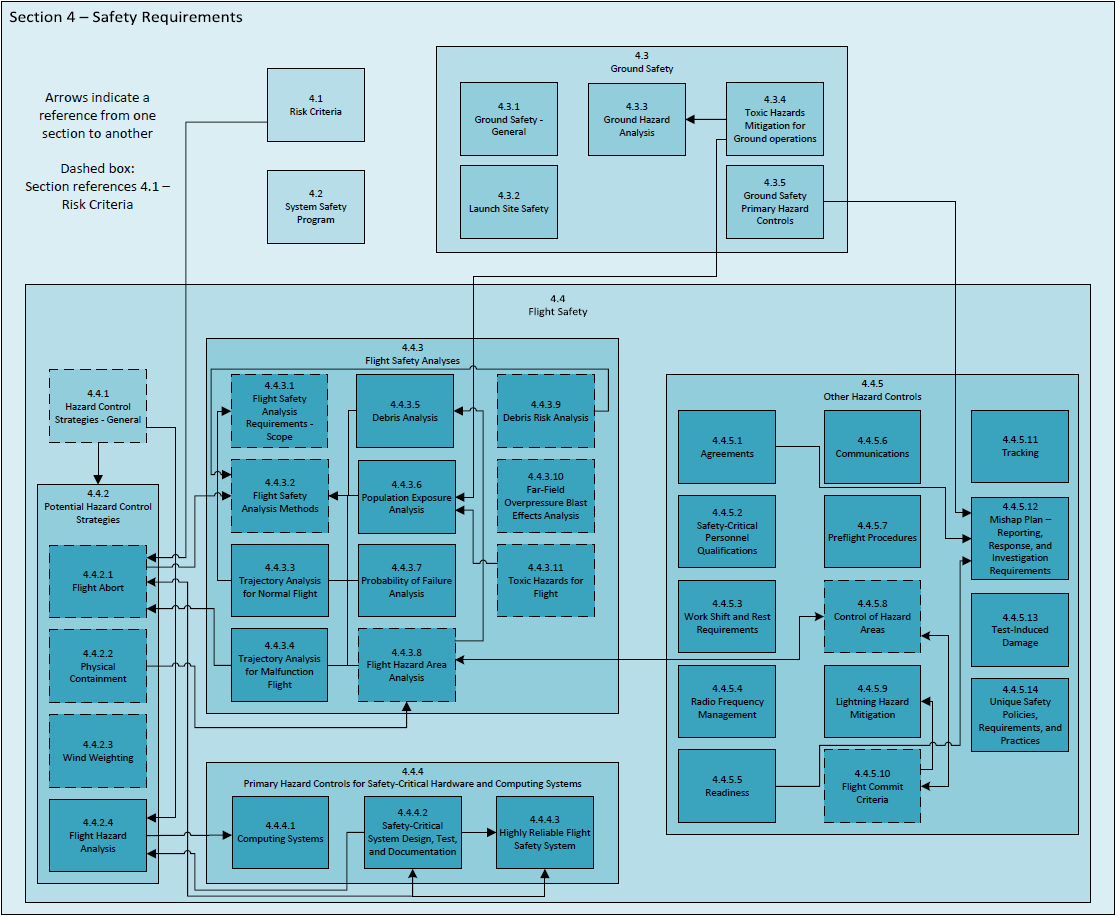
Figure 1 – Safety Requirements References - Overview of safety requirements. Please refer to section 4 of the document.

Figure 2 – Safety Framework - Overview of system safety program requirements. Please refer to section 4.2 of the document.
Table 4 – Launch Risk Criteria
| Collective Risk (Expected Casualty) | ||
|---|---|---|
| Members of the Public |
1 × 10⁻⁴ |
|
| Neighbouring Operations Personnel |
2 × 10⁻⁴ |
|
| Individual Risk (Probability of Casualty) | ||
| Members of the Public |
1 × 10⁻⁶ |
|
| Neighbouring Operations Personnel |
1 × 10⁻⁵ |
|
| Aircraft Risk (Probability of Impact with Debris Capable of Causing Casualty) | ||
| Aircraft Other than Launch Vehicle |
1 × 10⁻⁶ |
|
| Risk to Critical Assets (Probability of Loss) | ||
| Critical Asset |
1 × 10⁻³ |
|
| Critical Payload |
1 × 10⁻⁴ |
|
Table 5 – High Consequence Event Protection Criteria
| Conditional Expected Casualty | ||
|---|---|---|
| People in Uncontrolled Areas |
1 × 10⁻³ |
|
Table 6 – Disposal Safety Criteria
| Controlled Atmospheric Disposal | ||
|---|---|---|
| Collective Risk (Expected Casualty) | ||
| Members of the Public, Excluding Persons in Aircraft |
1 x 10⁻⁴ |
|
| Individual Risk (Probability of Casualty) | ||
| Members of the Public |
1 x 10⁻⁶ |
|
| Aircraft Risk (Probability of Impact with Debris Capable of Causing Casualty) | ||
| Aircraft Other than Launch Vehicle |
1 x 10⁻⁶ |
|
| Uncontrolled Atmospheric Disposal | ||
| Effective Casualty Area for all Surviving Debris |
7 m2 |
|
| or | ||
| Collective Risk (Expected Casualty) to Members of the Public, Excluding Persons in Aircraft |
1 x 10⁻⁴ |
|
Table 7 - Orbital Safety Criteria
| Debris-Generating Explosions (Integrated Probability) | ||
|---|---|---|
| Each Upper Stage | Annex 5.3(a)(1) |
< 1 x 10⁻³ |
| Collision Mitigation Between Launched Objects (Probability of Collision) | ||
| With Objects 10 cm and Larger | Annex 5.4(b) |
< 1 x 10⁻³ |
| Collision Avoidance of Launching Objects with Orbital Objects | ||
| Inhabitable Objects |
probability of collision ≤ 1 × 10⁻⁶ or Ellipsoidal separation distance of 200 km in-track and 50 km cross-track and radially or Spherical separation distance of 200 km |
|
| Active Payloads (Probability of Collision) |
probability of collision ≤ 1 × 10⁻⁵ or Ellipsoidal separation distance of 25 km in-track and 7 km cross-track and radially or Spherical separation distance of 25 km |
|
| Other Known Objects with a Radar Cross Section Greater Than 0.04 m2 |
Probability of collision ≤ 1 x 10⁻⁵ or Spherical separation distance of 2.5 km |
|
| Direct Retrieval | ||
| Time to Complete after Mission Completion |
≤ 5 years (TBC) |
|
| Removal of the Upper Stage and Each of its Components |
Controlled atmospheric disposal according to Annex 5.7(b) or Maneuvering the debris into a disposal orbit according to Annex 5.11 |
|
| Uncontrolled Atmospheric Disposal | ||
| LEO Disposal (Below 2000 km) - For All Surviving Debris | ||
| Orbital Lifetime |
≤ 5 years (TBC) |
|
| Any Surviving Debris |
Effective casualty area < 7 m2 or Expected Casualty < 1 x 10⁻⁴ |
|
| Highly Elliptical Long-Term Disposal | ||
| Orbital Lifetime |
≤ 200 years |
|
| Operational Spacecraft and Debris 10 cm and larger |
Probability of collision < 1 x 10⁻⁴ |
|
| All Surviving Debris |
Effective casualty area < 7 m2 or Expected casualty < 1 x 10⁻⁴ |
|
| Disposal Orbit | ||
| Operational Spacecraft and Debris 10 cm and larger |
Probability of collision < 1 x 10⁻³ for 100 years after disposal |
|
Annex 4 – Accepted Means of Compliance
Accepted Means of Compliance Table
| Section No. | Section Title | Accepted Means of Compliance |
|---|---|---|
|
Risk Criteria |
||
|
System Safety Program |
||
|
Ground Safety - General |
||
|
Launch Site Safety |
TBD |
|
|
Ground Hazard Analysis |
||
|
Toxic Hazards Mitigation for Ground Operations |
||
|
Airborne Toxic Concentration and Duration Thresholds for Toxic Risk Assessment |
Acute Exposure Guideline Level 2 (AEGL-2) Emergency Response Planning Guidelines Level 2 (ERPG-2) or Short-term Public Emergency Guidance Level (SPEGL) TBC |
|
|
Ground Safety Primary Hazard Controls |
||
|
Hazard Control Strategies - General |
||
|
Flight Abort |
||
|
Physical Containment |
FAA AC 450.110-1 Physical Containment as a Hazard Control Strategy |
|
|
Wind Weighting |
FAA legacy regulations 415.109(b)(2)(v), 417.125, 417.201(c), 417.233, and Appendix C to Part 417 |
|
|
Flight Hazard Analysis |
||
|
Flight Safety Analysis Methods |
||
|
Trajectory Analysis for Normal Flight |
||
|
Trajectory Analysis for Malfunction Flight |
FAA AC 450.119-1 High-Fidelity Malfunction Trajectory Analysis [Not yet released] |
|
|
Debris Analysis |
FAA AC 450.115-1B High Fidelity Flight Safety Analysis FAA 450.115-2 Medium Fidelity Flight Safety Analysis [Not yet released] |
|
|
Population Exposure Analysis |
||
|
Probability of Failure Analysis |
||
|
Flight Hazard Area Analysis |
FAA AC 450.115-1B High Fidelity Flight Safety Analysis FAA 450.115-2 Medium Fidelity Flight Safety Analysis [Not yet released] 450.133-1 Airspace and Waterborne Vessel Hazard Analysis [Not yet released] |
|
|
Debris Risk Analysis |
FAA AC 450.115-1B High Fidelity Flight Safety Analysis FAA 450.115-2 Medium Fidelity Flight Safety Analysis [Not yet released] |
|
|
Far-Field Overpressure Blast Effects Analysis |
FAA AC 450.137-1 De Minimis Far-Field Overpressure Blast Effects Analysis |
|
|
Toxic Hazards for Flight |
||
|
Airborne Toxic Concentration and Duration Thresholds for Toxic Risk Assessment |
Acute Exposure Guideline Level 2 (AEGL-2) Emergency Response Planning Guidelines Level 2 (ERPG-2) or Short-term Public Emergency Guidance Level (SPEGL) TBC |
|
|
Computing Systems |
FAA AC 450.141-1A - Computing System Safety Range Commanders Council Standard (RCC) 319-19 Appendix on Mission Data Loads |
|
|
Safety-Critical System Design, Test, and Documentation |
FAA AC 450.143-1 Safety-critical Systems [Not yet released] |
|
|
Highly Reliable Flight Safety System |
Range Commanders Council Standard (RCC) 319-19: Flight Termination Systems Commonality Standard; RCC 324-11: Global Positioning and Inertial Measurements Range Safety Tracking Systems Commonality Standard (for airborne tracking sources); AFSPCI 91-701: Launch and Range Safety Program Policy and Requirements (for flight safety system related ground systems) |
|
|
Agreements |
N/A |
|
|
Safety-Critical Personnel Qualifications |
FAA legacy regulations sections 417.311 and 415.113 Means of Compliance - Medical Capability for Safety-Critical Personnel involved in Commercial Space Launch |
|
|
Work Shift and Rest Requirements |
TBD |
|
|
Radio Frequency Management |
Frequency management plan. A launch operator must implement a plan that:
|
|
|
Readiness |
FAA legacy regulations, section 417.117 |
|
|
Communications |
FAA legacy regulations, section 417.111(k) |
|
|
Preflight Procedures |
FAA legacy regulations, section 417.121 |
|
|
Control Of Hazard Areas |
FAA AC 450.161-1 Control of Hazard Areas (Contact Transport Canada) |
|
|
Lightning Hazard Mitigation |
NASA STD 4010A: Lightning Launch Commit Criteria for Space Flight FAA legacy regulations, Appendix G to Part 417 |
|
|
Flight Commit Criteria |
N/A |
|
|
Tracking |
FAA AC 450.167-1 Tracking for Launch and Re-entry Safety Analysis |
|
|
Mishap Plan- Reporting, Response, and Investigation Requirements |
FAA AC 450.173-1 Mishap Plan - Reporting, Response, and Investigation Requirements |
|
|
Test-Induced Damage |
TBD |
|
|
Unique Safety Policies, Requirements and Practices |
TBD |
|
|
Control of Debris Released During Normal Operations |
TBD |
|
|
Minimizing Debris Generated by Explosions |
TBD |
|
|
Collision Mitigation Between Launched Objects |
TBD |
|
|
Collision Avoidance with Orbital Objects |
||
|
Post-Mission Disposal |
TBD |
|
|
Controlled Atmospheric Disposal |
TBD |
|
|
Heliocentric, Earth-Escape Disposal |
TBD |
|
|
Direct Retrieval |
TBD |
|
|
Uncontrolled Atmospheric Disposal |
TBD |
|
|
Maneuver to a Disposal Orbit |
TBD |
|
|
Real-Time Reporting of Orbital Safety Hazards |
TBD |
Annex 5 – Additional Post-Authorization Conditions - Orbital Safety
Annex 5.1 – Applicability
-
(a) This section establishes the requirements for a launch operator regarding orbital debris mitigation, including collision avoidance analysis, prior to authorized launch operations with a planned altitude greater than 150 kilometers.
-
(b) For each authorization to launch with a planned altitude greater than 150 kilometers, a launch operator must submit:
-
(1) An Orbital debris assessment Plan containing the information required by this section not less than 60 days before the authorized launch, unless Transport Canada agrees to a different time frame;
-
(2) A Collision Avoidance Analysis Worksheet in accordance with Annex 5.5; and
-
(3) A launch operator must send the information required by this section.
-
Annex 5.2 – Control of Debris Released During Normal Operations
A launch operator is encouraged to ensure, for any proposed launch that for all vehicle stages and components related to launch that reach an altitude greater than 150 kilometers, that:
-
(a) The component will not release orbital debris into LEO that will remain in orbit for more than 5 years (TBC), unless otherwise decided by Transport Canada for all planned released orbital debris, the total debris object-time product in LEO must not exceed (TBD) object-years per authorized launch. The total object-time product in LEO is the sum of the orbit dwell time in LEO for all planned released debris objects, excluding the upper stage and any released payloads.
-
(b) The quantity of individual orbital debris items is minimized; where possible, dummy payloads, covers, etc. should be retained with the upper stage.
-
(c) Any orbital debris released into the geosynchronous region must enter an orbit with an apogee that will not remain in the geosynchronous region within 5 years of the release, unless otherwise decided by Transport Canada.
-
(d) Information Requirements. If applicable a launch operator must submit the following information in an Orbital Debris Assessment Plan:
-
(1) A demonstration through environmental qualification and acceptance testing that the system is designed to limit the release of orbital debris; and
-
(2) A statistical analysis, including inputs and assumptions, demonstrating that any orbital debris released will be disposed of within 5 years (TBC), unless otherwise decided by Transport Canada and satisfying the (TBD) object-year requirement.
-
Annex 5.3 – Minimizing Debris Generated by Explosions
-
(a) A launch operator must ensure for any proposed launch that for all vehicle stages or other components that reach an altitude greater than 150 kilometers, except for energy sources that are safety-critical on-orbit:
-
(1) The integrated probability of debris-generating explosions or other fragmentation from the conversion of energy sources (i.e. chemical, pressure, kinetic) of each upper stage is less than 1 × 10⁻³ during operations; and
-
(2) Stored energy is removed by depleting residual propellants, venting any pressurized system, leaving all batteries in a permanent discharge state, and removing any remaining source of stored energy.
-
-
(b) Information Requirements. A launch operator must submit the following information in an Orbital Debris Assessment Plan:
-
(1) Analysis, using commonly accepted engineering and probability assessment methods, showing how the operation meets (a)(1) of this section.
-
(2) Test results or analysis, with 95 percent confidence levels, of the planned end-of-mission passivation procedure that verifies dissipation of all energy sources to levels that will prevent explosion of any launch vehicle component, to show that:
-
(i) All residual propellants contained in the system can be purged or passivated at the end of launch;
-
(ii) All pressurized systems can be purged or passivated; and
-
(iii) All energy storage systems (e.g., batteries or fuel cells) have sufficient structural design to prevent rupture and subsequent explosion.
-
-
Annex 5.4 – Collision Mitigation between Launched Objects
-
(a) Payload Separation. A launch operator must prevent unplanned physical contact between a launch vehicle or any of its components and each payload after payload separation;
-
(b) Collision after the End of Launch. In developing the design and mission profile for an upper stage, the launch operator must limit the probability of collision with objects 10 cm and larger after the end of launch to less than 1 × 10⁻³;
-
(c) Information required., A launch operator must submit the following information in an Orbital debris assessment Plan:
-
(1) Procedure for preventing vehicle and payload collision after payload separation, including any propellant depletion burns and compressed gas releases that minimize the probability of subsequent collisions; and
-
(2) The results of a probability of collision analysis between the upper stage and its components and orbital objects, using commonly accepted engineering and probability assessment methods, meeting (b) of this section.
-
Annex 5.5 – Collision Avoidance with Orbital Objects
-
(a) Criteria. For an orbital or suborbital launch, a launch operator must establish window closures needed to ensure that the launch vehicle, any jettisoned/disposed-of components, and payloads meet the following requirements with respect to orbiting objects, not including any object being launched.
-
(1) For inhabitable objects, one of the following three criteria must be met:
-
(i) The probability of collision between the launching objects and any inhabitable object must not exceed 1 × 10⁻⁶;
-
(ii) The launching objects must maintain an ellipsoidal separation distance of 200 kilometers in-track and 50 kilometers cross-track and radially from the inhabitable object; or
-
(iii) The launching objects must maintain a spherical separation distance of 200 kilometers from the inhabitable object.
-
-
(2) For active payloads, one of the following criteria must be met:
-
(i) The probability of collision between the launching objects and the active payload must not exceed 1 × 10⁻⁵;
-
(ii) The launching objects must maintain an ellipsoidal separation distance of 25 kilometers in-track and 7 kilometers cross-track and radially from the active payload; or
-
(iii) The launching objects must maintain a spherical separation distance of 25 kilometers from the active payload.
-
-
(3) For all other known orbiting objects with a radar cross section greater than 0.04 m2:
-
(i) The probability of collision between the launching objects and any known orbiting objectsmust not exceed 1 × 10⁻⁵; or
-
(ii) The launching objects must maintain a spherical separation distance of 2.5 kilometers
-
-
-
(b) Screening time. A launch operator must ensure the requirements of (a) of this section are met as follows:
-
(1) Through the entire segment of flight of a suborbital launch vehicle above 150 kilometers altitude;
-
(2) For an orbital launch, during ascent from a minimum of 150 kilometers altitude to initial orbital insertion and for a minimum of 3 hours from liftoff;
-
(3) For controlled atmospheric disposal, during descent from initial disposal burn to 150 kilometers altitude; and
-
(4) For maneuver to a disposal orbit, during initial disposal operation until established in a disposal orbit.
-
-
(c) Rendezvous. Planned rendezvous operations that occur within the screening time frame are not considered a violation of collision avoidance if the involved operators have precoordinated the rendezvous or close approach.
-
(d) Analysis. A launch operator must obtain a collision avoidance analysis for each launch from Transport Canada, or another entity agreed to by Transport Canada.
-
(1) A launch operator must use the results of the collision avoidance analysis to establish flight commit criteria for collision avoidance; and
-
(2) The collision avoidance analysis must account for uncertainties including launch vehicle performance and timing, atmospheric changes, variations in drag, and any other factors that affect position and timing of the launch vehicle.
-
-
(e) Timing and information required. A launch operator must prepare a Collision Avoidance Analysis Worksheet for each launch using a standardized format that contains the input data required by Annex 5.5 (f), as follows:
-
(1) Except as specified in (e)(1)(i) of this section, a launch operator must file the input data with an entity identified in (d) of this section and Transport Canada at least 7 days before the first attempt at the flight of a launch vehicle.
-
(i) Launch operators that have never received a launch conjunction assessment from the entity identified in (d) of this section must file the input data at least 15 days in advance.
-
-
(2) A launch operator must obtain a collision avoidance analysis performed by an entity identified in (d) of this section no later than 3 hours before the beginning of a launch window; and
-
(3) If a launch operator needs an updated collision avoidance analysis due to a launch delay, the operator must file the request with the entity identified in (d) of this section and Transport Canada at least 12 hours prior to the beginning of the new launch window.
-
-
(f) Collision Avoidance Analysis Worksheet. The Collision Avoidance Analysis Worksheet must include:
-
(1) Launch information. A launch operator must file the following information
-
(i) Mission name. A mnemonic given to the launch vehicle/payload combination identifying the launch mission distinctly from all others;
-
(ii) Launch location. Launch site location in latitude and longitude;
-
(iii) Launch window. The launch window opening and closing times in Greenwich Mean Time (referred to as ZULU time) and the Julian dates for each scheduled launch attempts including primary and secondary launch dates;
-
(iv) Epoch. The epoch time, in Greenwich Mean Time (GMT), of the expected launch vehicle liftoff time;
-
(v) Segment number. A segment is defined as a launch vehicle stage or payload after the thrusting portion of its flight has ended. This includes the jettison or deployment of any stage or payload. For each segment, a launch operator must determine the orbital parameters;
-
(vi) Orbital parameters. A launch operator must identify the orbital parameters for all objects achieving orbit including the parameters for each segment after thrust ends;
-
(vii) Orbiting objects to evaluate. A launch operator must identify all orbiting object descriptions including object name, length, width, depth, diameter, and mass;
-
(viii) Time of powered flight and sequence of events. The elapsed time in hours, minutes, and seconds, from liftoff to passivation or disposal. The input data must include the time of powered flight for each stage or jettisoned component measured from liftoff; and
-
(ix) Point of contact. The person or office within a launch operator's organization that collects, analyzes, and distributes collision avoidance analysis results.
-
-
(2) Collision avoidance analysis results transmission medium. A launch operator must identify the transmission medium, such as voice or email, for receiving results.
-
(3) Deliverable schedule/need dates. A launch operator must identify the times before flight, referred to as “L-times,” for which the operator requests a collision avoidance analysis. The final collision avoidance analysis must be used to establish flight commit criteria for a launch.
-
(4) Trajectory files. Individual position and velocity trajectory files, including:
-
(i) The position coordinates in the Earth-Fixed Greenwich (EFG) coordinates system measured in kilometres and the EFG velocity components measured in kilometres per second, of each launch vehicle stage or payload starting below (TBC) km through screening time frame;
-
(ii) Radar cross section values for each individual file;
-
(iii) Position covariance, if probability of impact analysis option is desired; and
-
(iv) Separate trajectory files identified by valid window time frames, if launch trajectory changes during launch window.
-
-
(5) Screening. A launch operator must select spherical, ellipsoidal, or collision probability screening as defined in this subsection for determining any conjunction:
-
(i) Spherical screening. Spherical screening centres a sphere on each orbiting object's centre-of-mass to determine any conjunction;
-
(ii) Ellipsoidal screening. Ellipsoidal screening utilizes an impact exclusion ellipsoid of revolution centred on the orbiting object's centre-of-mass to determine any conjunction. An operator must provide input in the UVW coordinate system in kilometres. The operator must provide delta-U measured in the radial-track direction, delta-V measured in the in-track direction, and delta-W measured in the cross-track direction; or
-
(iii) Probability of Collision. Collision probability is calculated using position and velocity information with covariance in position.
-
-
Annex 5.6 – Post-Mission Disposal
-
(a) General. A launch operator is encouraged to dispose of all vehicle stages or jettisoned components in accordance with one of the disposal methods identified in Annex 5.7 through Annex 5.11.
-
(b) Information requirements. If applicable, a launch operator must submit a description of the chosen disposal option in an Orbital debris assessment Plan.
Annex 5.7 – Controlled Atmospheric Disposal
-
(a) Applicability. This section applies to the use of controlled atmospheric disposal of vehicle stages or components by re-entering the atmosphere to meet the post-mission disposal requirement of Annex 5.6.
-
(b) Disposal safety criteria. A launch operator must ensure the upper stage and each of its components re-enters the Earth’s atmosphere within 30 days after mission completion in a controlled manner that:
-
(1) Ensures that the cumulative effective casualty area for all surviving debris will be less than 7 square meters;
-
(2) Targets a broad ocean area; or
-
(3) Meets the risk criteria of 4.1 (c)(1)(iii).
-
-
(c) Notification of planned impacts. For any controlled atmospheric disposal, a launch operator must notify the public of any region of land, sea, or air that contains, with 97 percent probability of containment, all debris resulting from normal flight events capable of causing a casualty.
-
(d) Information requirements. A launch operator must submit a description of the controlled atmospheric disposal in an Orbital debris assessment Plan including:
-
(1) Verification through hardware and software testing or analysis that the system has at least a 90 percent probability of successfully executing the controlled atmospheric disposal as planned;
-
(2) A description of how the system will achieve a controlled atmospheric disposal under nominal and off-nominal conditions; and
-
(3) If not targeting a broad ocean area, the calculated total expected casualty and individual probability of casualty for the proposed operation or the effective casualty area of any surviving debris.
-
Annex 5.8 – Heliocentric, Earth-Escape Disposal
-
(a) Applicability. This section applies to the use of heliocentric, Earth-escape disposal to meet the post-mission disposal requirement of Annex 5.6.
-
(b) General. A launch operator must ensure, within 30 days after mission completion, that the upper stage and each of its components enters a hyperbolic trajectory which no longer orbits Earth.
-
(c) Information requirements. A launch operator must submit a description of the planned heliocentric, Earth-escape disposal in an Orbital debris assessment Plan including:
-
(1) Verification through hardware and software testing or analysis that the system has at least a 90 percent probability of successfully executing the planned heliocentric, Earth-escape disposal; and
-
(2) A description of how the system will achieve a controlled disposal under nominal and off-nominal conditions.
-
Annex 5.9 – Direct Retrieval
-
(a) Applicability. This section applies to the use of direct retrieval to meet the post-mission disposal requirement of Annex 5.6.
-
(b) General. No more than 5 years after completion of the mission, an operator must ensure the removal of the upper stage and each of its components from orbit by either:
-
(1) Performing a controlled atmospheric disposal that meets the disposal safety requirements of Annex 5.7 (b) and (c); or
-
(2) Maneuvering the debris into a disposal orbit in accordance with Annex 5.11.
-
-
(c) Information requirements. An operator must submit a description of the planned direct retrieval in an Orbital debris assessment Plan including:
-
(1) Verification through hardware and software testing or analysis that the system has at least a 90 percent probability of successfully executing the planned direct retrieval; and
-
(2) If performing a controlled atmospheric disposal:
-
(i) A description of how the system will achieve a disposal under nominal effective casualty area of any surviving debris; or
-
-
(3) If maneuvering to a disposal orbit:
-
(i) A description of how the system will achieve and maintain the planned disposal orbit for the required time limit as specified in Annex 5.11 (b) through (d); and
-
(ii) A statistical analysis demonstrating that the probability of collision with operational spacecraft and debris is within the lifetime limit of Annex 5.11 (e).
-
-
Annex 5.10 – Uncontrolled Atmospheric Disposal
-
(a) Applicability. This section applies to the use of uncontrolled atmospheric disposal to meet the post-mission disposal requirement of Annex 5.6.
-
(b) LEO Disposal. For orbits below 2,000 kilometers:
-
(1) A launch operator must leave an upper stage and its components in an orbit where, accounting for mean projections for solar activity and atmospheric drag, the orbital lifetime should be as short as practicable but does not exceed 5 years (TBC) after launch, unless otherwise decided by Transport Canada; and
-
(2) A launch operator must ensure that the cumulative effective casualty area for all surviving debris will be less than 7 square meters, or the expected casualty will be less than 1 x 10⁻⁴.
-
-
(c) Highly elliptical long-term disposal. For highly elliptical MEO (including semi-synchronous Molniya) and highly elliptical GEO orbits (including synchronous Tundra orbits), and other orbits subject to significant eccentricity growth, the operator must maneuver the upper stage to a long-term disposal orbit where orbital resonances will increase the eccentricity for its long-term disposal. In developing this disposal plan, the launch operator must:
-
(1) Limit the orbital lifetime to be as short as practicable, but no more than 200 years after mission completion;
-
(2) Limit the probability of collisions with operational spacecraft and debris 10 cm and larger to less than 1 × 10⁻³ during orbital lifetime; and
-
(3) Ensure that the cumulative effective casualty area for all surviving debris will be less than 7 square meters, or the expected casualty will be less than 1 x 10⁻⁴.
-
-
(d) Information requirements. A launch operator must submit the following information in an Orbital debris assessment Plan:
-
(1) Verification through hardware and software testing or analysis that the system has at least a 90 percent probability of successfully executing the planned disposal option;
-
(2) A list of all materials and quantities which have a higher melting point than aluminum. Any orbital debris assessment based on atmospheric disposal needs to reflect the appropriate melting points.
-
(3) An estimate of the expected casualty or the cumulative effective casualty area for all surviving debris; and
-
(4) A statistical analysis demonstrating compliance with the requirements of Annex 5.10 (b) or (c) to dispose of the debris within the prescribed time limit.
-
Annex 5.11 – Maneuver to a Disposal Orbit
-
(a) Applicability. This section applies to the use of a disposal orbit to meet the post-mission disposal requirement of Annex 5.6.
-
(b) General. Within 30 days after mission completion, a launch operator must place the upper stage and its components either:
-
(1) Between LEO and GEO in accordance with (c) of this section; or
-
(2) Above GEO in accordance with (d) of this section.
-
-
(c) Maneuver to disposal orbit between LEO and GEO. The operator must place the upper stage and its components into either:
-
(1) An eccentric disposal orbit where:
-
(i) Perigee altitude remains above 2,000 kilometers for at least 100 years;
-
(ii) Apogee altitude remains below the geosynchronous region for at least 100 years; and
-
(iii) The time spent by the upper stage between 20,182 +/- 300 kilometers is limited to 5 years (TBC) or less over 200 years, unless otherwise decided by Transport Canada; or
-
-
(2) A near-circular disposal orbit that avoids for at least 100 years:
-
(i) Altitudes 20,182 +/- 300 kilometers;
-
(ii) The geosynchronous region; and
-
(iii) Altitudes less than 2,000 kilometers.
-
-
-
(d) Maneuver to disposal orbit above GEO. The launch operator must place the upper stage and its components into an orbit with a perigee altitude above 36,100 kilometers for a period of at least 100 years after disposal.
-
(e) Probability of Collision. The operator must limit the probability of collisions with operational spacecraft and known/tracked debris 10 cm and larger to less than 1 × 10⁻³ for 100 years after disposal.
-
(f) Information requirements. A launch operator must submit the following information in an Orbital debris assessment Plan:
-
(1) Verification through hardware and software testing or analysis that the system has at least a 90 percent probability of successfully executing the planned disposal option;
-
(2) A description of how the system will achieve and maintain the planned disposal orbit for the required time limit; and
-
(3) Statistical analysis demonstrating compliance with the probability of collision lifetime limit with operational spacecraft and debris, as per Annex 5.11 (e).
-
Annex 5.12 – Real-Time Reporting of Orbital Safety Hazards
-
(a) Applicability. At the detection of any launch activity outside the 3-sigma trajectory provided for collision avoidance or any debris-creating event, or if requested by a cognizant federal department or agency, an operator must immediately provide information to Transport Canada and, if appropriate, to the requesting federal department or agency pertinent to locating and categorizing any orbital objects.
-
(b) The operator must provide the following information to Transport Canada and, if applicable, the requesting federal department or agency:
-
(1) The size and mass of the affected objects;
-
(2) The last known orbital or trajectory information; and
-
(3) Other details as determined by Transport Canada necessary to locate and categorize orbital objects.
-
Annex 6 – Additional Post-Authorization Conditions - General
Annex 6.1 – Responsibility for Aviation Safety, Public Safety and Safety of Property
A launch operator is responsible for taking all reasonable efforts to ensure public safety and safety of property during the conduct of an authorized launch.
Annex 6.2 – Compliance
A launch operator must conduct an approved launch in accordance with representations made in its application for an authorization to launch, and conditions attached to the authorization to launch. A launch operator’s failure to act in accordance with the representations made in the application and the conditions contained in the authorization to launch, may be sufficient basis for the repeal of an authorization to launch.
Annex 6.3 – Compliance Monitoring
For each authorized launch, a launch operator must provide Transport Canada with access to a console for monitoring the progress of the countdown and communication on all channels of the countdown communications network, unless the launch operator has another acceptable means to allow Transport Canada to monitor the launch. A launch operator must also provide Transport Canada with the capability to communicate with the mission director designated by 4.2 (a)(1).
Annex 6.4 – Continuing Accuracy of Launch Application; Application for Modification of Authorization
-
(a) A launch operator is responsible for the continuing accuracy of representations contained in its application for the entire term of the authorization.
-
(b) After a launch authorization has been issued, a launch operator must seek approval from the Minister of Transport for any amendments the launch authorization if:
-
(1) The launch operator proposes to conduct a launch in a manner not authorized by the launch authorization; or
-
(2) Any representation contained in the launch application that is material to the public interest and aviation safety is no longer accurate and complete or does not reflect the launch operator’s procedures governing the actual conduct of a launch. A change is material to the public interest and aviation safety if it alters or affects:
-
(i) The payload;
-
(ii) The type of launch vehicle;
-
(iii) The type or quantity of hazardous material;
-
(iv) The flight trajectory;
-
(v) The launch site; or
-
(vi) Any system, policy, procedure, requirement, criteria, or standard that is safety-critical.
-
-
-
(c) Upon approval of a modification, Transport Canada issues either a written approval to the launch operator or an order amending the authorization to launch if a stated term or condition of the authorization to launch is changed, added, or deleted. Transport Canada may also refuse to amend the authorization, in which case it would be required to issue a notice to the authorization holder.
Annex 6.5 – Preflight Reporting
-
(a) Reporting method. A launch operator must send the information in this section as an email attachment to: tc.commercialspacelaunch-lancementspatialcommercial.tc@tc.gc.ca or via other methods as agreed to by Transport Canada.
-
(b) Mission information. A launch operator must submit to Transport Canada the following mission-specific information no less than 60 days before each mission conducted under the authorization, unless Transport Canada agrees to a different time frame, except when the information was provided in the application:
-
(1) Payload information in accordance with 3.4(e); and
-
(2) Planned mission information, including the vehicle, launch site, planned flight path, staging and impact locations, each payload delivery point, and the location of any disposed launch vehicle stage or component that is deorbited.
-
-
(c) Flight abort and flight safety analysis products. A launch operator must submit to Transport Canada updated flight abort and flight safety analysis products, using methodologies previously approved by Transport Canada, for each mission no less than 30 days before flight, unless Transport Canada agrees to a different time frame.
-
(1) A launch operator is not required to submit the flight abort and flight safety analysis products if:
-
(i) The analysis submitted in the application satisfies all the requirements of this section; or
-
(ii) The launch operator demonstrated during the application process that the analysis does not need to be updated to account for mission-specific factors.
-
-
(2) If a launch operator is required to submit the flight abort and flight safety analysis products, the launch operator:
-
(i) Must account for vehicle-and mission-specific input data;
-
(ii) Must account for potential variations in input data that may affect any analysis product within the final 30 days before flight;
-
(iii) Must submit the analysis products using the same format and organization used in its application; and
-
(iv) May not change an analysis product within the final 30 days before flight unless the launch operator has a process, approved in the authorization, for making a change in that period as part of the launch operator’s flight safety analysis process.
-
-
-
(d) Flight safety system test data. Any launch operator that is required by 4.1(b) to use a flight safety system to protect public safety must submit to Transport Canada, or provide Transport Canada access to, any test reports, in accordance with approved flight safety system test plans, no less than 30 days before flight, unless Transport Canada agrees to a different time frame. These reports must include:
-
(1) A summary of the system, subsystem, and component-level test results, including all test failures and corrective actions implemented;
-
(2) A summary of test results demonstrating sufficient margin to predicted operating environments;
-
(3) A comparison matrix of the actual qualification and acceptance test levels used for each component in each test compared against the predicted flight levels for each environment, including any test tolerances allowed for each test; and
-
(4) A clear identification of any components qualified by similarity analysis or a combination of analysis and test.
-
-
(e) Collision avoidance analysis. A launch operator must submit collision avoidance information to an entity identified by Transport Canada and to Transport Canada in accordance with Annex 5.5 (f).
-
(f) Launch schedule. A launch operator must file a launch schedule that identifies each review, rehearsal, and safety-critical operation. The schedule must be filed and updated in time to allow Transport Canada personnel to participate in the reviews, rehearsals, and safety-critical operations.
Annex 6.6 – Post-Flight Reporting
-
(a) A launch operator must submit to Transport Canada the information in (b) of this section no later than 90 days after a launch unless Transport Canada agrees to a different time frame.
-
(b) A launch operator must send the following information as an email attachment to: tc.commercialspacelaunch-lancementspatialcommercial.tc@tc.gc.ca or via other methods as agreed to by Transport Canada in the launch authorization:
-
(1) Any anomaly that occurred during countdown or flight that is material to the public interest and aviation safety;
-
(2) Any corrective action implemented or to be implemented after the flight due to an anomaly or mishap;
-
(3) The actual trajectory flown by the vehicle, if requested by Transport Canada; and
-
(4) For an unguided suborbital launch vehicle, the actual impact location of all impacting stages and impacting components, if requested by Transport Canada.
-
Annex 6.7 – Registration of Space Objects
-
(a) To assist the Canadian Government in implementing Article IV of the 1975 Convention on Registration of Objects Launched into Outer Space, each launch operator must submit to Transport Canada the information required by (b) of this section for all objects placed in space by a launch, including a launch vehicle and any component parts.
-
(b) For each space object that must be registered in accordance with this section, no later than 30 days following the conduct of an authorized launch, unless otherwise agreed to by Transport Canada, a launch operator must file the following information:
-
(1) Name of space object;
-
(2) The international designator of the space object;
-
(3) Date and location of launch (date and time (in UTC));
-
(4) General function of the space object;
-
(5) Final orbital parameters, including:
-
(i) Nodal period;
-
(ii) Inclination;
-
(iii) Apogee;
-
(iv) Perigee; and
-
-
(6) Owner/Operator of the space object.
-
Annex 6.8 – Records
-
(a) Except as specified in (b) of this section, a launch operator must maintain for 7 years all records, data, and other materials necessary to verify that a launch is conducted in accordance with representations contained in the launch operator’s application, the requirements of this document, and the conditions contained in the launch authorization.
-
(b) For an event that meets any of (a) through (e) or (g) and (h) of the definition of mishap in this document, a launch operator must preserve all records related to the event. Records must be retained until completion of any federal investigation and Transport Canada advises the operator that the records need not be retained. The launch operator must make all records required to be maintained under the regulations available to federal officials for inspection and copying.