Subject: Guidance on Manual Development for Remotely Piloted Aircraft System Operator Certificate (RPOC) Holders
| Issuing Office: | Civil Aviation, Strategy and Emerging Technologies |
|---|---|
| Document No.: | AC 901-002 |
| File Classification No.: | Z 5000-34 U |
| Issue No.: | 02 |
| RDIMS No.: | 20993678-v5 |
| Effective Date: | 2025-11-04 |
Table of contents
- 1.0 Introduction
- 2.0 References and requirements
- 3.0 Background
- 4.0 RPAS operations manual
- 5.0 Maintenance Control Manual
- 6.0 Processes
- 7.0 Information management
- 8.0 Document history
- 9.0 Contact office
- Appendix A - RPAS operations manual template
- 1.0 Preamble
- 2.0 Table of contents
- 3.0 Company organization
- 4.0 RPAS fleet
- 5.0 Approval
- 6.0 Distribution control
- 7.0 Flight operations
- 8.0 Standard operating procedures
- 9.0 Emergency procedures
- 10.0 Operating in vicinity of airport, heliport, DND aerodromes
- 11.0 Operational training and evaluation program
- 12.0 Emergency response plan
- Appendix B - Maintenance Control Manual template
- Appendix C - Processes template
- Appendix D - RPAS process flow
- Appendix E - The Five Whys & Bowtie
1.0 Introduction
(1) This Advisory Circular (AC) contains helpful information and guidance. It does not:
- (a) change regulatory requirements;
- (b) allow deviations from regulatory requirements; or
- (c) set minimum standards.
1.1 Purpose
(1) This document is intended to guide RPAS Operators in establishing and maintaining the RPAS operations manual, maintenance control manual, and the Processes which are to support a Remotely Piloted Aircraft System Operator Certificate (RPOC) application and complex SFOC application. (ref CAR 901.214(3)(c), 901.217 (1), 901.218, 901.219, and 901.221.)
(2) The RPOC holders that are mentioned in this document are the RPAS operators defined in CAR part IX.
(3) This guidance is still under development and will be updated in the next version.
1.2 Applicability
(1) This document applies to RPOC and complex SFOC applicants and holders.
1.3 Description of changes
(1) Not applicable.
2.0 References and requirements
2.1 Reference documents
(1) We encourage you to use the following reference materials in conjunction with this document:
- (a) Aeronautics Act (R.S.C., 1985, c. A-2)
- (b) Canadian Aviation Regulations (SOR/96-433) Part IX — Remotely Piloted Aircraft Systems
- (c) Canadian Aviation Regulations (SOR/96-433) 901.220 — Person Responsible for RPAS Maintenance
- (d) Canadian Aviation Regulations (SOR/96-433) 901.221 — Maintenance Control Manual (MCM)
- (e) Part I, Subpart 7 of the Canadian Aviation Regulations (CARs) — Safety Management System Requirements
- (f) Advisory Circular (AC) No. 922-001 – Remotely Piloted Aircraft Systems Safety Assurance
- (g) Standard 922 of the CARs — RPAS Safety Assurance
- (h) Standard 923 of the CARs — Vision-Based detection and avoidance (DAA)
- (i) Advisory Circular (AC) QUA-001 — Quality Assurance
- (j) Advisory Circular (AC) 700-065 — Potential for High Energy Fires Due to Lithium-Ion Batteries
- (k) Advisory Circular (AC) 107-001— Guidance on Safety Management Systems Development;
- (l) Advisory Circular (AC) SUR-002 – Root Cause Analysis and Corrective Action for TCCA Findings
- (m) Advisory Circular (AC) 903-001 — Remotely Piloted Aircraft Systems Operational Risk Assessment
- (n) Advisory Circular (AC) 901-001 — Remotely Piloted Aircraft Systems Safety Assurance Declaration and Pre-Validated Declaration Processes
- (o) Transport Canada Publication (TP) 12863 — Human Factors for Aviation - Basic Handbook
- (p) Transport Canada Publication (TP) 13158 — Decision Making/Human Factors
- (q) Transport Canada Publication (TP) 14371 – Transport Canada Aeronautical Information Manual (TC AIM)
- (r) Transport Canada Publication (TP) 14408 – Transport Canada Civil Aviation Guidelines: Maintenance Control Manuals
- (s) Transport Canada Publication (TP) 14308 – Transport Canada Civil Aviation Guidelines: Maintenance Policy Manuals
- (t) Transport Canada Publication (TP) 14343 – Implementation Procedures Guide for Air Operators and Approved Maintenance Organizations
- (u) Transport Canada Publication (TP) 15263 – Knowledge Requirements for Pilots of Remotely Piloted Aircraft Systems 250 g up to and including 25 kg, Operating within Visual Line-of-Sight (VLOS)
- (v) Transport Canada Publication (TP) 15530 — Knowledge Requirements for Pilots of Remotely Piloted Aircraft Systems Operated Beyond Visual-Line-of-Sight (BVLOS)
- (w) Transport Canada Staff Instruction SUR-001 – Surveillance Procedures. Available at: RDIMS 15074633
- (x) RPAS 101 – A general knowledge guide for Canadian RPAS pilots
- (y) Federal Aviation Administration (FAA) AC 43.13-2B — Acceptable Methods, Techniques, and Practices Aircraft Alterations
- (z) ASTM WK88720 — Standard Guide for AAM Maintenance Technician Qualification
- (aa) ASTM F3600 — Unmanned Aircraft System Maintenance Technician Qualification
- (bb) ASTM F3245 — Standard Guide for Aircraft Electronics Technician Personnel Certification
- (cc) ISO 23665 - Uncrewed aircraft systems — Training for personnel involved in UAS operations
- (dd) International Civil Aviation Organization (ICAO) Annex 19 — Safety Management
- (ee) International Civil Aviation Organization (ICAO) Doc 9859 — Safety Management Manual
2.2 Cancelled documents
(1) Not applicable.
2.3 Definitions and abbreviations
(1) We use the following definitions in this document, if not defined in a specific section of the manual:
- (a) Mandatory actions: The inspection, repair, or modification of a remotely piloted aircraft system that the manufacturer of the system considers necessary to prevent an unsafe or potentially unsafe condition.
- (b) Proactive: Proactive is having the ability to detect the potential for something to go wrong, analyze that potential and see if it is worth applying some mitigations.
- (c) Process: A group of interrelated or interacting activities that convert inputs into outputs.
- (d) Risk: The assessed likelihood and severity of a hazard’s consequence(s) or outcome(s).
- (e) Risk Assessment: The overall process of risk identification, risk analysis and risk evaluation.
- (f) Risk Management: A systematic approach to setting the best course of action under uncertainty, by identifying, understanding, assessing, monitoring, acting on, and communicating risk issues.
- (g) Reactive: The objective of having reactive processes is to minimize the impact of the unfortunate. Learn from the incident/accident and not repeat that mistake again.
(2) The following abbreviations are used in this document:
- (a) AC: Advisory Circular
- (b) AE: Accountable Executive
- (c) ASTM: American Society for Testing and Materials International
- (d) CARs: Canadian Aviation Regulations
- (e) ConOps: Concept of Operations
- (f) FD: Flight Dispatcher
- (g) FM: Fleet Manager
- (h) FOO: Flight Operation Officer
- (i) ICAO: International Civil Aviation Organization
- (j) INRAT: Instrument Type Rating Examination
- (k) MCM: Maintenance Control Manual
- (l) OEM: Original Equipment Manufacturer
- (m) OPC: Operational Proficiency Check
- (n) PPL: Private Pilot Licence
- (o) PRM: Person Responsible for Maintenance
- (p) R&D: Research and Development
- (q) RPA: Remotely Piloted Aircraft
- (r) RPAS: Remotely Piloted Aircraft System
- (s) RPOC: RPAS Operator Certificate
- (t) SFOC: Special Flight Operations Certificate
- (u) SCS: safety-compromising state
3.0 Background
(1) What is this guide for and who should use it?
- (a) This document is intended to guide RPAS Operators in establishing and maintaining the RPAS operations manual, maintenance control manual, and the Processes which are to support an RPOC application and complex SFOC application. (ref CAR 901.214(3)(c), 901.217 (1), 901.218(1), 901.219(1), and 901.221(1).)
- (b) In order to hold an RPOC, in most cases, if it was a person, the person must be a Canadian citizen or permanent resident; if it was a corporation, the corporation must be incorporated under Canadian laws. For any commercial air services, the person must be Canadian, ref CAR 901.213.
- (c) RPAS Operators are to establish and maintain their own manuals which reflect their organizational and operational reality. RPAS Operators are expected to assess risk, make logical decisions on how to proceed when hazards/risks are identified, and assess the effectiveness of their safety program on a continuous basis.
- (d) TC may verify that declared framework exists, and during any oversight, certification, or inspection activities as per SI SUR-001, to confirm that the system is effective and compliant with CAR 901.214, 901.217 and 901.218, 901.219, and 901.221.
(2) Compliance and beyond
- (a) Transport Canada works to make our transportation system safe, secure, efficient, and environmentally responsible. This guide is intended to assist RPAS Operators in developing manuals and processes to support safe and efficient RPAS operations.
- (b) Well-developed processes from the aviation industry help ensure regulatory compliance and can be leveraged to develop best practices which will ensure safety and add value to the organization. RPAS Operators are recommended to focus on the output of the program, and the structure of the processes. Appendix A with examples is provided to guide RPAS operators to develop their processes.
(3) Organizational complexity
- (a) The manuals and processes need to be appropriate for the nature and complexity of operations and be compliant with the CARs Part IX.
- (b) Lower-risk operations (low altitude, low population density, and uncontrolled airspace) require less robust processes. As the risk levels increase the expectations of a more robust processes increase as well. Higher-risk operations (over 150KGs, high altitude, high population density, in controlled airspace with complex/multiple aircraft, and remote operating centers) usually require processes to meet the elevated risk and robustness levels, but not necessarily complex processes if straightforward processes ensure safe operations.
- (c) Most organization’s appropriate process complexity level will fall somewhere in between these two. To conclude, getting started, RPAS Operators should be researching and receiving training on safety programs, processes, and determining where safety intersects with their market positioning.
4.0 RPAS operations manual
4.1 Content of the manual
(1) As provided for in the regulations, an RPAS operator shall establish and maintain an RPAS operations manual that consists of the information in CAR 901.217(1).
(2) The RPAS operations manual consists of instructions and methods necessary to enable operations personnel, including pilots and Visual Observers, to perform their duties. Operations manual is distributed to all operations personnel.
(3) If there is a change in any aspect of an RPAS operator’s operations, the RPAS operator shall amend its operations manual.
(4) The RPAS operator shall provide a copy of its RPAS operations manual to the Minister on request. CAR 901.217(2)(3)(4)
(5) A template of an RPAS operations manual is provided in Appendix A.
5.0 Maintenance Control Manual
5.1 Content of the manual
(1) As provided for in the regulations, an RPAS operator shall establish and maintain a maintenance control manual that consists of the information in CAR 901.221(1).
(2) The Maintenance Control Manual (MCM) consists of instructions and methods necessary to enable every person authorized by RPAS operator to perform servicing, maintenance, and preflight and post-flight inspections of the RPAS operator’s remotely piloted aircraft systems that are consistent with any instructions from the manufacturer to perform their duties safely. The MCM is distributed to all maintenance personnel, and the third-party maintenance provider should have a copy of the manual and the procedure.
(3) The MCM must be consistent with the manufacturer’s instructions, and it's acceptable and encouraged to exceed manufacturer’s maintenance recommendations when deemed necessary by RPAS Operator. An MCM that exceeds the manufacturer instructions is considered to be consistent with those instructions mentioned above.
(4) RPAS operator shall ensure that the MCM is made available to the Minister on request outlined in CAR 901.221(2).
(5) A template of a MCM is provided in Appendix B.
6.0 Processes
6.1 Processes content
(1) Processes must be under the control of the AE. As provided for in the regulations, an RPAS operator shall establish and maintain processes that cover the requirements in CAR 901.218.
(2) Processes consist of instructions and methods for setting goals for safety; identifying, reporting, analyzing and mitigating hazards and risks; taking effective corrective actions; and safekeeping of such records.
(3) A template of processes is provided in Appendix C.
(4) Examples of process tools are provided in Appendix D.
7.0 Information management
(1) Should RPAS operator be the owner of the RPAS, the RPAS operator shall keep the records in accordance with CAR 901.48.
8.0 Document history
(1) Not applicable.
9.0 Contact office
For more information, please contact:
Transport Canada Strategy and Emerging Technology team (SET) (AARV)
6th Floor, Place de Ville, Tower C
330 Sparks Street, Ottawa, ON, K1A 0N8
E-mail: TC.RPASInfo-InfoRPAS.TC@tc.gc.ca
Suggestions for amendment to this document are invited, and should be submitted via the contact information above.
Document approved by
Ryan Coates
Director, Strategy and Emerging Technology team (SET) Civil Aviation
Transport Canada Civil Aviation
Appendix A - RPAS operations manual template
1.0 Preamble
This RPAS operations manual is issued under the authority of (Insert Company Name).
This Manual contains instructions and information necessary to enable operations personnel, including pilots, to perform their duties safely, and contains the information required by CAR 901.217.
This manual shall be distributed to all operations personnel, who shall familiarize themselves with its contents, and apply the detailed procedures.
Where reference in this Manual is made to the “Company” and/or the “Operator”, it shall be taken to mean (Insert Company Name)
Principle address
Type of operation (e.g., VLOS, BVLOS)
2.0 Table of contents
Identify sections and locations which may or may not include the sections listed below.
3.0 Company organization
(1) Provide the company management structure (e.g., organizational chart)

(2) Provide a list of personnel with their respective titles, qualifications, duties, and responsibilities. When defining the roles and responsibilities, reference applicable regulations. This list is a best practice and not exhaustive.
- (a) Accountable Executive
- (b) Chief Pilot
- (c) Training Pilot
- (d) Pilot in Command
- (e) Maintenance Manager
- (f) Visual Observer
4.0 RPAS fleet
|
RPAS Model |
Registration |
|---|---|
|
|
|
|
|
|
|
|
|
Note: operators may include this information in an appendix for ease of updating with larger fleets.
5.0 Approval
(1) This section is not intended for TC’s approval, but rather an example template for RPAS Operators. It specifies the operator’s intended means of compliance with the CAR. Failure to comply with the procedures outlined in this RPAS operations manual may result in the findings of non-compliance. In case of conflict between this manual and the CAR, the CAR will prevail. Inquiries regarding this document should be directed to the AE.
Signed
Accountable Executive
Date
6.0 Distribution control
(1) As per this example template, should any changes made to the manual, it is recommended to sign off electronically, for example, in Section 5. The AE shall ensure a current electronic copy is available online to all personnel.
7.0 Flight operations
(1) Detail how your company/organization will conduct flight operations. The following criteria should be considered. Article (2) is not an exhaustive list.
(2) Reference AC 903-001 for description of the Operational Safety Objectives (OSO) as best practices and Concept of Operations (ConOps) for intended operations. For example: OSO 1 covers Flight Operations.
- (a) Weather minima: State your weather limits for flight operations. (OSO 8,11,14,21 and OSO 23)
- (b) Checklists and flight manuals
- (c) Hazardous Conditions: State your tolerance for flight operations in hazardous conditions (e.g. high winds, icing conditions, etc.)
- (d) High Density Altitudes
- (e) Crew Qualifications and currency (CAR 901.24(c))
- (i) The Operator should have a means of tracking the flight crew qualifications, ensure the currency, and that those records are carried during operations according to the regulations. (ref CAR 901.57, 901.66)
- (ii) Recency requirements (CAR 901.93, or as necessary)
- (f) Flight and Duty Time Limitations
- (i) Fitness of the Crew (CAR 901.19)
- (A) Drugs and Alcohol
- (B) Fatigue
- (ii) Duty time
- (i) Fitness of the Crew (CAR 901.19)
- (g) Flight planning (CAR 901.24), site survey (CAR 901.27), other pre-flight requirements (CAR 901.28)
- (i) Airspace
- (A) Uncontrolled airspace (CAR 901.14, 901.27 and 901.73)
- (B) Controlled airspace (CAR 901.14, 901.27 and 901.71)
- (C) Restricted (CAR 901.14, 901.27)
- (ii) Operational Volume (CAR 901.27)
- (iii) Site Survey (CAR 901.27)
- (A) Flight geography, NOTAMs
- (B) Route, altitude, maximum altitude (CAR 901.25)
- (C) The proximity of other aircraft operations (CAR 901.27c)
- (D) Location of airports and aerodromes, and air routes
- (E) Location of ground-based obstacles
- (F) Forecast weather and environmental considerations (OSO 18)
- (I) Small RPA, VLOS
- (II) Medium RPA, 4 miles or less (CAR 901.34)
- (III) BVLOS
- (IV) Night (CAR 901.38/9)
- (G) VLOS distances from persons not involved (CAR 901.26)
- (I) Small
- (II) Medium
- (H) Operational area population densities
- (I) Maximum operational distance of RPA (CAR 901.28c)
- (J) Other criteria to be specified by the company.
- (iv) Fuel/Energy Requirements (CAR 901.28)
- (A) state the minimum reserve battery power (time or %), or
- (B) fuel (time or %) to conduct flight operations
- (v) Crew Competencies (CAR 901.28)
- (A) FPV & VO’s (CAR 901.38)
- (B) Multiple RPAs (CAR 901.40)
- (vi) Serviceability of RPAS (CAR 901.29): As per RPAS MCM (Reference Appendix B)
- (vii) Pilot and Crew Acceptance of RPAS (CAR 901.29)
- (viii) Airframe, Ground Control Station & Limitations
- (A) Declaration level of the RPA (CAR 901.194)
- (B) Anti-collision lights (CAR 901.39)
- (C) Limitations of the RPA (CAR 901.34) and operation: Temperature, wind, and precipitation
- (D) Icing (CAR 901.35)
- (E) Multiple RPAs (CAR 901.40b)
- (F) Payloads (CAR 901.43), weight and balance (CAR 901.31), etc.
- (ix) Communications (OSO 9,15,22)
- (x) SFOCs (CAR 903.01(a)-(i))
- (xi) Transportation of Dangerous Goods
- (A) TDG Company Policy and Procedures to be in accordance with that Act.
- (B) Procedures
- (i) Airspace
(3) As best practices, a fleet manager (FM) may be designated to execute specific functions. In several jurisdiction operational control may be delegated to a flight operation officer (FOO) or a flight dispatcher (FD). Ref ISO 23665.
8.0 Standard operating procedures
(1) Ref CAR 901.23 and OSO 8,11,14,21 and OSO 9,15,22 for this section.
8.1 Normal procedures
(1) Provide documentation of all procedures (e.g., site survey, pre-flight, etc.) conducted during normal flying operations. (CAR 901.23(a))
(2) All publications applicable to the operation will be present and available (CAR 901.30)
(3) Pre-flight (CAR 901.28, OSO 7)
(4) Visual Observers (CAR 901.20)
(5) First Person View (FPV) (CAR 901.38)
(6) RPA flight path management, automation (OSO 9,15,22)
(7) PIC (CAR 901.21)
(8) Right of Way (CAR 901.17)
(9) Take-off, Launch, Approach, Landing, Recovery (CAR 901.33)
(10) Cruise (CAR 901.28(a))
(11) Other as defined necessary by the operator.
(12) Handovers may include: (Ref CAR 901.42 and OSO 9,15,22)
- (a) Transferring control to another PIC
- (b) Transferring RPA to another GCS and PIC.
8.2 Contingency procedures
(1) Dealing with abnormal situations (OSO 8,11,14,21), e.g., low battery, air traffic conflict, deteriorating weather conditions, alternate landing area
(2) Automatic Protection of the flight envelope from Human Error (OSO 18)
9.0 Emergency procedures
(1) Ref CAR 901.23 (b) and OSO 8,11,14,21 and OSO 9,15,22 for this section.
(2) RPAS Operator should have emergency procedures, and the equipment required for these procedures (i.e., fire extinguisher for fuel fires, sand for battery fire, etc.).
(3) RPAS Operator should keep emergency point of contact handy (i.e., 911, Emergency Services, ANSP / NAV CANADA numbers, frequencies, Transport Safety Board of Canada, etc.,). It should indicate which number(s) needs to be called in what order, during what scenario(s), and what may trigger those scenarios.
(4) Procedures include but are not limited to:
- (a) Provide documentation of all emergency procedures supplied by the RPA manufacturer and required by the operator.
- (b) Control station failure
- (c) Equipment failure
- (i) GPS
- (ii) power sources
- (iii) GCS failure
- (iv) loss of RPA control (car 901.32)
- (d) Failure of the RPA
- (i) fuel/energy power loss
- (ii) engine/prop failure
- (iii) bird strike or collision of RPA
- (e) Loss of C2 (CAR 901.32 and OSO 9,15,22)
- (i) direct c2 (radio)
- (ii) satellite or cell or repeater or internet
- (iii) fly away, (OSO 18) flight envelope
- (f) Inadvertent entry into controlled or restricted airspace (901.15)
- (g) Loss of RPA in VLOS
- (h) Pilot/Crew incapacitation
- (i) psychological factors
- (ii) physical injury
- (iii) interference with GCS
- (iv) sickness
- (v) other factors as defined by the operator.
- (i) Flight termination (CAR 901.44)
- (j) Loss of separation with crewed aviation (CAR 901.23 and 901.33)
- (i) horizontal
- (ii) vertical
- (k) Other interference, i.e., electromagnetic environment (EME)
10.0 Operating in vicinity of airport, heliport, DND aerodromes
(1) Establish procedure for operating near airport or heliport (CAR 901.47 and 901.73)
- (a) Flight planning software, Drone Site Selection Tool (DSST), etc. (CAR 901.47)
11.0 Operational training and evaluation program
(1) The AE shall ensure that all RPA pilots and crew members receive initial and recurrent training. This training is to be documented, recorded, and periodically reviewed as per CAR 901.56 and 901.65. Training programs and crew competency should be validated.
(2) A training program is not limited to but should at least include:
- (a) RPA crew qualifications: Advanced/Complex, if necessary, Private Pilot Licence (PPL)/ Instrument Type Rating Examination (INRAT), RPA type training
- (b) Visual Observer (VO) Training
- (c) RPAS technical knowledge
- (i) limitations of the RPA and adherence to the Original Equipment Manufacturer (OEM) (CAR 901.31)
- (d) human factors (OSO 8,11,14,21 and OSO 9,15,22)
- (i) initial and recurrent
- (ii) renewed every three years.
- (e) meteorology
- (f) flight planning (OSO 8,11,14,21)
- (i) Altitude, Sheltered Ops, A-typical, etc. (CAR 901.25)
- (g) pre and post flight inspections (Ref RPAS MCM)
- (h) normal procedures
- (i) contingency procedures (To cope with abnormal situations) (Ref section 8.0 of this guide)
- (j) emergency procedures (To cope with emergency situations) (Ref section 8.0 of this guide)
- (k) logbook/technical records
- (i) operators are required to keep records of each flight and the name of the pilot. (CAR 901.48, 901.223, and 103.04)
- (ii) pilot training records (CAR 901.57 and 901.64)
- (iii) company flight reviewers (CAR 901.175)
- (iv) occurrence reporting procedures (OSO 8,11,14,21)
- (l) incidents and accidents (CAR 901.49)
- (m) safety training (Ref Appendix C)
- (n) transportation of dangerous goods (OSO 9,15,22)
- (o) maintenance training/record keeping (OSO 3, ref APPENDIX B)
(3) RPAS operators must evaluate the effectiveness of their training annually in accordance with CAR 901.219(2)(c). For example, once training is complete, RPAS operator is to ensure the pilots and crew members are qualified by having them demonstrate their competency through written exams and an Operational Proficiency Check (OPC), or equivalent.
(4) The RPAS operator should appoint person(s) who have the skills and competencies to conduct the related evaluations. The RPAS operator should also ensure that measures have been taken to maintain objectivity in its process. It is recommended that the operators review its evaluation processes annually according to the company processes to maintain and improve integrality.
12.0 Emergency response plan
(1) Ref Appendix C of this manual for this section.
Appendix B - Maintenance Control Manual template
1.0 Introduction
(1) As per CAR 901.221, all RPAS operators shall establish and maintain a MCM. RPAS operator shall ensure that the MCM is made available to the Minister on request.
(2) An operator that uses a third-party maintenance provider should have a documented agreement with them in order to plan, oversee the maintenance and meet the requirements in CAR 901.220 (2). The maintenance provider should have a documented manual and procedure so that in such situation the RPAS operator can meet the requirements on documentation and record keeping outlined in CAR 901.200 and 901.221.
2.0 Administration
(1) Ref CAR 901.221 for this section.
2.1 Manual distribution
(1) Each person who is assigned maintenance responsibilities should have access to a copy of this manual including: Air operator, maintenance department, and/or third-party maintenance provider(s), Transport Canada.
2.2 Amendments
(1) Ref CAR 901.221 for this section. Should there be any changes related to the organization, the company’s maintenance policy manual needs to be updated accordingly. RPAS Operators are recommended to evaluate amendments and update the manual accordingly, such as manufacturer’s amendments which will impact the operations, i.e.,TC regulatory changes, organizational changes, and change of maintenance scope.
3.0 RPAS Operator and/or maintenance organization
(1) Ref CAR 901.194 (1) & (2), 901.200 (c), 901.214 (1)(d), and 901.220 for this section.
(2) RPAS Operator and/or maintenance organization description
Name(s) of the RPAS Operator and/or Maintenance Organization:
Note: If the RPAS Operator is the provider of the maintenance, the information should match the RPOC application. (hereafter referred to as “the operator or maintenance provider”)
Address:
Phone: E-mail:
Person Responsible for Maintenance:
Address: Phone: E-mail:
Location of principal base:
Sublocation(s):
Type of operation:
(i.e., R&D, aerial work, commercial air service, flight training, and other.)
4.0 RPAS maintenance organization description
(1) This section applies to both the RPAS Operators who carry out in-house maintenance activities, and the RPAS Operators that contract maintenance activities to a third-party maintenance provider, and/or Maintenance Organization. In both cases, the RPAS Operators take sole responsibility for meeting the requirement in their application/declarations. In the former case, the RPOC holder has the responsibility to establish and maintain their own maintenance procedures in their MCM; in the latter, RPAS Operators must ensure that the third-party maintenance provider meet the service agreement between them.
(2) Table 1 is recommended for RPAS Operators to use to indicate their maintenance capability. RPAS Operator can list and categorize the RPAS that they maintain by category, class, system/component, and propulsion.
| RPAS CategoryFootnote 1 | Approved Maintenance Product(s) by RPAS Manufacturer |
|
250 g-25 kg (Small) |
|
|
25 kg-150 kg (Medium) |
|
|
Above 150 kg (Large) |
|
|
Declared |
|
|
Pre-Validated Declaration (PVD) |
|
|
Certified |
|
|
RPAS ClassFootnote 2 Specialty |
|
|
Multicopter |
|
|
Helicopter |
|
|
Fixed wing |
|
|
Lighter-than-air/balloon/airship |
|
|
Other (i.e., Pilot-optional) |
|
|
Systems/Component |
|
|
DAA, i.e., Radar; EO/IR; acoustic |
|
|
C2, i.e., direct radio; cellular; satellite; laser |
|
|
Propulsion |
|
|
Liquid fuel i.e., piston/turbine |
|
|
Electric |
|
|
Hybrid |
|
|
Hydrogen |
Note: operators may include this information in an appendix for ease of updating.
(5) Examples of how this would apply to RPAS: (multicopter, ornithopter, rotorcraft, fixed wing, multi-mode, VTOL, fixed wing, variable geometry, lighter than air)
5.0 Maintenance policies and procedure
(1) Ref CAR 901.29, 901.51, and 901.200 for this section. The manufacturers shall provide the maintenance programs in accordance with CAR 901.200. The RPAS Operator and/or third-party maintenance provider is allowed to maintain their systems in excess of the manufacturer’s recommendations but shall at the minimum meet the manufacturer’s maintenance requirements through this manual.
5.1 Maintenance program
(1) Ref CAR 901.200 (a)(i)(ii)(ix), 901.196 (h)(ii)(iii)(iv), and 901.29 (a)(b)(c)(d) for this section. Maintenance programs are made by the manufacturer unless the operator has a more stringent standard. A maintenance program will include instructions related to the maintenance of systems, a separate program which enables system readiness, and instruction for assembly, adjustment, and modification for the system. RPAS operators may reference CAR 706.08, Standard 726.08 regarding MCM requirements, and CAR 573.10, Standard 573.10 regarding MPM requirements as best practice to mirror traditional aviation practice as these regulations and standards have been proven efficient and safe over time.
(2) Additionally, the remotely piloted aircraft system shall be maintained, and all mandatory actions have been completed, in accordance with the instructions of the manufacturer or of the person who has made a declaration. Test flights following maintenance are to be performed in accordance with manufacturer’s requirement, component providers instruction and RPAS Operator’s internal procedures. The results of the test flights should be recorded in the RPAS records.
5.2 Maintenance planning and control
(1) Ref CAR 901. 216(d), 901.221(c), and 901.48 for this section. Maintenance planning and control should follow the latest MCM in accordance with 901.221(c). RPAS Operators should build processes and/or procedures to track and ensure the RPAS is serviceable before flight. The Person Responsible for Maintenance (PRM) is responsible for determining whether the maintenance is completed internally or by a third-party maintenance provider.
(2) For maintenance of individual RPAS components, the PRM needs to follow section 4.7 of this manual for maintaining a record for maintenance of components.
(3) If there are no recommendations from the manufacturer, or if a modified RPAS that the declaration is no longer valid due to the incorporation of a modification, maintenance actions should be taken referencing recognized aviation standards (i.e., FAA AC 43.13-2B, AC922-001 section 8 and Appendix A & D).
(4) When necessary, the PRM should assess the operational environmental factors, and identify any additional maintenance and procedures that may be necessary to ensure continued serviceability (i.e. spraying, painting, cold weather, corrosive environment, high lift cycles that exceed the manufactures recommendations).
5.3 Maintenance arrangements and/or contracts
(1) As best practices, RPAS Operators should establish maintenance agreement or contract with third-party maintenance providers should services be required.
(2) All RPAS maintenance shall be performed by to the highest standard available and shall be authorized in writing in the form of a contract, purchase order or letter. Each request for maintenance shall specify that the work be performed and certified in the RPAS record in accordance with the applicable requirements of the CAR and in accordance with this document. Your contract may include but are not limited to examples in Appendix A. Regular Maintenance Arrangements. Any changes to maintenance agreement and contract should be under RPAS Operator’s internal version control and quality control.
(3) In the case of unplanned maintenance away from main base, the pilot should notify the PRM immediately. The PRM may request maintenance to be performed by a third-party maintenance provider using a work order or similar document to detail the work request.
5.4 Reportable service difficulty reporting, deferral and rectification
(1) Ref CAR 901.197, 901.198, 901.199, 901.223(1)(a)(b)(c)(d), 901.96(e)(i)(ii)(iii), 901.51, and 901.29 for this section.
- (a) Reportable service difficulty reporting
The RPAS Operator should address service difficulty and determine whether it can be deferred or has to be rectified and reported to the person who made the RPOC declaration. If a reportable service difficulty is identified with an RPAS or integrated equipment the system an entry will be made in the RPAS record and the system will be inspected before the next flight to ensure it is servable to carry the intended operation. To support the determination of serviceability of the system, the pilot should contact the PRM and/or maintenance organization and/or the RPAS manufacturer. - (b) Deferral
If the determination is made that the RPAS is serviceable for the intended operation prior to rectifying, a deferral will be recorded in the RPAS record and identify any resulting operational limitations. Deferral length will be based on the manufacturer recommendation or PRM’s instruction. - (c) Rectification
Maintenance action(s) to rectify a reportable service difficulty will be entered in the RPAS record, and may include inspection actions and results, repair(s), parts replacement(s), and testing required to ensure RPAS serviceability.
(2) If a service difficulty or malfunction could affect the safety of the RPAS or cause injury to a person, the operator will be reporting a reportable service difficulty in accordance with the manufacturer’s SDR process. (See AC 901-001 for information on manufacturer SDR process)
5.5 Elementary work
(1) Elementary work for an RPA includes routine or preventative tasks. As best practices, elementary work should be recorded in the RPAS record.
(2) The PRM is responsible for controlling authorizations to persons who may perform elementary work (ref CAR 901.220 (1) & (2)). No person shall perform any elementary work without first being trained and authorized in accordance with the training program as detailed in this manual. Elementary work should be included in the RPAS Operator training syllabus. The crew members shall receive a record of training upon completion (ref section 5.3 of this guidance and CAR 901.217(1)(e) & 901.219). Elementary work shall be performed in accordance with the methods and procedures recommended by the RPAS manufacturer. The Maintenance Manager shall maintain an individually itemized list of tasks the operator may accomplish, and those persons authorized to perform them.
(3) Elementary work examples:
- (a) servicing, i.e., battery charging, oil, fuel replenishment
- (b) cleaning i.e., for the purpose of operations or inspection
- (c) regular assembly and disassembly
- (d) propeller replacement
- (e) battery swapping
- (f) other battery maintenance
- (g) payload swapping
- (h) firmware updating
- (i) attachment and removal of accessories (i.e., payload)
5.6 RPAs reportable service difficulty
(1) Ref CAR 901.51 for this section. A reportable service difficulty is any failure, malfunction of, or defect in, an RPA that, if not corrected, is likely to affect the safety of an aircraft or a person. Upon discovery of such an issue, the operator shall submit information in accordance with the process established by the manufacture of the declared RPAS in accordance with 901.197.
5.7 RPAS technical records
(1) Ref CAR 901.223(1)(e), 901.48(1)(b) for this section. Every owner of a remotely piloted aircraft system shall keep a record containing the particulars of any mandatory action and any other maintenance action, modification or repair performed on the system, and/or weight and balance calculations (as applicable), including the following:
- (a) the names of the persons who performed them,
- (b) the dates they were undertaken,
- (c) in the case of a modification, the manufacturer, model and a description of the part or equipment installed to modify the system, and
- (d) if applicable, any instructions provided to complete the work.
(2) The above-mentioned records must be maintained for two (2) years.
6.0 Maintenance personnel
(1) Ref CAR 901.221, 901.220, 901.227, 901.217(1)(b), 901.223(2)(a), 901.223(1)(c),106.02, 106.03 for this section.
6.1 Organizational chart
(1) An RPAS operator shall appoint a person responsible for RPAS maintenance and establish and maintain a MCM in accordance with CAR 901.220 and 901.221. Additional suggested positions include but are not limited to: Accountable Executive, Quality Manager, thirdy-party/In-house Maintenance Manager, and Maintenance Technician. Depending on the complexity of the organization, this chart may be tailored to best suit the organizational needs.
(2) Records should be maintained adequately for appointments and changes.
Figure 1 Typical Organizational Chart
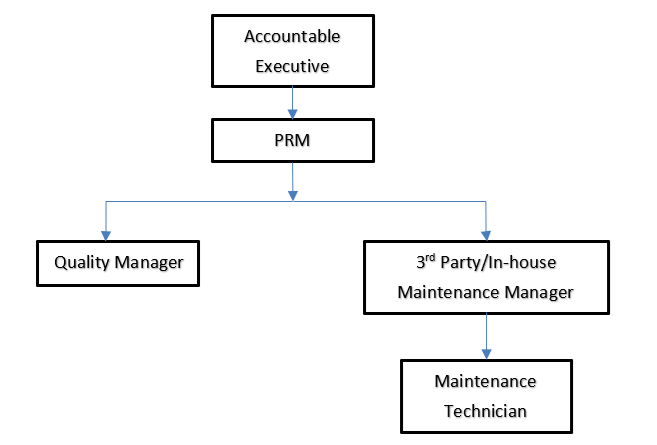
Figure 1 Typical Organizational Chart - Text version
A typical organizational chart starts with the PRM, the second level has the Quality Manager and 3rd party or in-house Maintenance Manager. Under the Maintenance Manager, the third level is the Maintenance Technician.
6.2 Maintenance personnel
(1) Ref CAR 106.02, 106.03 for this section.
(2) Accountable Executive (AE) Qualifications and Responsibilities
- (a) Qualifications: The AE should have control of the financial and human resources that are necessary for the activities and operations authorized under the certificate.
- (b) Suggested skillsets of an AE may include but are not limited to experience in the RPAS or crewed aviation industry, aviation certifications including pilot license, Aircraft Maintenance Engineer (AME) license, RPA pilot certificate, knowledge of the CARs, quality/safety management system experience, and business skills.
- (c) It is the responsibility of the AE to appoint a qualified Person Responsible for Maintenance (PRM) to be responsible for the maintenance control program under 901.220.
(3) PRM’s Qualifications and Responsibilities
- (a) Qualifications: in cases where the AE is not the PRM, the PRM must be appointed by the AE.
- (b) Suggested skillsets of a PRM may include but are not limited to; PRM experience in the RPAS or crewed aviation industry, aviation certifications including pilot license, AME license, RPA pilot certificate, knowledge of the CAR, quality/safety management system experience, and business skills.
- (c) Responsibilities: plan and oversee the maintenance of the RPAS operator’s remotely piloted aircraft systems, coordinate maintenance arrangements with third-party maintenance providers, ensure the third-party service provider meets the maintenance agreement between them, ensure that maintenance is carried out in accordance with the RPAS operator’s MCM, remove from service any RPAS that are unsafe, or that do not comply with the CAR, and in cases of temporary absence, assign their duties to another person.
(4) Maintenance Staff’s Qualifications and Responsibilities
- (a) The qualifications and responsibilities of maintenance staff should be defined based on organizational and operational requirements. i.e., manufacturer’s RPAS Qualifications (RPA-Q) training, pilot license, AME licence, RPA pilot certificate, and knowledge of the CAR.
6.3 Training
(1) Ref CAR 901.223(1)(c), 901.223(2)(a) for this section. RPAS Operator shall establish and maintain a training program that is designed to ensure that each person who receives training acquires the competence to perform their assigned duties. The training program shall include but are not limited to indoctrination training, initial and annual training, training on the models of RPAS operated by the operator, RPAS elementary work and ground handling, and training on the procedures set out in the RPAS maintenance manual.
(2) The PRM should build a process for assessing the competency of each person who receives training and for evaluating the effectiveness of the training program.
(3) The indoctrination training could include training on the RPAS maintenance manual, applicable sections of the CAR, and other training pertinent to performing duties.
(4) The initial training could include manufacturer maintenance type training on specific models of RPAS being operated, human factors, quality, or any other training relevant to the performance of the maintenance duties at the company.
(5) The annual training would be on any changes to the MCM, changes to the regulations, changes to the manufacturer or customer requirements, or any other subject matter that the company has deemed important, i.e., SMS, QA.
(6) Details of the tasks authorized, and the training undertaken by each employee shall be recorded on the individual’s personnel record. The PRM shall retain all personnel records for at least 12 months after the last entry and keep training records accessible for inspection purposes. Each employee will receive a record of training on completion of the training.
|
Subject |
Training Hours |
Date |
PRM Signature for Training Completion |
|---|---|---|---|
|
Indoctrination Training |
|
|
|
|
Initial Training |
|
|
|
|
Annual Training |
|
|
|
|
Other (i.e., OJT, QA) |
|
|
|
(7) Depending on the complexity of the operations, some other best practices listed here could be developed.
- (a) Regulatory Compliance: Ensuring that the company complies with all relevant aviation regulations, including those related to maintenance, safety, and airworthiness.
- (b) Safety Management: Overseeing the development and implementation of a robust safety management system (SMS) to promote a culture of safety within the organization.
- (c) Quality Assurance: Establishing and maintaining a quality assurance program to ensure that all maintenance activities meet the highest standards of quality and airworthiness.
- (d) Operational Oversight: Providing oversight of all maintenance operations, including scheduling, resource allocation, and maintenance procedures.
- (e) Budget Management: Managing the maintenance department budget, including forecasting, monitoring expenditures, and implementing cost-saving measures.
- (f) Stakeholder Communication: Serving as the primary point of contact for regulatory authorities, customers, and other stakeholders on maintenance-related matters.
- (g) Risk Management: Identifying and managing risks related to maintenance operations, including developing and implementing risk mitigation strategies.
- (h) Training and Development: Ensuring that maintenance personnel receive the necessary training and development to perform their duties safely and effectively.
- (i) Continuous Improvement: Driving continuous improvement initiatives to enhance the efficiency, quality, and safety of maintenance operations.
- (j) Emergency Response: Developing and implementing emergency response plans to address maintenance-related emergencies effectively.
7.0 Maintenance resources
(1) This section provides best practices to help RPAS operators succeed in developing their manuals.
7.1 Facilities
(1) Facilities should be suitable for the type of maintenance performed. Please reference manufacturer’s recommendation for maintenance location (i.e. field/bench/hangar) and environmental requirements. Factors could be taken into consideration including moisture, temperature, static-free, lighting, non-corrosive, cleanliness, air quality, regional occupational requirements etc.
7.2 Tools and equipment
(1) Maintenance should be accomplished using manufacturer recommended tools and equipment for maintenance procedures. Where tools are made locally, the maintainer should follow the manufacturer recommendations where available.
7.3 Precision tools
(1) Precision tools such as oscilloscope, multimeter, torque measurement tools etc. should be maintained, calibrated, and tested for accuracy in accordance with manufacturers’ recommendation. The PRM should keep a list of all calibrated tools including due dates, calibration intervals, methods of identifying each tool, i.e., serial number and certification documentation.
7.4 Technical and regulatory publications
(1) As per CAR 901.220(2), the PRM is responsible for overseeing the maintenance. He or she should ensure that the updated technical and regulatory publications are available to all maintenance personnel. Updated manufacturers’ publications should be referenced with diligence before maintenance tasks are carried out including firmware and software versions.
(2) Some firmware/software updates may be part of standard practices where can be done automatically, or manually by the PIC or maintenance technicians; others may require personnel to be trained to do in a particular way according to the manufacturers’ requirement.
8.0 Stores procedures
(1) As best practices, ref AC 700-065 for this section. Any parts held for elementary work and servicing shall be under the control of the PRM. Fuels, oils, lubricants, batteries storage and cleaning materials shall be kept in closed fireproof containers, clearly marked with contents. No fluids shall be dispensed from any unmarked container.
(2) Maintenance operations away from the facility should follow the standard practices and ensure that the equivalent safeguards are in place.
8.1 Purchasing, receiving, and distribution
(1) RPAS parts are recommended to be sourced from RPAS manufacture approved suppliers. Non-manufacturer parts should be identified prior to use. RPAS Operators should verify parts received are consistent with their part numbers (or equivalent) and in a serviceable condition. It is recommended that RPAS Operators and/or maintenance organization(s) establish internal parts labelling and tracking procedures for maintenance and distribution.
8.2 Hazardous material storage/transportation/disposal
(1) Maintenance providers should reference manufacturer’s instructions and recommendations. Maintenance providers should consider the storage conditions such as: temperature, moisture, risk of fire, and energy levels. Reference AC 700-065 for dangerous goods guidance for lithium-ion batteries. For fuel/oil, consider contamination and shelf life. Disposal of hazardous material such as fuel/oil, batteries should follow municipal guidelines.
8.3 Quarantine stores
(1) Depending on the type of RPAS fleet and the scale of operations, the maintenance operator should have part quarantine policy and control systems in place to ensure airworthiness requirements are met.
(2) Quarantine is used to store unserviceable parts, or those involved in an incident/ accident, until such time where they can be sent to be repaired or disposed of to eliminate the possibility that an unserviceable part is installed on RPAS.
(3) It is recommended that RPAS Operators using correct tagging, keeping unserviceable parts, warranty return, and spares separate, such as in a lockable cabinet, or other designated quarantine areas.
9.0 Quality Assurance (QA) program
(1) An AE is responsible for the QA program. The AE should ensure that the PRM has all the resources necessary so that the maintenance policies and procedures are effective and continue to comply with the regulatory requirements.
(2) The QA program reviews the entire maintenance control system. The PRM shall continually evaluate the effectiveness of the maintenance control system, by establishing checklists, which shall consider maintenance procedures, operational and environmental conditions, organizational structure, maintenance schedules, record keeping, and etc. to ensure continued compliance with the pertinent Canadian Aviation Regulations. Where deficiencies are discovered, they shall be recorded along with a copy of the checklist.
(3) This evaluation, which may be done in conjunction with the RPAS operator and/or manufacturer(s) and/or approved maintenance organization(s) and shall consist of a review of all technical activities of the organization (all items in RPAS Operator’s MCM manual should be covered under the QA program). The evaluation shall include an assessment of all deficiencies reported during the period.
(4) The PRM shall develop corrective actions which include short- and long-term actions to rectify known deficiencies. A follow-up review should be conducted in due course to ensure the corrective actions are effective. Where the deficiencies relate to the performance of maintenance, details of the deficiencies shall be communicated to the RPAS operator and/or approved maintenance organization(s)’s approved repair facility concerned, for input into the QA system and communicated with maintenance personnel.
(5) A record will be kept of all evaluations, corrective and follow-up actions including any decisions taken which should be documented and records maintained for two (2) years.
(6) For more details regarding QA, please reference CAR 901.218(1)(e) & (2) and AC QUA-001.
Appendix C - Processes template
(1) As provided for in the regulations, an RPAS operator shall establish and maintain Processes that cover the requirements in CAR 901.218.
(2) The following summary presents the main steps when developing safety processes.
- (a) Gap analysis, i.e., identify what safety processes are currently in place, and shortcomings between what is in place and what is needed to ensure safe operations;
- (b) Design and rollout, i.e., plan and communicate the processes, engage personnel with appropriate skills;
- (c) Measure and improve, i.e., gather feedback, measure performance, continuously improve your processes. For establishing the structure of your processes, please ref CAR 107.03 as best practices.
(3) Note: An example of process flow is provided in Appendix D.
1.0 Safety policy
(1) The safety policy forms the basis for the entire processes. It establishes an overall sense of direction, states the commitment to safety and sets the principles of action for the organization. It can be less robust, but should establish a clear, high-level direction, and be consistent with the AE’s outlook on safety. Ref CAR106.02(1)(a) and 901.218 (2).
- (a) The AE and the management team support may include:
- (i) Be accountable for the processes;
- (ii) Allocate both time and financial resources;
- (iii) Drive the development of a positive safety culture; and
- (iv) Have a written safety policy approved by the AE.
- (b) A safety policy may include:
- (i) Promotion internally by the AE;
- (ii) Communication to all employees; and
- (iii) Implementation at all levels within the organization.
- (c) A safety policy may be subject to management review.
2.0 Safety reporting
(1) A safety reporting policy gives all stakeholders a clear understanding of your organization’s values related to reporting safety-related information. This encourages a healthy reporting culture.
(2) Small RPAS Operators can start with processes of reporting hazards and safety events. Complex operations are recommended to add elements such as the promotion of the reporting system and of a non-punitive reporting structure. It is important to build such reporting system so that nobody fears reprimand when mistakes are made, the cultural buy-in will begin and the system will start to mature.
3.0 Roles and responsibilities
(1) The Accountable Executive
- (a) The AE is the person accountable for compliance with the regulations and the processes effectiveness. Ref CAR 901.218 (2)
- (b) The AE is the appointed individual in the RPOC application by the RPAS operator under section CAR 106.02.
- (c) The selection of the AE should ensure the selected person has the knowledge and qualification. As best practices, ref TP 14343 Appendix D and E.
4.0 Communication
(1) It is important that all stakeholders involved with the organization are aware of the processes which must be effectively communicated. As such, communication channels should exist between internal staff, TC, industry associations, manufacturers, and clients by a suitable medium, such as: emails, announcements etc. Effective communication encourages all personnel to participate in the processes and builds a positive safety culture as the operations grow.
5.0 Safety planning
(1) Safety Strategy. The first thing an organization needs to do is decide where it intends to be in terms of safety, by articulating its Strategy. Is the goal to meet the minimum possible standards or to develop an extremely robust safety program? Or does it lie somewhere in the middle? TC expects an honest, truthful position for a safety program. It is up to the organization to determine where it is, and where it wants to be.
Examples:
- (a) “Meeting minimum” strategy is not recommended for complex operations and may be more suitable to stick with the most basic in uncontrolled airspace.
- (b) “Above minimum” strategy is recommended to consider the appropriateness of missions and reduce risk as low as possible, many missions should be declined, and at a very minimum a good record of the acceptance of missions is kept.
- (c) “Meeting high” strategy is leveraged to determine the risk vs reward and when medium to high-risk operations take place a very thorough analysis takes place to determine the appropriateness of continuing med-high risk operations are. The determination of the strategy is critical before the system is developed. One of the leading causes and contributing factors of process failure has been organizations that develop processes that look good on paper but do not align with the organization's market positioning. The processes are often developed and showcased, but operations go on as they had before. Hence, it is critical that what the organization intends to do with its RPAS aligns with the processes it intends to implement.
(2) Objectives are statements of desired outcomes that describe what the organization plans to accomplish to improve safety. They can be broad statements that provide the overall context for what your safety plan is trying to accomplish. You should develop your safety objectives based on the areas of highest safety risk within your organization, i.e. they reflect your organization’s safety priorities. Ref CAR 901.218 (1)(a)(b)
(3) Goals are outcomes you want to achieve, while an objective is a specific and measurable action that can be reached in a short amount of time, often related to a goal.
Examples:
- (a) Safety objective :
- (i) to have fewer c2 failures next quarter
- (b) Goals:
- (i) to make sure every c2 failure is 100% reported
- (ii) to train all pilots on C2 interference sources
- (iii) add possible C2 interference sources in all site assessments
6.0 Performance measurement
(1) It is a well-known saying that “if it is not being measured it won’t improve”. Measuring the success of the Risk Management and continuous improvement is therefore a must. Measurables also aid in determining if the processes are effective. An organization must measure the goals and objectives Ref CAR 901.218 (1)(a), such as using Safety Performance Indicators (SPI).
(2) SPIs are used to measure achievement of safety goals. Ref CAR 901.218 (1)(a). Similar to priorities, objectives, and goals, SPIs are subject to change as the organization grows.
(3) For smaller operators, it is recommended to produce a series of your own measurables that clearly demonstrate the organization is on the path you have chosen. By going through the process of your own, it is more likely that your processes can satisfy your organization’s needs. It is advised to include data from industry organizations and associations, related industries, regulatory bodies, and safety boards due to the limited data you gather. Ref 901.218 (1)(a).
(4) For larger operators, it is advised to conduct trend analysis to look at changes over a given time. This will help determine what actions you must take to maintain and/or improve safety. Trend analysis is used while assessing the SPIs and before taking proactive actions, i.e., graphing data over time and plotting SPI measurements by month, year, occurrence type, incident leading causes and contributing factors etc. If you recognize negative trends, you may need to look further to proactively prevent incidents/accidents from happening.
(5) Examples of SPI:
- (a) number of hazards identified this year vs. previous years;
- (b) number of organizational personnel who receive safety related training;
- (c) value of damage to organization property this year vs. previous years.
(6) Please refer to ICAO Doc 9859 for more information on safety performance measuring and monitoring.
7.0 Management review of processes
(1) The purpose of reviewing the processes is to evaluate how effective they are for continuous improvements in its aviation safety performance. Ref CAR 901.218 (1)(c). Your organizational structure will determine who participates in these reviews. As a minimum, it requires the participation of the AE. The AE appointed by the RPAS Operator under CAR 106.02(1)(a) is ultimately accountable for the results. Ref CAR 901.218 (2).
(2) The review process of a small operator could be simple, but the AE must be aware of the safety performance. In a complex organization, a more formalized review that is accepted by the AE is expected.
(3) The review must be logical to your organization and processes should be suitable and effective based on relevant data. The review periods are up to the organization. These reviews are typically conducted annually, or more frequently if there are significant changes or risks.
(4) RPAS Operators are recommended to review the following:
- (a) safety objective achievement progress;
- (b) activities to verify that employees understand the processes and their role and responsibilities within it;
- (c) hazard investigation and analysis;
- (d) internal feedback analysis and results;
- (e) corrective and preventive action(s) status;
- (f) training program effectiveness;
- (g) OPC process;
- (h) keeping apprised of recent technology trends and best practices across the organization.
(5) According to CAR 901.218 (1)(c), the RPAS operator shall evaluate the effectiveness of the measures taken. A review of these areas should determine how well the processes are performing and what measures you must take to improve them. It is also suggested to take corrective actions if any measures taken are ineffective and to document the results.
8.0 Documentation
8.1 Identification and maintenance of applicable regulations
(1) An organization should establish and implement a process to ensure it identifies all regulatory requirements that apply, and periodically review this process. This will help ensure all staff understand their regulatory responsibilities. For example:
- (a) Aeronautics Act
- (b) Transportation of Dangerous Goods Act
- (c) CARs and standards
(2) It is recommended to document the review to demonstrate regulatory compliance.
8.2 Processes documentation
(1) The processes documentation should be a living document that reflects the current goals, structure, and procedures. Organizational charts, job descriptions and other descriptive written material can be used to delineate the system of authority and responsibility within the organization to ensure safe operations. Processes are recommended to clearly outline who does what, when, where, how, and be specific to your organization.
(2) There are two types of records:
- (a) description of processes policies, processes, and procedures;
- (b) records or outputs from these processes, which may include risk assessment, root cause analysis, training reports, and corrective action logs.
(3) For small RPAS operators, the formatting of documents could be flexible. It is recommended to develop a control process to ensure record storage, retention, and disposition. Suggest storing safety records and output for at least two years, or two years after the accident/incident whichever is longer.
9.0 Safety oversight
(1) The processes must include internally reporting and analyzing hazards, incidents and accidents and taking corrective actions to prevent their recurrence. Ref CAR 901.218 (1)(d) for this section.
9.1 Reactive/proactive safety reporting
(1) Safety Reporting
- (a) A safety reporting system can help identify underlying issues that have the potential to negatively affect aviation safety. Safety reporting can be either:
- (i) reactive (safety event that has happened within your organization); or
- (ii) proactive (potentially unsafe situation within your organization is identified as a hazard).
- (b) Once reported, the information can be used to identify safety risks and trends for taking appropriate action(s). Ref CAR 901.218 (1)(b)(d) for this section.
- (i) It is important have everyone actively participate. This is easiest when reporting process is simple, accessible, and relevant.
- (ii) Encourage reporting of “minor” safety events, such as near misses, to prevent future incidents/accidents.
- (iii) It is important to build a non-punitive reporting system for reporting hazards, incidents, and accidents. The ability to report confidentially may be helpful. Feedback is also important. Suggest having follow-up with the reporter that the report has been received, investigated, and acted upon.
- (iv) Documentation is crucial to maintain reactive/proactive reports. The key is to collect the information consistently and use it to improve safety within your organization.
- (v) Exceptions to the non-punitive reporting include grounds for disciplinary action could be negligence; willful or intentional disregard of regulations or procedures; criminal intent; use of illicit substances; and intentional non-reporting of incidents/accidents, etc.
(2) Hazard Identification
- (a) Defined by the ICAO, A hazard is a condition or object that can cause or contribute to an aircraft incident or accident. Identifying hazards is vital in proactively managing risk within the organization. Operators are required to internally report, analyze hazards, and take preventive corrective actions Ref CAR 901.218 (1)(b) for this section.
- (b) There are many ways to identify hazards, such as:
- (i) brainstorming
- (ii) trend analysis
- (iii) safety reports
- (iv) other mechanism examples can be found in ICAO Doc 9859
- (c) The promotion of good reporting within the organization will help motivate individuals to actively report hazards and risks that they may see.
- (d) A hazard registry is a viable method of documenting hazards. The register should be an active record and it is particularly important whenever planning a change.
(3) Management of Change
- (a) RPAS Operators are recommended to develop processes to identify potential changes to the organization, operation that would potentially impact induce hazard and/or risk into the system.
- (b) Common changes could be:
- (i) organizational changes (i.e. new owner, the departure of experienced pilots, organizational restructuring)
- (ii) operational changes (i.e. new type of drone)
- (iii) physical changes (i.e. new base, aerodrome layout changes)
- (c) Suggest conducting an assessment for each identified hazard. For instance, introducing a new type of drone may require an assessment of: SFOC application, training requirements, maintenance arrangements, changes to existing operational manuals or the development of new ones etc.
- (d) Review the processes and remember a change within the organization may impact your emergency preparedness.
9.2 Risk management
(1) Preliminary investigation of reported hazards, incident/accident, change management should be conducted to identify the likelihood and severity of the risks.
(2) Since it is not possible to eliminate all sources of risk from your operations, you must accept some level of risk. It is important that the organization clearly articulates the risk position. It is okay for an RPAS Operator to carry out high risk activities if they can demonstrate they meet, or exceed the regulations, and are appropriately managing the risk. One of the misconceptions is that all risks must be mitigated to a low level. It is up to the AE to determine where this threshold lies, and what approvals may be necessary to accept each level of risk defined within your organization. More about risk tolerability can be found in ICAO Doc 9859 section 2.14 Safety Risk.
(3) There are three main components to an effective risk management process;
- (a) Risk identification
- (b) Rating of risks
- (c) Risk mitigation
(4) Note: AC 903-001 has been developed to provide guidance for manufacturers and operators to develop or operate RPAS for operations under CAR 903.01 which require a risk assessment for a Special Flight Operations Certificate (SFOC). For operating risk TC will use AC 903-001 to determine the efficacy of the organizations risk program. Ref CAR 901.218 (1)(b) and AC 903-001 for this section.
(5) Steps
- (a) Risk identification
- (i) It is critical to understand the difference between a hazard and a risk. According to ICAO, Hazard categories are used to identify and classify objects or conditions that cause or have the potential to cause aviation accidents or incidents. A risk is the anticipated effect the hazard may have on the operation in the future.
- (ii) Documenting this process helps you understand the scenario to determine the overall risk by assessing the likelihood and severity.
- (b) Rating risk
- (i) Likelihood: Likelihood is a measure of the chance of a safety consequence or outcome will occur.
- (ii) Severity: Severity is the extent of harm that might reasonably occur as a consequence or outcome of the identified hazard.
- (iii) Level of Risk: It is the combined impact of both likelihood and severity using a risk matrix.
- (iv) It is recommended to customize the risk acceptability matrix and risk acceptance determination tools to reflect an organization’s needs and risk tolerance. The example below is a Risk Acceptability Matrix which includes three levels of risk, i.e. High, Moderate, and Minimum. Similar matrix can be found in ICAO Doc 9859 section 2.14 Safety Risk.
|
Severity |
Accident |
Moderate |
High |
High |
|---|---|---|---|---|
|
Incident |
Moderate |
Moderate |
High |
|
|
Negligible |
Minimum |
Minimum |
Moderate |
|
|
Unlikely |
Possible |
Likely |
||
|
Likelihood |
||||
Table 3 Risk Acceptability Matrix (3X3) - Text version
The Matrix includes the likelihood for the X axis and Severity as the Y axis. Likelihood has Unlikely, Possible and Likely. Severity has Negligible, Incident and Accident. Unlikely and Negligible intercept and become Minimum risk. Possible and Negligible intercept and become Minimum risk. Likely and Incident intercept as High risk. Likely and Accident intercept as High risk. Possible and Accident intercept as High risk. The rest of the interceptions are Moderate risks. Minimum risk is green, Moderate risk is orange and High risk is red in color.
- (v) To manage the risks, the risk acceptance scale and required actions should define at what risk level mitigations are required. Information on risk tolerability can be found in ICAO Doc 9859 section 2.15 Safety Risk Management. Where the level of risk is unacceptable, RPAS Operator should establish a structure to make informed decisions.
- (c) Risk mitigation
- (i) Mitigation measures reduce the likelihood of the risk occurring, the severity of the consequences should it occur, or both likelihood and severity, and ultimately reduce the risk to a lower, acceptable level.
- (ii) After assessing the risk, there should be a report including the results and the assigned individual(s) who will determine corrective/preventative action(s). Ref CAR 901.218 (1)(b)(d)
- (iii) Preplanned actions should be considered for any risk based on its severity. For example:
- (A) A risk assessed as red, an operator may decide to not proceed;
- (B) A risk assessed as orange, management approval is required to proceed;
- (C) A risk assessed as green, operations may proceed.
- (iv) There may be residual and secondary risks. Residual risk is the remaining risk after the planned response. Secondary risks are new hazards introduced due to mitigation measures. For larger operators, it may be necessary to build processes to control these two types of risks. More information can be found in ICAO Doc 9859 Chapter 5 Safety Management Systems.
9.3 Mitigation and corrective actions
(1) Operators need to implement any corrective or risk mitigation action(s) to address the causes and contributing factors(s) identified in the previous risk processes. Safety reports require investigation to determine root cause(s) and contributing factors. Using this method will help identify what caused the problem and allows to develop effective corrective actions. Ref CAR 901.218 (1)(d). 5 WHYs and Bowtie are examples of tools used for developing mitigation and corrective actions. 5 WHY is an easy tool to complete without statistical analysis. By repeatedly asking the question “Why”, you can peel away the layers of symptoms which can lead to the root cause of a problem. A "Bowtie" diagram may be used to analyze and demonstrate causal relationships in high-risk scenarios. It provides effective visual depiction of hazard components and identification of critical risk controls. See APPENDIX E.
(2) This process should include the level of investigation, mitigation, and corrective actions to prevent recurrence. Ref AC SUR-002. Investigation documentation should include procedures to:
- (a) Determine cause(s) and contributing factors;
- (b) Develop and implement corrective or preventative actions; and
- (c) Evaluate corrective/preventative actions to make sure they are effective in preventing recurrence.
(3) Corrective and preventative actions can include:
- (a) Immediate - to be implemented immediately (less than a week)
- (b) short term - to be implemented within 30 days
- (c) long term - to be implemented within 90 days or longer depending on the complexity of the action (e.g., financial, resources, multifaceted actions etc.)
- (d) follow up - CAR 901.218 (1)(c) requires RPAS Operators evaluating the effectiveness of measures taken to mitigate or remove risks. If ineffective, actions must be taken to evaluate and correct any issues.
(4) Sometimes it is beneficial to group similar hazards and safety events and analyze/investigate them together.
(5) The corrective or risk mitigation action(s) are to be added to the safety report.
10.0 Safety training
(1) To meet processes expectations and/or regulatory requirements, as best practices, all employees should demonstrate the appropriate levels of competency to perform assigned duties. Ref CAR 107.03(d) for best practices.
(2) All staff require training to understand what their safety-related responsibilities are, and it is recommended to incorporate safety indoctrination training upon employment, followed by periodic refresher and update training.
(3) Staff should be encouraged to participate in safety-related training events and/or delivering them.
(4) Some examples of safety related training include:
- (a) safety concepts and principles
- (b) organizational policies, processes, and procedures
- (c) human factors
- (d) emergency preparedness and response training
- (e) application of operational procedures (normal, contingency and emergency procedures, flight planning, pre-flight and post-flight inspections)
- (f) communication
- (g) RPA flight path management, automation
- (h) leadership, teamwork, and self-management
- (i) problem solving and decision-making
- (j) situational awareness
- (k) workload management
- (l) coordination and handover
- (m) Crew Resource Management (CRM)
(5) As best practices, a documented process should be in place to identify training requirements for each position, a list of staff requiring training, and a record of when refresher and update training take place.
(6) Safety-related training may be focusing on different topics or presented in numerous formats. Some examples of safety training include regular briefings or facilitated workshops where employees can discuss hazards, safety issues and established mitigations. Make safety-related information i.e., manuals, pamphlets, posters, videos, online resources readily available.
(7) Suggest making safety education part of an organizational safety culture.
11.0 Emergency preparedness
(1) It is recommended to have Emergency Response Plan (ERP) for operations, maintenance, and any other departments within your organization for an emergency event. According to ICAO, an ERP is a comprehensive, operational-level document outlining specific roles, set of actions and timeframes to respond to unexpected situations, disruptions or potential disruptions. It helps you proactively manage a possible significant risk, respond, and reduce the impact, should it occur.
(2) Things to consider while developing an emergency response plan may include:
- (a) making it appropriate to organization’s size, complexity, and scope of operations
- (b) steps and procedures: transition from normal to emergency operations
- (c) communication process, i.e., emergency call list
- (d) roles and responsibilities in the event of an emergency
- (e) documentation process
- (f) return to normal process
(3) Such processes should be distributed to all employees and make sure all key personnel with defined roles understand it. These individuals also require training in the associated processes and procedures.
(4) Suggest establishing step-by-step procedures, completing drills or desktop exercises, and evaluating to identify weaknesses and the effectiveness of the plan. Make changes of the processes if needed. Drills and exercises should be practiced as if they were real.
(5) For larger operators, it is recommended to incorporate in your process to communicate and coordinate your emergency processes with stakeholders, i.e., emergency services, contractors. These processes and procedures are living documents and require regular exercise/review.
Appendix D - RPAS process flow
(1) Note: This template is only used to guide RPAS Operators on establishing and maintaining their own processes. Follow the steps of the process and ask yourself questions which help building your own processes. Questions should start with “ops history”, an analysis of the past performances, current situation, then meeting with the AE, the crew to plan for “next year”.
(2) Description of the organization:
- (a) Larger operators with more than 5 RPAS;
- (b) Operators that had prior incidents/accidents due to low battery or connectivity loss;
- (c) Operators have the intention for more complex operations, or the operator is going through change management.
| Process Flow | Ask Yourself Questions |
|---|---|
|
Safety goals & objectives (ref CAR 901.218(1)(a)) Establish and maintain processes for setting goals for the improvement of aviation safety, measuring the attainment of those goals and addressing instances when those goals are not met. then |
Ops History
Next Year
|
|
Safety reporting processes (ref CAR 901.218(1)(b)(c)(d)) Reactive Report
Proactive Report
then |
Ops History
Next Year
|
|
Recording and assignment of safety report (ref CAR 901.218(1)(b), 901.218(2))
then |
Ops History
Next year
|
|
Safety report investigation and data collection (ref CAR 901.218(1)(d))
then |
Ops History
Next Year
|
|
Safety report classification and hazard registry development (ref CAR 901.218(1)(b)(d))
As the hazards get classified into the Hazard Registry there may be future incidents or hazard situations that will fall within an already identified hazard classification.
then |
Next Year
|
|
Safety report risk assessment (ref CAR 901.218(1)(b), AC 903-001 Table 15)
then |
Next Year
|
|
Safety report corrective action plan (reactive) or risk mitigation process (proactive) (ref CAR 901.218(1)(b))
then |
Next Year
|
|
Safety report corrective action or risk mitigation implementation (ref CAR 901.218(1)(d))
then |
Next Year
|
|
Safety report corrective action or risk mitigation follow up (ref CAR 901.218(1)(c))
then |
Next Year
|
|
Process evaluation (ref CAR 901.217(1))
then |
Ops History
Next Year
|
|
Emergency repsonse plan and safety training (ref CAR 901.218(1)(b))
then |
Ops History
Next Year
|
|
Setting safety priorities (ref CAR 901.218(1)(a))
|
Next Year
|
Appendix E - The Five Whys & Bowtie
The Five Whys flow chart
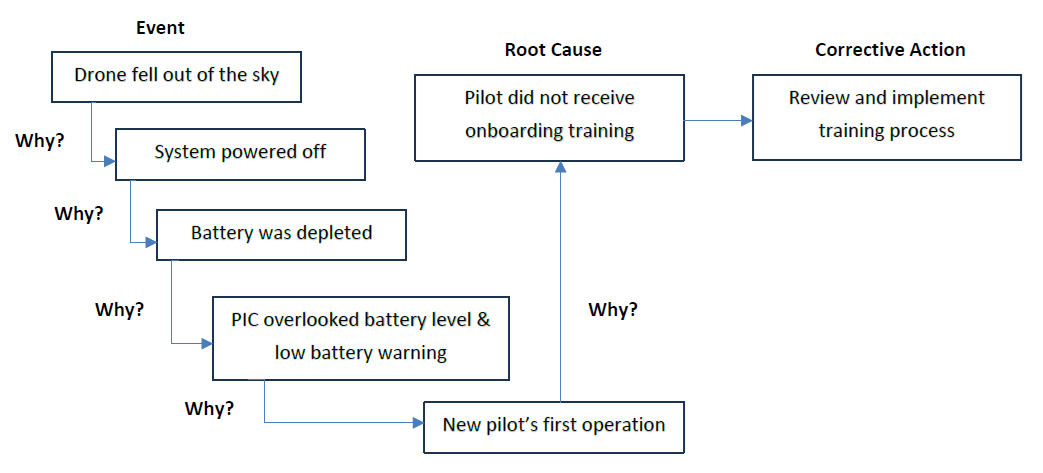
The Five Whys flow chart - Text version
The Five Whys flow chart starts with Event: Drone fell out of the sky. Why? Because the system powered off. Why? Because the battery was depleted. Why? Because the Pilot in command overlooked battery level and low battery warning. Why? Because this was a new pilot’s first operation. Why? The Root Cause was because the pilot did not receive onboarding training. Thus, the corrective action is to review and implement training process.
The Bowtie flow chart

The Bowtie flow chart - Text version
The Bowtie flow chart starts with the Event/Hazard in the middle. Moving to the left, the first column is the Counter measure which includes: Ballistic Parachute, Emergency procedures, Automated recovery, collision protection, DAA, Flight termination. The next column to the left is proactive barrier or control which includes 1st: Use a visual observer, 2nd: Use airspace lockout software, and 3rd: Make blind radio transmission for traffic. The next column to the left is the Error and could be Low awareness of RPA position relative to airport and traffic circuit. The furthest left column is the Threat: Pilot oversaturated with data collection. The column to the right of Event/Hazard is the Consequence: RPA collided with Cessna in circuit. The next column to the right is Recovery barrier or mitigation which includes 1st: Emergency landing, 2nd: Aircraft structure, and 3rd: Pilot skills. The furthest right is the Harm: None caused.